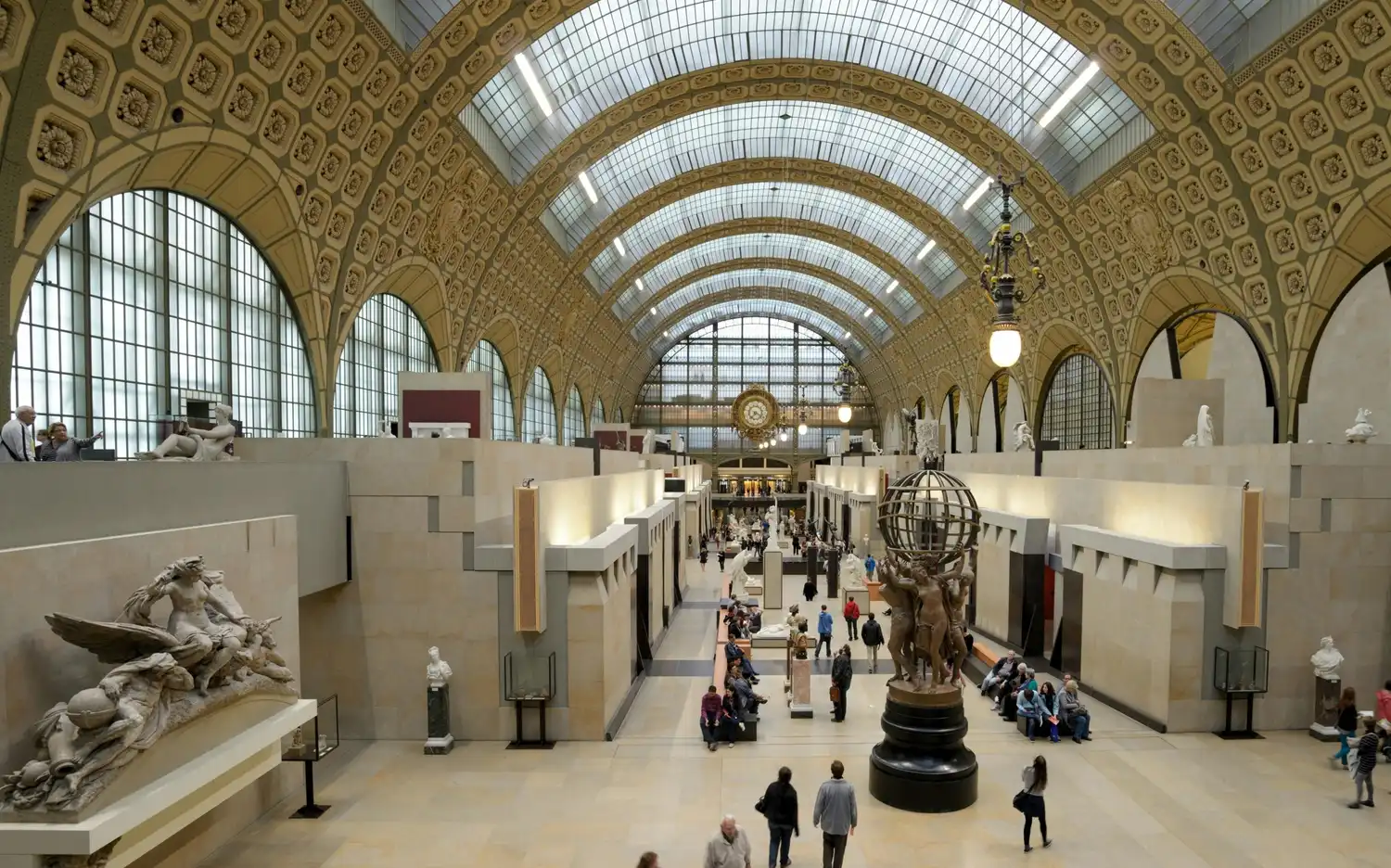
Visitors walk among sculptures in the vaulted glass hall of Musée d'Orsay, with others seated on benches.
Recommended

Musée d'Orsay

  • Paris

Housed within the magnificent Beaux-Arts Gare d'Orsay, this iconic Paris museum showcases the world's premier collection of Impressionist and Post-Impressionist masterpieces by legends such as Monet, Van Gogh, and Renoir. Its rotating exhibitions and permanent galleries offer an unparalleled journey through 19th-century art history in one of the city's most breathtaking architectural landmarks.

A selection of delicate pencil and pastel sketches by Pierre-Auguste Renoir displayed in a gallery.

Renoir Drawings

  • Musée d'Orsay, Paris
17 Mar - 5 Jul 2026
From€17.50

The refined elegance of Renoir’s artistry revealed through his most intimate sketches.

Recommended
Vibrant oil painting of a couple dancing outdoors in a sunlit, crowded Parisian cafe by Pierre-Auguste Renoir.

Renoir and Love: a Joyful Modernity: 1865-1885

  • Musée d'Orsay, Paris
17 Mar - 19 Jul 2026
From€17.50

Renoir’s radiant brushwork illuminates the tender elegance of love in the modern age.

Gallery of 19th-century paintings exploring labor and the Industrial Revolution at the Musée d’Orsay.

100 Works That Tell the Story of Work: Working in the 19th Century

  • Musée d'Orsay, Paris
31 Mar - 2 Aug 2026
From€13.00

A definitive visual history of nineteenth-century labor through one hundred curated masterpieces.

Hand-colored silver gelatin photograph by Youssef Nabil blending cinematic nostalgia and dreamlike imagery.

Youssef Nabil: Still Dreaming

  • Musée d'Orsay, Paris
19 May - 13 Sep 2026
From€13.00

A cinematic exploration of nostalgia and memory through hand-colored silver gelatin dreamscapes.

The Musée d’Orsay stands as one of the world’s most spectacular examples of adaptive reuse, a former industrial behemoth transformed into a temple of high art. Located on the left bank of the Seine, the building was originally the Gare d’Orsay, a railway station and luxury hotel inaugurated for the 1900 Universal Exhibition. Designed by architect Victor Laloux in the ornate Beaux-Arts style, its monumental limestone façade was intended to harmonize with the neighboring Louvre and Tuileries Garden. After the station’s platforms became too short for modern trains, the structure narrowly escaped demolition before being designated a protected monument and reopening as a museum in 1986.

The interior of the museum is defined by the breathtaking Grand Nave, where the station's original steel-and-glass skeleton remains the primary aesthetic feature. Underneath a massive barrel-vaulted roof, visitors are greeted by a flooded sense of natural light and the iconic, oversized station clocks that still keep time over the gallery floors. This architectural grandeur provides a dramatic backdrop for the world’s most comprehensive collection of Impressionist and Post-Impressionist masterpieces. The collection acts as a vital bridge between the classical treasures of the Louvre and the contemporary works of the Centre Pompidou, specifically focusing on the prolific period between 1848 and 1914.

Art lovers will find themselves wandering through a "who’s who" of 19th-century genius, with dedicated spaces for Claude Monet, Pierre-Auguste Renoir, Edgar Degas, and Paul Cézanne. The museum is perhaps most famous for its upper-level galleries, which house Vincent van Gogh’s "Starry Night Over the Rhône" and Édouard Manet’s once-scandalous "Olympia." Beyond the canvas, the museum celebrates the Decorative Arts, Photography, and Sculpture, including major works by Auguste Rodin. The atmosphere is one of sophisticated nostalgia; as you move from the open central aisle into the intimate side galleries, you experience the transition from traditional academic art to the radical, light-drenched "revolution" that redefined modern painting.

Highlights

  • Marvel at the world's largest collection of Impressionist masterpieces, including iconic works like Vincent van Gogh's Starry Night Over the Rhône.
  • Explore the building's stunning Beaux-Arts architecture, a former railway station featuring a monumental clock and a vast vaulted glass roof.
  • Admire Edgar Degas's famous Little Dancer Aged Fourteen, a revolutionary sculpture that once scandalized the art world with its realistic materials.
  • Discover the museum's extensive collection of Post-Impressionist art, featuring vibrant and emotional works by masters such as Gauguin, Cézanne, and Seurat.
  • Gaze through the monumental clock window on the upper level for a unique panoramic view of the Seine and the Parisian landscape.
  • See the original architectural model of the Palais Garnier opera house, offering an intricate look at one of the city's most famous landmarks.

Must-Dos

  • Step into the intimate world of the Nabis on the middle level to admire the decorative screens and colorful, flattened perspectives of artists like Bonnard and Vuillard.
  • Visit the decorative arts galleries to see the sinuous "whiplash" curves and organic nature-inspired motifs of exquisite Art Nouveau furniture.
  • Plan your visit for a Thursday evening to experience the museum’s masterpieces in a more quiet, atmospheric setting when it stays open until 9:45 PM.
  • Walk across the glass floor above the scale model of the Quartier de l'Opéra for a dizzying bird's-eye view of 19th-century Parisian urban planning.
  • Search for the hidden details in the intricate wood carvings and gilded ornaments that remain from the building's original life as a luxury hotel.
  • Take a moment to sit on the sculpture-lined central nave to soak in the sheer scale of the vaulted nave and the play of natural light through the glass.

Guidelines

  • All visitors must undergo a security check at the museum entrance to ensure the safety of the collection.
  • Any backpacks or large bags must be checked at the complimentary cloakroom before entering the galleries.
  • The use of flash photography, selfie sticks, and tripods is strictly prohibited throughout the exhibition spaces.
  • Visitors are required to maintain a safe distance and avoid touching any of the artworks or frames.
  • Only pencils are permitted for sketching or taking notes, while pens and markers are not allowed.
  • The consumption of food and drinks is forbidden inside the museum halls to protect the artifacts.
  • Appropriate footwear and attire must be worn at all times to ensure a safe and respectful environment for all guests.

Tips

  • Visit the museum during the late-night openings on Thursdays when the doors stay open until 9:45 PM for a much quieter and more intimate experience.
  • Purchase your timed-entry tickets online well in advance to bypass the long ticket-purchase queues at the entrance.
  • Plan to spend at least 3 to 5 hours to fully appreciate the world's premier collection of Impressionist and Post-Impressionist masterpieces.
  • Head straight to the upper floor as soon as you arrive to see iconic works by Van Gogh and Monet before the largest crowds gather.
  • Take advantage of the free coat check located near the entrance to store bulky bags and umbrellas so you can wander the galleries unencumbered.
  • Make sure to stop by the massive station clock on the top floor for a unique photo opportunity with a silhouette view of the city.

Why Visit

To visit the Musee d'Orsay is to witness the very moment the world of art fractured and rebuilt itself in a burst of light and color. While other institutions may overwhelm with sheer scale, the Orsay offers a meticulously curated journey through the most radical decades of human creativity. It is here that you truly grasp the defiance of the Impressionists, standing inches away from the mesmerizing brushstrokes of Van Gogh or the soft, ethereal light captured by Renoir. This isn't just a gallery; it is a grand stage where 19th-century industrial ambition meets the unbridled soul of the avant-garde, providing a perspective on the birth of modernism that simply cannot be found anywhere else on earth.

Stepping into the central nave, you are immediately enveloped by an atmosphere that feels both majestic and deeply intimate. The sensory experience is profound; as the sun filters through the massive glass ceiling, it dances across the marble sculptures, shifting with the clouds just as the artists on the walls once intended. You don't just see the art here—you feel the mystical connection between nature and the human spirit, a communion that transcends language. Whether you are gazing through the giant clock face at the shimmering Seine or finding a quiet corner to admire the vibrant, jewel-toned screens of the Nabis, the museum offers a rare emotional resonance that leaves you feeling profoundly connected to the pulse of Paris.The Musee d'Orsay is more than a museum; it is a breathtaking immersion into the light and color of a revolution that changed the way we see the world forever.

When to Visit

Navigating the Former Rail Station Floor

Arriving exactly at 9:30 AM on a Wednesday or Friday provides the highest probability of exploring the upper-level Impressionist gallery before large tour groups congregate. Tuesdays are notoriously packed because many other Paris museums are closed, so delaying your visit until the Thursday late-night opening, which lasts until 9:45 PM, ensures a significantly more relaxed atmosphere with fewer students and families.

Sunlight Through the Beaux-Arts Vaults

Natural light streaming through the massive vaulted glass ceiling creates the most dramatic visual impact during the late afternoon, particularly between 3:00 PM and 5:00 PM. This illumination highlights the intricate textures of the ground-floor sculptures and the gold accents of the iconic Great Clock. Strategic visitors should monitor the weather for clear skies, as the museum's interior architecture transforms under the shifting shadows and golden hues of the Parisian sun.

How to Visit

To get the most out of your visit to the Musée d'Orsay, you should plan to spend at least 2 to 3 hours exploring. If you are an art devotee who likes to linger, stretching that to 4 hours will allow for a coffee break at the Café Campana, famous for its view through the giant clock face.

Mastering the Entrance and Timing

The golden rule for the Orsay is to avoid the massive ticket-purchase line by booking a timed-entry ticket online in advance. When you arrive, look for Entrance C (for ticket holders), which is significantly faster than Entrance A. To beat the thickest crowds, aim for a weekday morning or take advantage of the late-night opening on Thursdays, when the museum stays open until 9:45 PM.

A Strategic Path Through the Masterpieces

Instead of wandering aimlessly, I recommend a "top-down" strategy to stay ahead of the tour groups:

  • Take the elevators or escalators immediately to the 5th Floor. This level houses the world-famous Impressionist gallery, featuring icons like Van Gogh's Starry Night over the Rhône and Monet’s Blue Water Lilies.
  • Once you've had your fill of the 5th floor, descend to the Middle Level (Level 2) to view the Post-Impressionist works, the opulent Ballroom, and the intricate Nabis collection.
  • Finish your tour on the Ground Floor (Level 0). Walking through the central nave allows you to appreciate the massive sculptures and early 19th-century works in the context of the building’s spectacular Beaux-Arts railway architecture.

Schedules

Opening Hours

  • The Musée d'Orsay is open Tuesday to Sunday from 9:30 AM to 6:00 PM with the last entry at 5:00 PM.
  • On Thursdays, the venue offers late-night hours until 9:45 PM with the final admission allowed until 9:00 PM.
  • The museum remains closed to the public every Monday, as well as on May 1st and December 25th.

Special Days

The museum is closed every Monday, as well as on May 1st and December 25th.

Free entry is offered to all visitors on the first Sunday of every month.

On Thursdays, the venue offers extended evening hours with the galleries remaining open until 9:45 PM.

How to get there

Located on the left bank of the Seine in the 7th arrondissement, the Musée d'Orsay is one of Paris's most accessible cultural landmarks, housed within a stunning former railway station. Its central position makes it easy to reach via a variety of efficient public transport links that connect it to the rest of the city.

  • RER: Line C to the Musée d'Orsay station, which is located directly outside the museum entrance.
  • Metro: Line 12 to Solférino or Assemblée Nationale, both of which are within a 5- to 10-minute walk of the venue.
  • Bus: Lines 24, 63, 68, 69, 73, 83, 84, and 94 all have stops at or very near the Musée d'Orsay.
  • Batobus: This river shuttle service has a dedicated stop at Musée d'Orsay on the Quai de Solférino, offering a scenic arrival by water.
Directions

Frequently Asked Questions about Musée d'Orsay

Yes, the Musée d'Orsay offers free cloakroom services for coats and small bags, but for security reasons, large luggage exceeding 56x45x25 cm is not permitted inside the museum. Visitors are encouraged to use local luggage storage services in Paris for oversized items before arrival.
The museum is fully accessible with lifts and ramps throughout the former Gare d'Orsay building. While strollers are permitted, they must be small and compact; the museum also provides manual wheelchairs and strollers for free at the cloakroom on a first-come, first-served basis.
The most iconic photo location is behind the massive station clocks on the 5th floor, offering a silhouette view of Paris landmarks. Additionally, the Grand Nave provides a stunning perspective of the vaulted ironwork and stone facade that define the museum's French art heritage.
A standard admission ticket provides full access to the permanent collection, including the world-famous Impressionist art and Post-Impressionism galleries. This includes legendary works like Van Gogh's 'Starry Night Over the Rhône' and Monet's 'Blue Water Lilies'.
Most temporary art exhibitions at the Musée d'Orsay require a specific ticket or a small supplement in addition to the general entry fee. It is highly recommended to book a combined ticket in advance to ensure access to high-profile rotating displays.
To experience the galleries with more tranquility, plan your visit for Thursday evenings when the museum stays open until 9:45 PM. Alternatively, arriving right at opening time on weekdays is a great way to view 'Olympia' and other masterpieces before the peak afternoon rush.
The museum offers several guided tour options in English that focus on the 'revolution' of Impressionist art and the history of the Gare d'Orsay. Audioguides are also available at the entrance for a self-paced exploration of the major highlights.
Yes, a popular 'Passport' or combined ticket is available, allowing visitors to explore both the Musée d'Orsay and the nearby Musée de l'Orangerie. This is a cost-effective way to see the full spectrum of Claude Monet's work, including the famous 'Water Lilies' cycles.
Eating and drinking are strictly prohibited within the gallery spaces to protect the delicate French art. However, the museum features several dining options, including a magnificent restaurant in the former hotel dining room and the casual Café Campana near the clock.
Recommended
Vibrant satirical photography by Martin Parr exploring global tourism and consumerism at the Jeu de Paume gallery.
Stark black-and-white landscape photography captures the silent aftermath of South African conflict and memory.
Recommended
Mummified human remains and funerary objects in a modern, respectfully lit gallery at the Musee de l'Homme.
Vibrant street performers and colorful Holi festival celebrations at the historic Jardin d'Acclimatation in Paris.
Crowd at Jardin d'Acclimatation celebrating Holi with a vibrant explosion of colorful powders in the Parisian sky.
Archaeological artifacts from the Seine riverbed displayed in the underground crypt beneath Notre-Dame cathedral.
Sculptures of 20th-century conflict in the modernist Ateliers-musee Chana Orloff gallery in Paris.
Recommended
Digital art projections of Da Vinci and Michelangelo masterpieces illuminate a large immersive gallery space.
Antique Korean beauty accessories and traditional paintings displayed in a modern museum gallery at Musée Guimet.
Vibrant interactive garden chapter at Cité des sciences featuring lush plants and sensory science displays.
Recommended
Elegant 18th-century gowns and contemporary couture on display in a grand gallery at Palais Galliera.
Recommended
Mannequins display vibrant contemporary African haute couture and textiles in a modern gallery space.
Recommended
Modern curved glass and metal Fondation Louis Vuitton building under a blue sky with trees and parked cars.
1 exhibition

Fondation Louis Vuitton

  • Paris

Where avant-garde art meets Frank Gehry’s breathtaking glass sails in the heart of Paris.

Recommended
Grand mansion at Musée Rodin viewed through manicured gardens with a central pond, statues, and trimmed bushes.
1 exhibition

Musée Rodin Paris

  • Paris

A historic mansion sanctuary where Rodin’s emotive masterpieces breathe amidst rose-filled gardens.

Recommended
Ornate stone Musée de l'Orangerie entrance with large columns and one person standing near the doorway.
2 exhibitions

Musée de l'Orangerie

  • Paris

A luminous sanctuary where Monets panoramic Water Lilies bloom in timeless Impressionist light.

Recommended
Grand neoclassical Palais Garnier with golden statues and a French flag under a blue sky.
1 exhibition

Palais Garnier

  • Paris

A breathtaking masterpiece of nineteenth-century opulence and legendary Parisian high culture.

Recommended
Vibrant abstract projections from the Kandinsky exhibition at the Atelier des Lumières digital art center.
1 exhibition

Atelier des Lumières

  • Paris

Masterpieces come alive through immersive light and sound in a historic Parisian foundry.

Recommended
Intricate metal framework of a large glass dome casting shadows on a mural of historical and mythical scenes.
1 exhibition

Bourse de Commerce - Pinault Collection

  • Paris

A sanctuary of contemporary masterpieces housed within a masterfully restored historic dome.

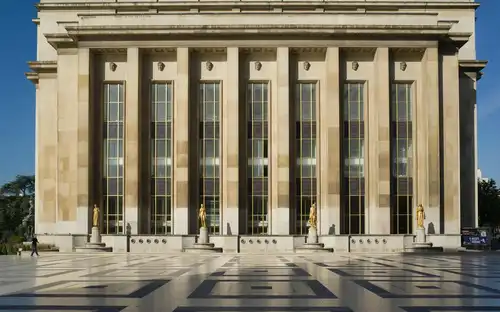
Neoclassical building with tall columns, large windows, outdoor seating, and a statue holding a spear.
2 exhibitions

Musée d'Art Moderne de Paris

  • Paris

A sanctuary of avant-garde masterpieces and evolving contemporary narratives in the heart of Paris.

Historic courtyard at Musée de l'Armée with arched windows and a golden-domed building under a partly cloudy sky.
1 exhibition

Musée de l'Armée & Napoleon's Tomb

  • Paris

France's storied military legacy rests beneath a majestic golden dome of timeless architectural grandeur.

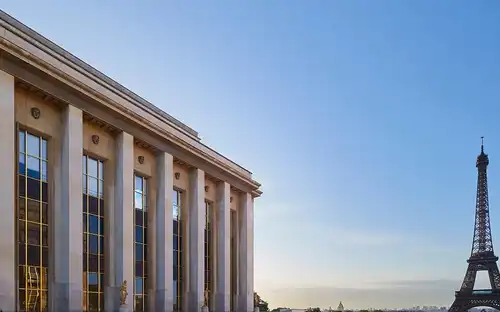
Grand building with arched windows, statues, and a central fountain, surrounded by lawns and city buildings.
2 exhibitions

Palais Galliera

  • Paris

A grand Renaissance palace enshrining the timeless evolution of French fashion and contemporary artistry.

Exhibit wall with multilingual text about Georges Méliès, surrounded by framed portraits and illustrations.
1 exhibition

La Cinémathèque Française

  • Paris

A stunning Frank Gehry masterpiece housing the world's most prestigious collection of cinematic treasures.

Elegant stone mansion with arched doorways and a columned entrance, set within a manicured courtyard.
1 exhibition

Musée Jacquemart-André

  • Paris

An opulent Haussmann-era mansion housing one of the city's most prestigious private art collections.

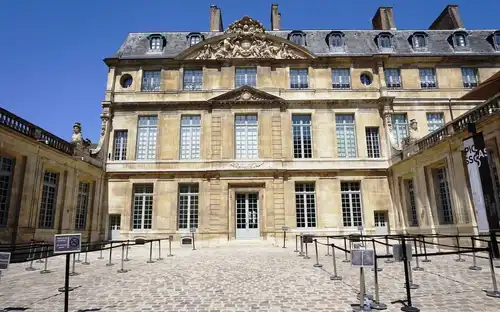
Stone Musée National Picasso-Paris with ornate sculptures and large windows under a clear sky from a courtyard.
3 exhibitions

Musée national Picasso-Paris

  • Paris

The profound legacy of the twentieth century’s most iconic artist in the historic Marais.