Plumes Du Paradis
- Musée du quai Branly - Jacques Chirac, Paris
22 May - 8 Nov 2026
From€14.00
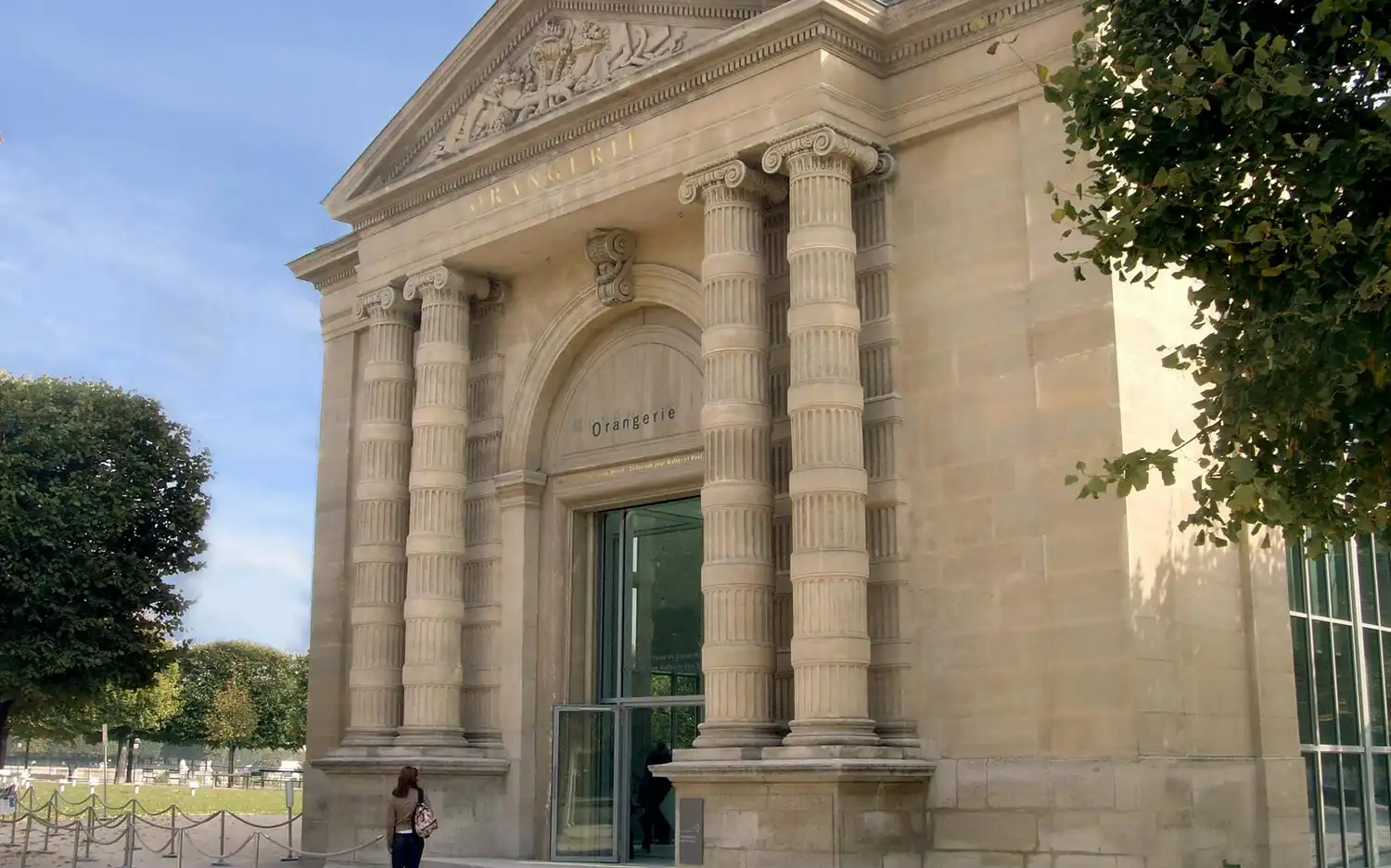
Nestled in the southwest corner of the historic Jardin des Tuileries, the Musée de l'Orangerie is a serene sanctuary of art that offers one of the most immersive cultural experiences in Paris. Originally constructed in 1852 by architect Firmin Bourgeois to shelter the garden’s orange trees during the winter, the building served various functions—from a storehouse to a military barracks—before its profound transformation into a temple of Impressionism. Its location, overlooking the Place de la Concorde and the Seine, provides a tranquil transition from the bustling city streets into a world defined by light and color.
The museum’s crown jewel is undoubtedly Claude Monet’s Water Lilies (Nymphéas) cycle, a monumental series donated to the French state as a symbol of peace following the Armistice of 1918. Housed in two specially designed Oval Rooms, these eight massive panels create an "illusion of an endless whole," as Monet himself described it. The rooms were meticulously planned by the artist alongside architect Camille Lefèvre to ensure that the curved canvases, which stretch nearly 100 meters in total, envelop the viewer. Bathed in natural light filtered through elegant glass ceilings, the atmosphere shifts with the time of day and the Parisian weather, allowing the vibrant blues, greens, and purples of Monet’s Giverny garden to practically breathe.
Beyond the ethereal beauty of the upper floor, the lower level reveals the prestigious Walter-Guillaume Collection, one of the finest ensembles of early 20th-century European art. Assembled by the visionary art dealer Paul Guillaume and later his wife Domenica Walter, this collection serves as a vibrant bridge between Impressionism and Modernism. Visitors can wander through intimate galleries showcasing masterpieces by Paul Cézanne, Pierre-Auguste Renoir, Amedeo Modigliani, Pablo Picasso, and Henri Matisse. The transition from the meditative stillness of Monet’s murals to the bold, energetic compositions of the avant-garde downstairs offers a comprehensive look at the evolution of modern art.
Visiting the Musée de l'Orangerie is less about a traditional gallery stroll and more about a sensory journey. The unique synergy between the neoclassical architecture and the groundbreaking art creates an environment that encourages slow contemplation and introspection. Whether you are mesmerized by the horizonless waters of the Nymphéas or exploring the psychological depth of a Modigliani portrait, the museum remains an essential, intimate destination for anyone seeking to understand the soul of French artistic heritage in the heart of Paris.
While the Louvre dazzles with its scale, the Musée de l'Orangerie offers a rare, intimate encounter with genius that feels like a private audience with the masters. Beyond the curated perfection of the Water Lilies, the subterranean Walter-Guillaume Collection provides a thrilling journey through the avant-garde, where the soulful gaze of a Modigliani portrait meets the vibrant energy of Matisse and Picasso. This is not merely a gallery visit but a quintessential Parisian rite of passage, perfectly positioned to offer a quiet, sophisticated escape before you emerge to witness a stunning sunset over the Place de la Concorde.
Stepping into the Oval Rooms is a profound emotional event where art and architecture merge to create a "Sistine Chapel of Impressionism." As natural light filters through the glass ceiling, the shifting Parisian sky breathes life into the canvases, transforming the blues, greens, and purples of Monet's garden into a living, moving landscape. To truly experience this, one must sit on the iconic benches and allow the horizonless water to envelop the senses, fostering a deep state of contemplation and peace that stays with you long after you leave the Tuileries.The Musée de l'Orangerie is an unmissable sanctuary where the immersive beauty of Monet’s masterworks and the bold spirit of the 20th-century avant-garde offer a transformative healing experience for the soul.
Morning Light in the Oval Salons
Arriving at the museum doors for the 9:00 AM opening on a Monday, Wednesday, or Thursday allows you to reach the Nymphéas galleries before the large tour groups descend. This early window provides the most consistent, soft natural light filtered through the glass ceiling, which is exactly how Monet intended his Water Lilies to be viewed. Shadows remain minimal during these first two hours of operation, ensuring that the subtle textures and brushstrokes on the monumental canvases are fully visible without the distraction of heavy foot traffic.
Midweek Twilight Transitions
Planning a visit during the final slot before the 6:00 PM closing time on weekdays offers a unique opportunity to see the color palette of the paintings shift as the sun begins to set over the Tuileries. While the museum is closed on Tuesdays, a late Friday afternoon often sees a dip in visitor numbers after the lunchtime rush has cleared out. This period provides a more meditative atmosphere in the lower galleries where the Jean Walter and Paul Guillaume collection is housed, far removed from the peak congestion typical of midday weekends.
To make the most of your visit to the Musée de l'Orangerie, you should set aside approximately 1.5 to 2 hours. While the building appears modest from the outside compared to its neighbors, the layout is purposeful and split across two distinct levels that require a bit of strategic movement to avoid the bottleneck of the main entrance hall.
Navigating the Nymphéas and Beyond
The museum is structured to lead you from the ethereal world of Monet into the bold, structured basement galleries. To have the most seamless experience, I recommend following this flow:
The Secret to a Smooth Entry
The museum is located at the western corner of the Jardin des Tuileries, specifically at the Place de la Concorde side. Because security is tight, avoid bringing large bags or suitcases, as there is no luggage storage for items exceeding standard cabin size. If you have pre-booked a timed-entry ticket, look for the dedicated line near the main glass doors to bypass the general admission queue. For those utilizing a Paris Museum Pass, you still need to reserve a specific time slot online in advance to guarantee entry.
The Musée de l'Orangerie is closed every Tuesday and also shuts its doors on May 1st, July 14th (morning only), and December 25th.
General admission is free for all visitors on the first Sunday of each month and is always free for those under 18 or EU residents under 26.
Nestled in the heart of the 1st arrondissement within the historic Jardin des Tuileries, the Musée de l'Orangerie sits elegantly along the banks of the Seine. This sanctuary of Impressionism is exceptionally accessible, positioned at the crossroads of Paris's most iconic landmarks and transit hubs.
Complete your cultural itinerary with the 10 other top-rated exhibitions in Paris in 2026.
Explore the 9 other top-rated cultural attractions to visit in Paris in 2026.