

Renoir Drawings
- Musée d'Orsay, Paris
17 Mar - 5 Jul 2026
From€17.50

The exhibition 100 Works That Tell the Story of Work: Working in the 19th Century at the Musée d’Orsay offers a profound exploration of how the Industrial Revolution radically transformed the human experience. By moving beyond a simple chronological survey, the curation adopts an interdisciplinary approach, placing art historians in dialogue with anthropologists and sociologists. The central theme examines the transition from traditional artisanal trades and agrarian life to the mechanized, often grueling realities of industrialized labor. This narrative arc highlights how artists moved from romanticizing the worker to documenting their conditions with a gritty, unyielding Realism.
Key to this showcase are the seminal works of Jean-François Millet, whose masterpiece The Gleaners serves as a cornerstone for understanding the dignity and physical toll of rural labor. The exhibition also features the innovative perspectives of Impressionist masters such as Edgar Degas, who captured the disciplined, repetitive work of the ballet and the laundress, and Gustave Caillebotte, whose The Floor Scrapers (Les raboteurs de parquet) provides a startlingly modern look at urban toil. These artists, alongside figures like Édouard Manet and Claude Monet, used their brushes to make the invisible laboring class visible, often sparking intense critical debate in the process.
The historical significance of these works lies in their role as catalysts for Modernism. By choosing to depict the "low" subject of manual labor—whether it be the fishermen of the coast or the coal miners of the north—these creators broke away from the sanitized ideals of Academicism. The collection demonstrates how the 19th century became a battleground for artistic language, where the avant-garde sought to reflect a society in flux. The inclusion of works from diverse contexts, including the maritime and domestic labor scenes of Danish painters like Michael Ancher and Anna Ancher, further emphasizes the universal nature of this social transformation across Europe.
Ultimately, the exhibition resonates with a deep emotional gravity, bridging the gap between the 19th-century worker and the contemporary visitor. There is a palpable sense of collective identity and social advocacy in many of the pieces, as artists like Honoré Daumier or Käthe Kollwitz used their medium to cry out for equity. From the quiet, meditative atmosphere of a woman mending clothes to the deafening, kinetic energy of a factory floor, the artworks foster a sense of human development and empathy. The exhibition concludes by reminding us that these "stories of work" are not merely historical records, but the foundational memories of our modern social structure.
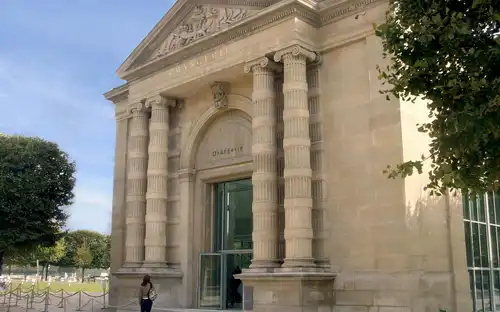
Housed within the magnificent Beaux-Arts Gare d'Orsay, this iconic Paris museum showcases the world's premier collection of Impressionist and Post-Impressionist masterpieces by legends such as Monet, Van Gogh, and Renoir. Its rotating exhibitions and permanent galleries offer an unparalleled journey through 19th-century art history in one of the city's most breathtaking architectural landmarks.
The museum is closed every Monday, as well as on May 1st and December 25th.
Free entry is offered to all visitors on the first Sunday of every month.
On Thursdays, the venue offers extended evening hours with the galleries remaining open until 9:45 PM.
Located on the left bank of the Seine in the 7th arrondissement, the Musée d'Orsay is one of Paris's most accessible cultural landmarks, housed within a stunning former railway station. Its central position makes it easy to reach via a variety of efficient public transport links that connect it to the rest of the city.
Don't miss the 3 other major exhibitions currently showing at Musée d'Orsay during your visit to Paris in 2026.
Complete your cultural itinerary in 2026 with the 55 other top-rated exhibitions in Paris.
Don't miss the 39 iconic cultural landmarks that define Paris in 2026.