
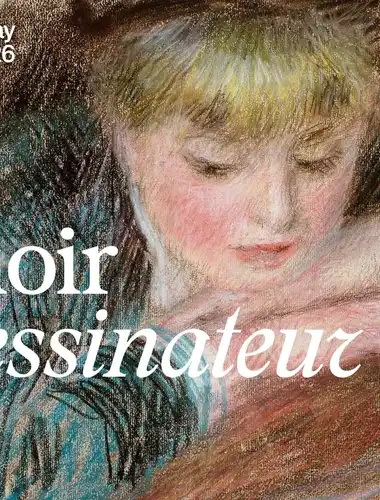
Renoir Drawings
- Musée d'Orsay, Paris
17 Mar - 5 Jul 2026
From€17.50
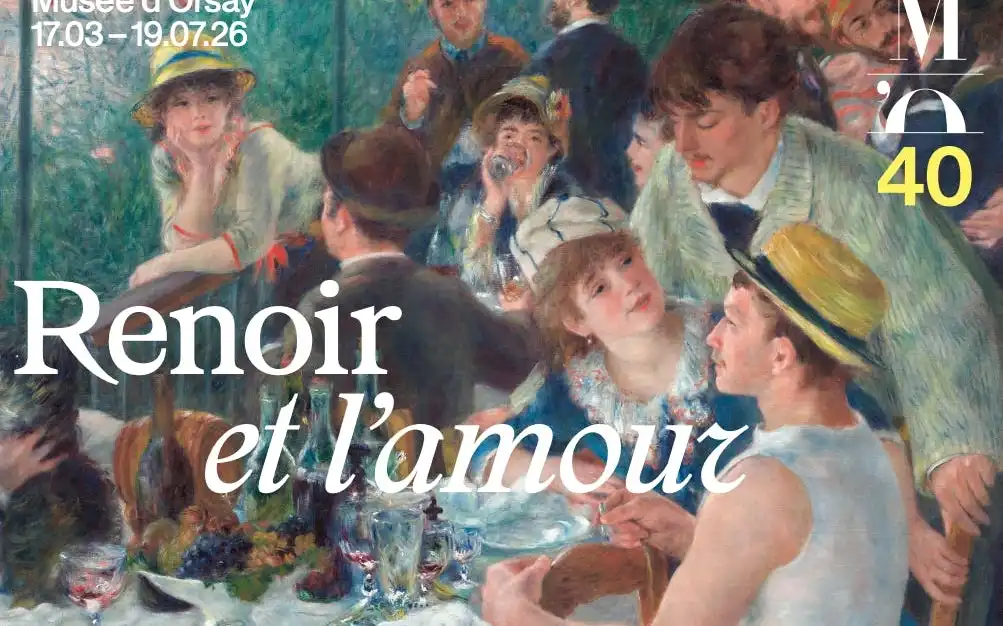
The exhibition Renoir and Love: A Joyful Modernity (1865–1885) at the Musée d’Orsay offers a sophisticated reexamination of Pierre-Auguste Renoir during the most radical and formative two decades of his career. Moving beyond his popular reputation as a mere "painter of happiness," the curatorial narrative explores how Renoir utilized the theme of love—not as a sentimental trope, but as a fundamental force of human connection and a lens through which to interpret the rapid changes of the late 19th century. By focusing on his output from 1865 to 1885, the showcase highlights his role in the birth of Impressionism alongside peers like Claude Monet, Edgar Degas, and Berthe Morisot, while asserting his unique commitment to depicting a "happy modernity" that stood in stark contrast to the disillusioned realism of his contemporaries.
Central to the exhibition is the 150th anniversary of the monumental Bal du moulin de la Galette, a masterpiece that exemplifies Renoir’s ability to weave light, movement, and social intimacy into a unified tapestry of urban life. The curation skillfully traces his artistic lineage back to 18th-century French masters such as Watteau, Boucher, and Fragonard, whose fêtes galantes served as historical precursors to Renoir’s own scenes of contemporary leisure. Masterpieces like La Grenouillère, La Promenade, and The Umbrellas serve as pivotal anchors, demonstrating his evolution from a light, fluid brushwork to the more structured compositions of his later years. These works transform public spaces—theaters, cafes, and boulevards—into stages for modern interaction, where the artist’s "loving gaze" elevates the mundane into the extraordinary.
The emotional resonance of the exhibition lies in its portrayal of camaraderie and shared joy as acts of social resistance. In an era marked by rigid bourgeois norms and class tensions, Renoir’s depictions of anonymous couples and multi-figure convivial scenes like Luncheon of the Boating Party functioned as manifestos against the growing loneliness and violence of urban existence. By emphasizing equality, gender balance, and the "illicit" freedoms of bohemian life, Renoir created a visual language of empathy and wonder. This landmark retrospective, the first dedicated to the artist in Paris since 1985, successfully re-enchants the viewer’s perspective on these iconic works, revealing the profound radicalism inherent in the pursuit of pleasure and human connection.
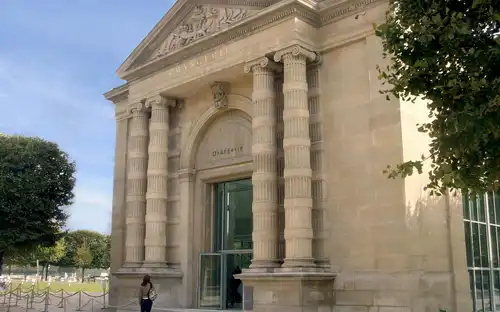
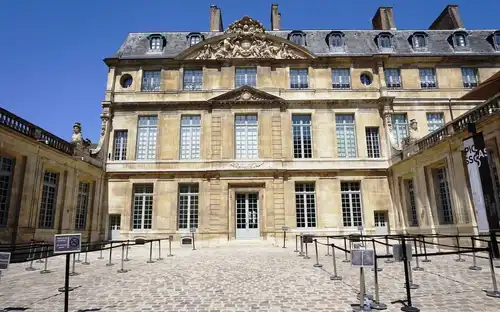
Housed within the magnificent Beaux-Arts Gare d'Orsay, this iconic Paris museum showcases the world's premier collection of Impressionist and Post-Impressionist masterpieces by legends such as Monet, Van Gogh, and Renoir. Its rotating exhibitions and permanent galleries offer an unparalleled journey through 19th-century art history in one of the city's most breathtaking architectural landmarks.
The museum is closed every Monday, as well as on May 1st and December 25th.
Free entry is offered to all visitors on the first Sunday of every month.
On Thursdays, the venue offers extended evening hours with the galleries remaining open until 9:45 PM.
Located on the left bank of the Seine in the 7th arrondissement, the Musée d'Orsay is one of Paris's most accessible cultural landmarks, housed within a stunning former railway station. Its central position makes it easy to reach via a variety of efficient public transport links that connect it to the rest of the city.
Don't miss the 3 other major exhibitions currently showing at Musée d'Orsay during your visit to Paris in 2026.
Complete your cultural itinerary in 2026 with the 55 other top-rated exhibitions in Paris.
Don't miss the 39 iconic cultural landmarks that define Paris in 2026.