Ornate room at Maison Victor Hugo with floral wallpaper, a chandelier, antique furniture, and a document display.

Maison Victor Hugo

  • Paris

Step inside the sublime Parisian townhouse where Victor Hugo penned masterpieces like Les Misérables, now home to evocative exhibitions and one of the most treasured literary pilgrimage sites in Paris. This refined City of Paris Museum offers an expert look into the Romantic luminary’s prolific life and genius, standing as a must-visit cultural landmark alongside the city's greatest historic cafes and monuments.

Detailed architectural sketches and manuscripts displayed in the historic, red-walled gallery of Maison Victor Hugo.

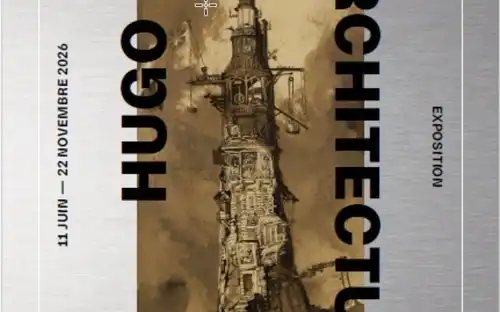
Victor Hugo & Architecture

  • Maison Victor Hugo, Paris
11 Jun - 22 Nov 2026
From€11.00

A refined exploration of how architectural form shaped Victor Hugo's literary and artistic genius.

Located in the southeastern corner of the prestigious Place des Vosges, the Maison Victor Hugo offers a profound immersion into the life of one of France’s most monumental literary figures. The museum is housed within the Hôtel de Rohan-Guéménée, where Victor Hugo rented a sprawling second-floor apartment from 1832 to 1848. This sixteen-year period was arguably the most prolific of his career; it was within these walls that he wrote a significant portion of Les Misérables and masterpieces like Ruy Blas. Visitors today can explore a sequence of rooms designed to evoke the three major stages of his life: before, during, and after his long exile in Guernsey.

The apartment is a masterpiece of interior design, largely curated by Hugo himself, who possessed a singular, eclectic aesthetic. One of the most striking spaces is the Chinese Salon, featuring intricate woodwork and panels originally designed for his mistress, Juliette Drouet. This room, along with the Medieval-style dining room, showcases Hugo’s talent as a decorator and his fascination with Gothic and Orientalist themes. Another highlight is the meticulously reconstructed Writing Room, where his unique standing desk remains a focal point, allowing guests to visualize the author at work on his legendary manuscripts.

The atmosphere within the museum is one of quiet, scholarly reverence, contrasting with the vibrant energy of the surrounding Marais district. As you move through the antechambers filled with family portraits and original drawings, the sense of intimacy is palpable. The tour culminates in the poignant recreation of his bedroom, where the author passed away in 1885. This final space, filled with personal memorabilia and heavy red velours, serves as a powerful tribute to his enduring legacy as a poet, novelist, and tireless advocate for social justice.

Highlights

  • The Red Drawing Room features crimson damask wallpaper and family portraits that evoke the social atmosphere of the Romantic Movement.
  • The Salon Chinois displays an impressive collection of Chinese-style art and intricate woodwork designed by Hugo himself for his mistress.
  • The Dining Room showcases the author's fascination with the Gothic style through heavy, hand-carved furniture and medieval-inspired decor.
  • The Writing Room contains the high, stand-up desk where Hugo penned masterpieces like Les Misérables and Toilers of the Sea.
  • The Bedroom is a faithful recreation of the room where the author spent his final moments, decorated in refined red velours.
  • The Library preserves a vast collection of the writer's original manuscripts, personal archives, and thousands of signed letters.
  • The Art Collection includes over 18,000 drawings and sketches created by Hugo, revealing his extensive talents beyond the written word.

Must-Dos

  • Pick up an audioguide at the entrance to hear detailed stories about Hugo’s life and the personal significance of his unique home decor.
  • Gaze out of the windows to admire the perfectly symmetrical views of the historic Place des Vosges from the author’s second-floor perspective.
  • Climb the impressive staircase slowly to examine the stained glass windows, rich woodwork, and personal portraits that lead to the primary apartments.
  • Inspect the ornate figurines and quirky memorabilia in the display cases that showcase how much of a celebrity Hugo was during his own lifetime.
  • Walk through the temporary exhibitions on the first floor to discover deeper insights into specific periods of the author’s prolific career.
  • Exit through the discreet garden path that connects the museum directly to the tranquil greenery of the Place des Vosges.

Guidelines

  • All visitors must undergo a security screening and inspection of belongings before entering the museum.
  • Large items and luggage exceeding 11 x 15 inches are strictly prohibited inside the galleries.
  • Personal photography is permitted without the use of flash, tripods, or selfie sticks.
  • Please ensure your mobile devices are set to silent mode to maintain a respectful atmosphere.
  • The consumption of food and beverages is not allowed within the exhibition spaces.
  • Visitors are requested to maintain a safe distance and not touch any artworks, furniture, or original manuscripts.
  • Appropriate attire including shirts and shoes must be worn at all times during your visit.

Tips

  • Arrive at 6 Place des Vosges early in the morning or during the week to enjoy the historic rooms with fewer crowds.
  • Take advantage of the free admission to the permanent collections, though booking a time slot online is still recommended to guarantee entry.
  • Plan to spend at least one to two hours exploring the apartment to fully appreciate the original manuscripts and decor.
  • Wear comfortable shoes as you will likely combine your visit with a stroll through the surrounding Marais district and its cobblestone streets.
  • After touring the museum, exit into the Place des Vosges to enjoy a peaceful moment in one of the oldest and most beautiful squares in Paris.
  • Check the official website for any temporary closures or renovations before heading to the southeast corner of the square.

Why Visit

To truly understand the heartbeat of 19th-century Paris, one must step beyond the crowded boulevards and into the vibrant, eccentric mind of its greatest literary giant. The Maison Victor Hugo is not merely a residence; it is a living canvas where the author's boundless creativity is etched into every floorboard and ceiling. Beyond the manuscripts, you are invited to witness the sheer celebrity of a man who was a household name in his own era, captured through a fascinating array of quirky memorabilia and personal artifacts that prove his influence extended far beyond the written word. This is a rare opportunity to see Paris through the eyes of a visionary, offering a uniquely intimate perspective of the Place des Vosges that remains unchanged since the day he first looked out upon it.

Stepping into these rooms feels like walking through a physical manifestation of a Romantic novel, where the atmosphere shifts from the brooding, heavy textures of hand-carved Gothic furniture to the startling, whimsical brilliance of the Salon Chinois. There is a profound, almost ghostly weight to the Writing Room, where the high standing desk remains poised as if waiting for the next stroke of genius to capture the soul of the city. As you traverse the crimson-hued drawing rooms and climb the stately, wood-paneled staircase, the transition from public icon to private dreamer becomes visceral, culminating in a deeply moving sensory encounter with the very environment that nurtured France's most enduring masterpieces.To walk through the Maison Victor Hugo is to breathe the very spirit of Paris and preserve your own soul within the walls where a genius once dreamt of justice and light.

When to Visit

Mid-Week Marais Solitude

Planning your arrival for the 10:00 AM opening on a Wednesday or Thursday provides the highest probability of experiencing the permanent collections without the congestion of school groups. Visiting late in the day, specifically between 4:30 PM and 5:30 PM, serves as an excellent alternative for those wishing to avoid the heavy 2:00 PM rush while still ensuring enough time before the museum shuts at 6:00 PM.

Morning Illumination on the Place des Vosges

Soft morning light creates the most evocative atmosphere within the ornate rooms overlooking the square. Entering between 10:00 AM and 11:00 AM ensures the sun is positioned to highlight the intricate floral patterns of the wallpaper and the depth of the original manuscripts. As the day progresses, the late afternoon light around 5:00 PM casts long, dramatic shadows across the Red Drawing Room, offering a moodier and more contemplative view of the author's former workspace.

How to Visit

Tucked away in the southeastern corner of the stunning Place des Vosges, this museum offers a remarkably intimate look at the life of one of France's most iconic figures. To get the most out of your visit to the Maison Victor Hugo, plan to spend about 60 to 90 minutes exploring the permanent collection. Since entry to the main apartment is free, it’s a perfect addition to a morning spent wandering the Marais. Keep in mind that while the apartment is free, the temporary exhibitions on the first floor often require a paid ticket.

Navigating the Writer's Refuge

The apartment is located on the second floor of the Hôtel de Rohan-Guéménée. Once you pass the security screening at the main entrance, I recommend following a chronological flow through the seven rooms to see how Hugo's surroundings evolved alongside his literary career.

  • Start in the Antechamber to see family portraits and early works that highlight his rapid rise to fame.
  • Move through the Red Drawing Room, which is filled with artifacts from his life in Paris before his long period of exile.
  • Don't miss the Chinese Room, featuring intricate panels and furniture that Hugo designed himself for his mistress, Juliette Drouet.
  • Conclude your journey in the Writing Room, where you can see the tall, stand-up desk where he penned some of his most famous masterpieces.

Strategic Entry Tips

To avoid any potential bottlenecks, aim to arrive right when the doors open at 10:00 AM. Access is through the courtyard at 6 Place des Vosges, and while there isn't a "secret" side door, having your belongings ready for the security check will help you breeze through. If you want a deeper layer of history, the 5 euro audioguide available at the reception desk is worth every cent, as it provides specific anecdotes about the furniture and manuscripts that you won't find on the wall placards. After your tour, the Café Mulot in the museum courtyard is a lovely, quiet spot for a coffee or a light lunch away from the busier streets of the neighborhood.

Schedules

Opening Hours

  • The museum is open from Tuesday to Sunday between 10:00 AM and 6:00 PM.
  • The venue is closed to the public every Monday.
  • The final entry for visitors occurs when the ticket office closes at 5:15 PM.

Special Days

The museum is exceptionally closed on January 1st, May 1st, and December 25th.

Access to the permanent collections is entirely free for all visitors throughout the year.

The venue remains open on public holidays such as Ascension Day, Easter, and July 14th.

How to get there

The Maison Victor Hugo is nestled in the southeastern corner of the prestigious Place des Vosges in the 4th arrondissement, a central location that is exceptionally easy to reach on foot or via public transit. This historic literary shrine serves as a cornerstone of the Marais district, offering visitors seamless access from several of the city's major transport hubs.

  • Metro: Lines 1, 5, and 8 to Bastille, Line 1 to Saint-Paul, or Line 8 to Chemin Vert.
  • Bus: Lines 20, 29, 65, 69, 76, and 96 serve nearby stops such as Saint-Paul, Bastille, and Birague.
Directions

Frequently Asked Questions about Maison Victor Hugo

For security and preservation of the historical house, large bags and suitcases are not permitted inside the museum. While a small cloakroom is available for coats and standard daypacks, visitors are encouraged to leave larger items at their hotel or a nearby 'Marais' luggage locker before visiting the Place des Vosges.
Yes, the museum is equipped with an elevator and ramps to ensure accessibility for visitors with reduced mobility and those with strollers. You can explore the permanent collections and 19th-century art exhibitions across the different floors of the 'Hôtel de Rohan-Guéménée' without physical barriers.
Access to the permanent collections at Maison Victor Hugo is generally free for all visitors, allowing you to see the famous 'Chinese Salon' and 'Writing Room' without a fee. However, temporary historical house exhibitions and specific guided tours often require a paid ticket which should be booked in advance.
The most photogenic locations are the vibrant 'Chinese Salon' with its intricate woodwork and the 'Red Drawing Room' which captures the essence of 19th-century literary opulence. Photography for personal use is permitted, provided you do not use a flash or a tripod to protect the delicate 'Victor Hugo manuscripts' and furniture.
To fully appreciate the interior design curated by Hugo himself and read the detailed descriptions of his 'Les Misérables' era, most visitors allocate about 60 to 90 minutes. This provides enough time to move through the rooms representing his life before, during, and after his exile.
Yes, digital companions and audio guides are available at the entrance, providing deep insights into the 'French literature' history and the significance of the artifacts in each room. The guides offer context on his social justice advocacy and the creation of masterpieces like 'Ruy Blas'.
The Maison Victor Hugo, like many city-run museums in Paris, is typically closed on Mondays. It is best to plan your visit between Tuesday and Sunday to ensure you can experience the scholarly reverence of this unique 'literary museum'.
The museum features several original pieces, most notably the 'standing desk' in his reconstructed Writing Room where he penned his legendary manuscripts. You can also see the 'Medieval-style' furniture Hugo designed himself, showcasing his talent as a decorator.
The museum houses a small boutique where you can purchase various editions of 'Les Misérables', poetry collections, and scholarly works on '19th-century art'. It is a perfect place to find a unique souvenir related to French literary history and the author's legacy.
Recommended
Mummified human remains and funerary objects in a modern, respectfully lit gallery at the Musee de l'Homme.
Vibrant street performers and colorful Holi festival celebrations at the historic Jardin d'Acclimatation in Paris.
Crowd at Jardin d'Acclimatation celebrating Holi with a vibrant explosion of colorful powders in the Parisian sky.
Archaeological artifacts from the Seine riverbed displayed in the underground crypt beneath Notre-Dame cathedral.
Sculptures of 20th-century conflict in the modernist Ateliers-musee Chana Orloff gallery in Paris.
Recommended
Digital art projections of Da Vinci and Michelangelo masterpieces illuminate a large immersive gallery space.
A selection of delicate pencil and pastel sketches by Pierre-Auguste Renoir displayed in a gallery.
Antique Korean beauty accessories and traditional paintings displayed in a modern museum gallery at Musée Guimet.
Vibrant interactive garden chapter at Cité des sciences featuring lush plants and sensory science displays.
Recommended
Elegant 18th-century gowns and contemporary couture on display in a grand gallery at Palais Galliera.
Recommended
Mannequins display vibrant contemporary African haute couture and textiles in a modern gallery space.
Vibrant avant-garde artwork and a Dreamachine light installation on display at the Brion Gysin exhibition in Paris.
Recommended
Visitors walk among sculptures in the vaulted glass hall of Musée d'Orsay, with others seated on benches.
4 exhibitions

Musée d'Orsay

  • Paris

Breathtaking Impressionist masterpieces housed within the timeless elegance of a magnificent Parisian station.

Recommended
Modern curved glass and metal Fondation Louis Vuitton building under a blue sky with trees and parked cars.
1 exhibition

Fondation Louis Vuitton

  • Paris

Where avant-garde art meets Frank Gehry’s breathtaking glass sails in the heart of Paris.

Recommended
Grand mansion at Musée Rodin viewed through manicured gardens with a central pond, statues, and trimmed bushes.
1 exhibition

Musée Rodin Paris

  • Paris

A historic mansion sanctuary where Rodin’s emotive masterpieces breathe amidst rose-filled gardens.

Recommended
Ornate stone Musée de l'Orangerie entrance with large columns and one person standing near the doorway.
2 exhibitions

Musée de l'Orangerie

  • Paris

A luminous sanctuary where Monets panoramic Water Lilies bloom in timeless Impressionist light.

Recommended
Grand neoclassical Palais Garnier with golden statues and a French flag under a blue sky.
1 exhibition

Palais Garnier

  • Paris

A breathtaking masterpiece of nineteenth-century opulence and legendary Parisian high culture.

Recommended
Vibrant abstract projections from the Kandinsky exhibition at the Atelier des Lumières digital art center.
1 exhibition

Atelier des Lumières

  • Paris

Masterpieces come alive through immersive light and sound in a historic Parisian foundry.

Recommended
Intricate metal framework of a large glass dome casting shadows on a mural of historical and mythical scenes.
1 exhibition

Bourse de Commerce - Pinault Collection

  • Paris

A sanctuary of contemporary masterpieces housed within a masterfully restored historic dome.

Neoclassical building with tall columns, large windows, outdoor seating, and a statue holding a spear.
2 exhibitions

Musée d'Art Moderne de Paris

  • Paris

A sanctuary of avant-garde masterpieces and evolving contemporary narratives in the heart of Paris.

Historic courtyard at Musée de l'Armée with arched windows and a golden-domed building under a partly cloudy sky.
1 exhibition

Musée de l'Armée & Napoleon's Tomb

  • Paris

France's storied military legacy rests beneath a majestic golden dome of timeless architectural grandeur.

Grand building with arched windows, statues, and a central fountain, surrounded by lawns and city buildings.
2 exhibitions

Palais Galliera

  • Paris

A grand Renaissance palace enshrining the timeless evolution of French fashion and contemporary artistry.

Exhibit wall with multilingual text about Georges Méliès, surrounded by framed portraits and illustrations.
1 exhibition

La Cinémathèque Française

  • Paris

A stunning Frank Gehry masterpiece housing the world's most prestigious collection of cinematic treasures.

Elegant stone mansion with arched doorways and a columned entrance, set within a manicured courtyard.
1 exhibition

Musée Jacquemart-André

  • Paris

An opulent Haussmann-era mansion housing one of the city's most prestigious private art collections.