

Plumes Du Paradis
- Musée du quai Branly - Jacques Chirac, Paris
22 May - 8 Nov 2026
From€14.00

The exhibition Victor Hugo & Architecture: From Stone to Pen, hosted at the Maison de Victor Hugo, offers a profound exploration into how the built environment served as a primary catalyst for the creative genius of one of France’s most iconic figures. As a curator, I find this showcase particularly compelling because it unveils the symbiotic relationship between architectural form and literary structure. For Victor Hugo, architecture was not merely a backdrop for his narratives but a living, breathing entity that embodied the soul of history. Through a meticulously curated selection of notebooks, sketches, and manuscripts, visitors can witness how his fascination with the "silent stories" written in stone paved the way for his monumental literary achievements.
The historical significance of this exhibition lies in its focus on Hugo’s role as a pioneer of architectural preservation. Long before modern heritage movements, Hugo waged a "War on the Demolishers," decrying the destruction of medieval landmarks. This curatorial journey highlights his seminal work, Notre-Dame de Paris, where the cathedral itself emerges as the true protagonist—a "tottering, unloved old pile of stone" that Hugo’s pen eventually saved from ruin. The display features rare sketches of castles, churches, and gothic turrets, revealing a man who was as much a visionary artist as he was a campaigner for the aesthetic integrity of urban landscapes.
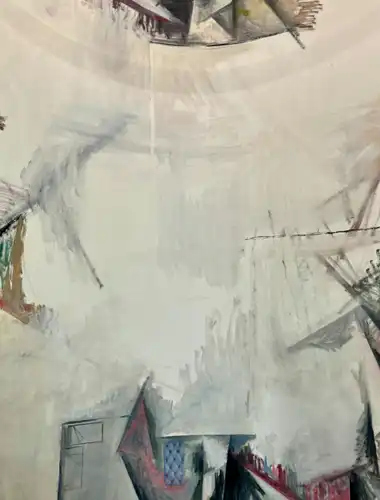
The emotional resonance of the artworks on display is most felt in the intimate nature of Hugo’s graphic art. Moving away from his public persona, the exhibition reveals his "under the skin" creativity through haunting pieces like the sketch of a Guernsey lighthouse, which spirals toward a mystical, hopeful light, or the evocative Causeway, reflecting the somber reality of his political exile. These works, created with a visceral mixture of ink, charcoal, and wash, transform architectural elements into psychological landscapes. The inclusion of his detailed drawings of Vianden Castle and various fairytale and nightmare fortresses underscores a lifelong obsession with the Gothic, where every arch and spire becomes a vessel for human memory and emotion.
Ultimately, this exhibition invites us to reconsider the polymathic nature of Hugo’s talent. By bridging his graphic imagination with his thematic obsession with the object and the monument, the Maison de Victor Hugo provides a rare glimpse into the private world of an artist who believed that "architecture was a way to embody and preserve history itself." From his intricate reproductions of decorative objects to his grand visions of cathedrals, the collection serves as a powerful reminder that for Hugo, the pen was simply an extension of the mason's tool, both dedicated to building the eternal structures of human culture and conscience.
Step inside the sublime Parisian townhouse where Victor Hugo penned masterpieces like Les Misérables, now home to evocative exhibitions and one of the most treasured literary pilgrimage sites in Paris. This refined City of Paris Museum offers an expert look into the Romantic luminary’s prolific life and genius, standing as a must-visit cultural landmark alongside the city's greatest historic cafes and monuments.
The museum is exceptionally closed on January 1st, May 1st, and December 25th.
Access to the permanent collections is entirely free for all visitors throughout the year.
The venue remains open on public holidays such as Ascension Day, Easter, and July 14th.
The Maison Victor Hugo is nestled in the southeastern corner of the prestigious Place des Vosges in the 4th arrondissement, a central location that is exceptionally easy to reach on foot or via public transit. This historic literary shrine serves as a cornerstone of the Marais district, offering visitors seamless access from several of the city's major transport hubs.
Complete your cultural itinerary in 2026 with the 9 other top-rated exhibitions in Paris.
Don't miss the 8 iconic cultural landmarks that define Paris in 2026.