Critical Thinking
- Cité des sciences et de l'industrie, Paris
7 Jul - 30 Jun 2027
From€15.00
A refined exploration of the cognitive mechanisms and social narratives behind human judgment.
Discover the 2 major exhibitions currently showing at Cité des sciences et de l'industrie in 2026.
Nestled within the sprawling, avant-garde Parc de la Villette in the 19th arrondissement, the Cité des sciences et de l'industrie stands as a monumental testament to French innovation and the democratization of knowledge. Opened in 1986 as one of President François Mitterrand’s ambitious Grands Projets, this titan of glass and steel was born from a radical transformation of the city’s former slaughterhouses (the abattoirs de la Villette). By repurposing an industrial "city of blood" into a temple of reason and discovery, architect Adrien Fainsilber created what is now the largest science museum in Europe, serving as a vital cultural anchor for a modernized, post-industrial Paris.
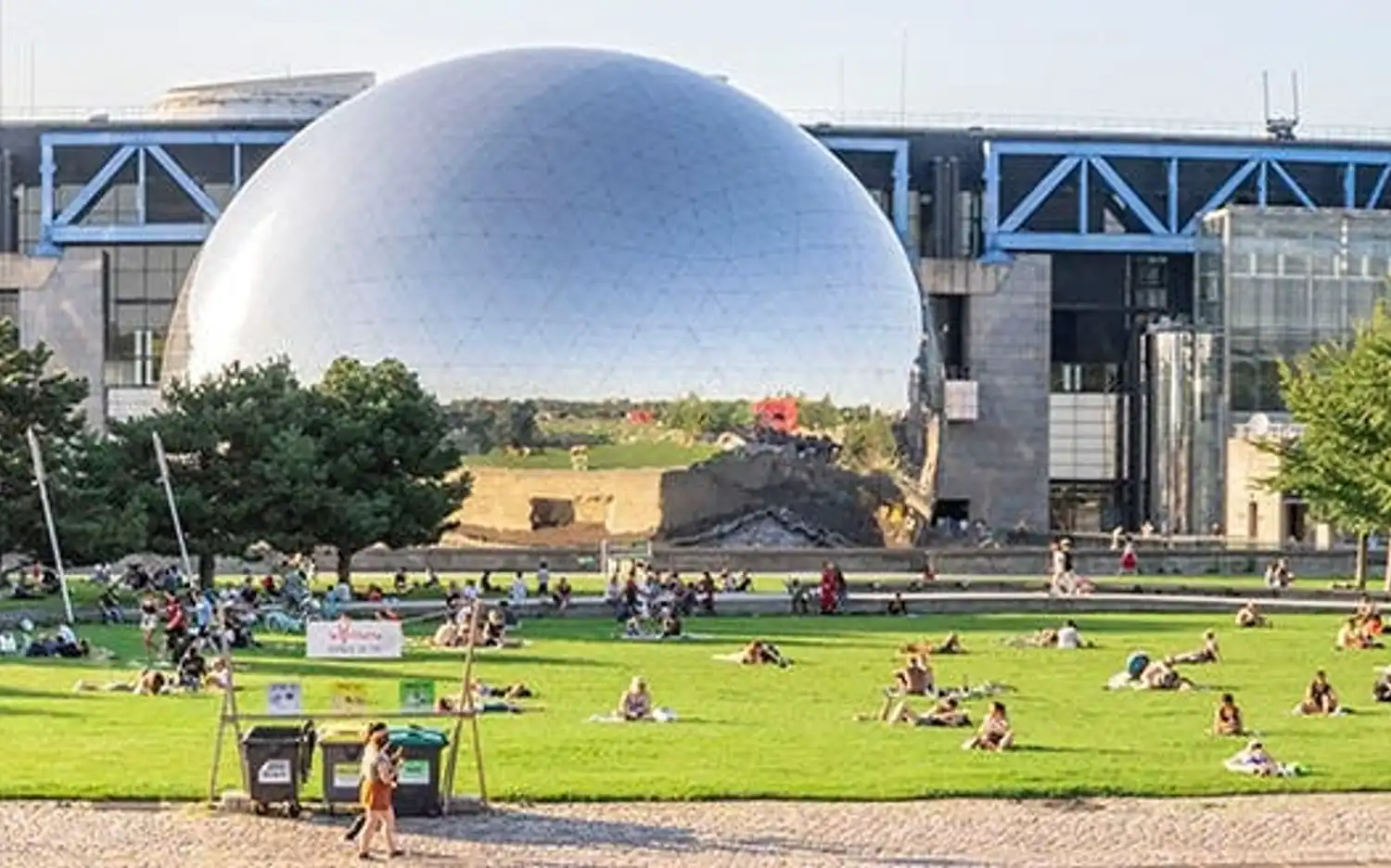
The architecture is a high-tech masterpiece that plays with the elemental themes of water and light. The main building, known as the Explora, is characterized by its massive blue steel trusses and grand bioclimatic glass walls, or les serres, which allow natural light to flood the cavernous interior. Surrounding the museum is a literal moat of water, reinforcing the building's identity as a detached, futuristic island of thought. Directly in front of the main entrance sits the iconic Géode, a breathtaking mirror-finished geodesic dome that reflects the Parisian sky and the surrounding greenery, housing one of the most immersive IMAX theaters in the world.
Inside, the atmosphere is electric with curiosity, blending the rigor of a research institution with the playful energy of an interactive playground. The permanent exhibition space, Explora, spans multiple levels, guiding visitors through the complexities of the universe, the mysteries of the human brain, and the mechanics of genetic engineering. For younger explorers, the Cité des Enfants provides a world-class hands-on experience, while history buffs can step aboard the Argonaute, a real 1950s military submarine docked just outside the main walls. It is a space where the clinical beauty of science meets a very human sense of wonder.
Beyond the exhibits, the museum functions as a vibrant social hub, seamlessly integrated into the cultural fabric of La Villette. Visitors often find themselves transitioning from the high-tech interior to the whimsical Follies—bright red architectural structures designed by Bernard Tschumi—that dot the surrounding park. Whether you are gazing at the stars in the state-of-the-art Planetarium or contemplating the sustainable future of the planet, the Cité des sciences offers a profound, multi-sensory journey that proves Paris is as much a city of the future as it is a city of the past.
While the Louvre captures the whispers of the past, the Cité des sciences et de l’industrie hums with the electric energy of what is to come, making it an essential pilgrimage for anyone seeking the pulse of modern Paris. It is a place where you don't just observe but participate in the unfolding story of human ingenuity, whether you are standing in the shadow of the pioneering Solar Impulse aircraft or decoding the future of intelligence in the E-lab. By transcending the traditional museum experience, it offers a vibrant, hands-on sanctuary where complex global challenges like the climate emergency are transformed into inspiring, interactive journeys of discovery.
Stepping into this colossal glass-and-steel cathedral of knowledge triggers an immediate sense of childlike wonder and intellectual awakening. Your journey is a multi-sensory odyssey: from the absolute immersion of 360-degree cosmic voyages in the Planetarium to the intimate, tactile thrill of navigating the cramped, authentic corridors of the Argonaute submarine. As you traverse the internal footbridges, the interplay of natural light and high-tech architecture creates an atmosphere of boundless possibility, grounding the abstract beauty of science in a deeply emotional and human experience.The Cité des sciences et de l'industrie is a breathtaking bridge to the future that proves Paris remains the world's most vibrant laboratory for imagination and innovation.
Avoiding the School Group Surge
Securing a timed-entry ticket online is the most effective way to bypass the primary entrance queues. Aim for an arrival right at the 10:00 opening on Tuesday through Friday to get ahead of the large school groups that typically populate the galleries by midday. If a morning visit isn't possible, the crowd density often thins out significantly after 15:00, providing a much calmer atmosphere for exploring the Cité des Enfants or the permanent exhibitions before the 18:00 closing time.
Twilight at the Geode and Glass Facades
The massive glass walls of the main building and the polished steel of the nearby Argonaute submarine create a unique environment for photography during the late afternoon. Catching the sun as it dips toward the horizon allows for dramatic reflections off the metallic Géode structure and the surrounding water features of the Parc de la Villette. Since the museum is closed on Mondays, visiting during the mid-week evening transition offers the best balance of soft, natural lighting for the exterior architecture and fewer pedestrians in your shots.
To make the most of your trip to the Cité des sciences et de l’industrie, you should budget at least three to four hours. The sheer scale of the building in Parc de la Villette can be overwhelming, so focusing your energy on the upper-level Explora exhibitions is the best way to see the heavy hitters without burning out.
Navigating the Glass Giant
For the smoothest start, use the main entrance at 30 Avenue Corentin Cariou. If you have already secured your tickets, head straight for the dedicated scan points to bypass the ticket windows. If you are traveling with children, remember that the Cité des Enfants often requires its own specific time slot, so check your booking carefully before you dive into the general galleries.
A Scientific Flight Path
The museum is closed on Mondays, January 1st, May 1st, and December 25th.
Special opening hours apply on Sundays when the venue remains open until 7:00 PM.
Early closures occur at 7:00 PM on December 24th and December 31st.
The Cité des sciences et de l’industrie is nestled within the sprawling, avant-garde Parc de la Villette in the 19th arrondissement, where the Ourcq Canal meets a hub of modern innovation. This landmark venue is exceptionally well-connected to the heart of Paris, offering seamless access through an array of efficient public transit links.
Complete your cultural itinerary with the 8 other top-rated exhibitions in Paris in 2026.
Explore the 8 other top-rated cultural attractions to visit in Paris in 2026.