Plumes Du Paradis
- Musée du quai Branly - Jacques Chirac, Paris
22 May - 8 Nov 2026
From€14.00
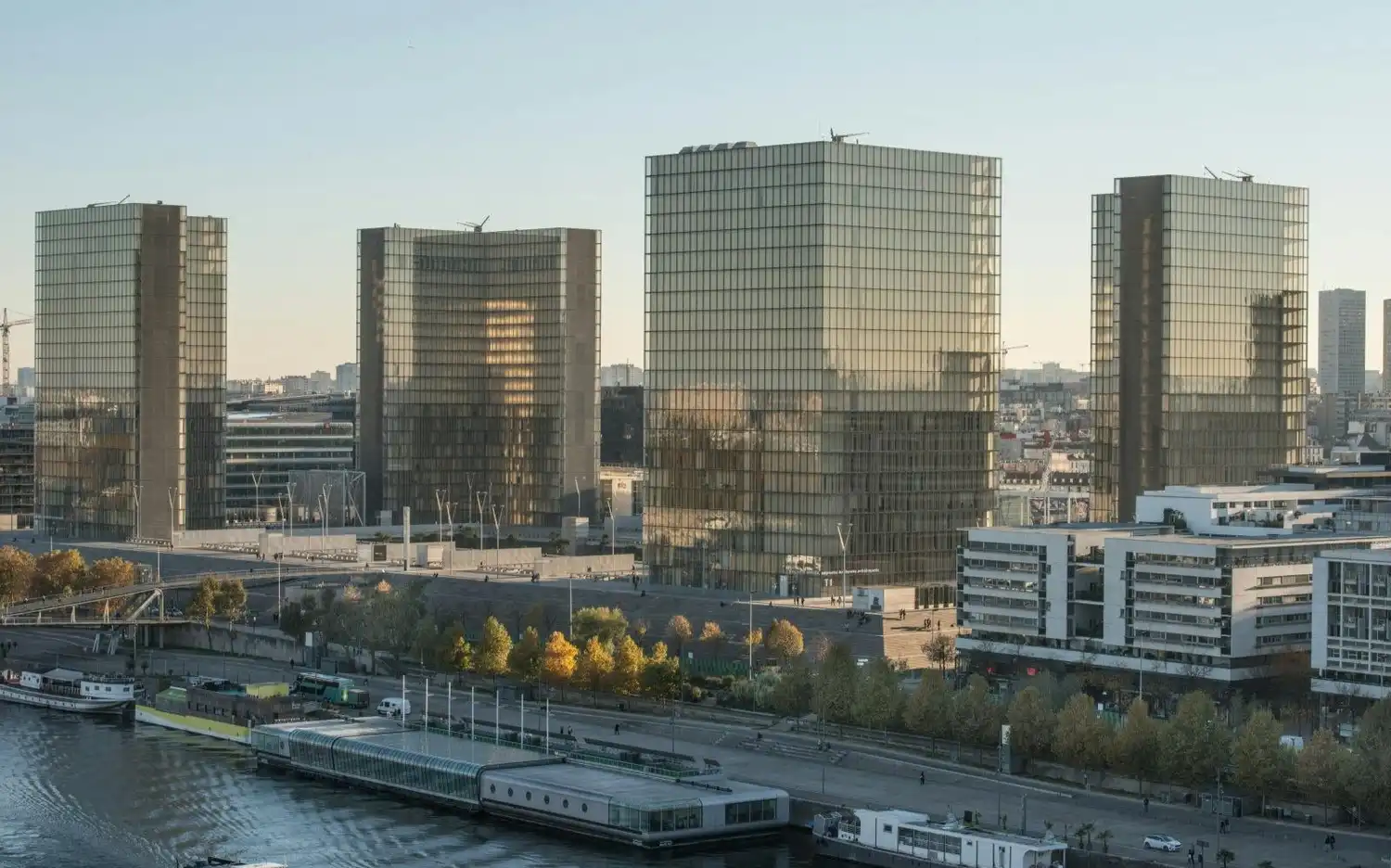
The Bibliothèque nationale de France (BnF) François-Mitterrand, also known as the Très Grande Bibliothèque, serves as the modern cornerstone of France’s national library system. Launched in 1988 by President François Mitterrand as one of his ambitious Grands Travaux, the site was designed to modernize and expand the repository for the nation’s cultural heritage. Opened in 1996, it functions as a legal deposit library, housing an astronomical collection of over 15 million books, manuscripts, and digital archives. It bridges the gap between the historic Richelieu site and a futuristic vision of information accessibility, symbolizing the democratization of knowledge in the heart of Paris's 13th arrondissement.
Architecturally, the venue is a masterpiece of minimalist modernism designed by Dominique Perrault. The most striking feature is its four L-shaped towers—named the Tower of Times, Tower of Laws, Tower of Numbers, and Tower of Letters—which are arranged at the corners of a massive, elevated esplanade. These 79-meter-high glass structures are designed to resemble open books, surrounding a lush, sunken forest garden of pines, oaks, and birches. This central garden is a "sanctuary" that is visually accessible from the reading rooms but remains physically untouched, creating a striking contrast between the rigid, industrial materials of steel and glass and the organic growth of nature.
The atmosphere at the BnF François-Mitterrand is one of quiet, monumental focus and contemplative retreat. Visitors entering from the open-air plaza find themselves in a world of vast proportions, where the use of exposed concrete, stainless steel, and doussié wood creates a sleek, intellectual environment. The Haut-de-Jardin level offers public reading rooms and exhibition spaces like the Hall des Globes, which houses the magnificent Coronelli Globes—giant 17th-century spheres gifted to Louis XIV. Below, the Rez-de-Jardin provides a more secluded setting for researchers, who work at desks overlooking the tranquil inner forest.
Beyond its role as a library, the site is a vibrant cultural hub that hosts rotating temporary exhibitions, conferences, and festivals. Whether exploring the Belvedere for a unique panorama of the Seine or attending a screening in its auditoriums, visitors experience a space that feels both institutional and avant-garde. The facility is highly accessible, featuring tactile paths and specialized services for visitors with disabilities, ensuring that this "temple of knowledge" remains a welcoming landmark for scholars and curious travelers alike.
A visit to the Bibliothèque nationale de France François-Mitterrand offers a departure from the Haussmannian aesthetic of central Paris, inviting you into a bold, futuristic vision of the city's eastern edge. Walking across the vast, weathered wood esplanade that overlooks the Seine, you feel the sheer scale of an architectural "temple" where the air is charged with the weight of millions of documents and the pulse of contemporary thought. Beyond being a mere repository of books, it is a thriving cultural crossroads where you can marvel at the celestial Coronelli Globes, explore avant-garde photographic galleries, or simply lose yourself in the silent, industrial beauty of a space designed to reflect the infinite nature of knowledge.
A Sanctuary of Glass and Greenery
The true soul of the BnF is found in the unexpected harmony between its cold, metallic structures and the wild, internal forest that thrives at its heart. As you descend into the reading levels, the city’s roar vanishes, replaced by a profound, monastic stillness that sharpens the senses and invites deep contemplation. There is a surreal, cinematic quality to watching the light shift across the glass book-towers while knowing that beneath your feet lies a hidden woodland sanctuary, making every moment spent here feel like a sophisticated retreat from the frantic pace of modern life.A journey to the BnF François-Mitterrand is an essential pilgrimage into a monumental landscape where the brilliance of human intellect meets the serene power of nature.
Morning Solitude in the Reading Rooms
Securing a seat in the Research Library or navigating the public exhibitions is most efficient immediately upon opening at 9:00 am, before the influx of students and researchers peaks. Mid-week visits on Tuesday or Thursday typically offer the most tranquil environment, as the site sees significantly higher foot traffic during the university semester on weekends. Early arrival ensures you bypass the bag check queues at the East and West towers, allowing for immediate access to the garden-level galleries or the upper-level study spaces.
Blue Hour Reflections on the Seine
Photographers should target the late afternoon or the hour just after sunset to witness the four glass "towers" of the library illuminate against the Parisian skyline. The architecture's massive glass facades create a striking interplay of light and shadow when viewed from the Quai François-Mitterrand, particularly during the transition from daylight to dusk. Positioning yourself on the Tolbiac Bridge during this time provides an unobstructed view of the river's reflection against the library's geometric profile.
Midday Sun through the Tolbiac Towers
Direct sunlight hits the interior sunken forest and the surrounding glass corridors most intensely between 11:00 am and 1:00 pm, providing natural illumination that reaches the lower levels. While this is the brightest time for viewing the central garden, it also coincides with the daily peak in visitor numbers, especially in the communal cafes and meeting areas. Choosing to visit the reading rooms during the late evening hours on weekdays can be a strategic alternative, as the library stays open until 8:00 pm, offering a quieter atmosphere for those focused on the permanent collections.
Navigating the immense Bibliothèque nationale de France (BnF) François-Mitterrand requires a bit of strategy to ensure you don't spend half your visit wandering the vast wooden esplanade. To truly appreciate both the architecture and the exhibits, I recommend budgeting at least two to three hours. This gives you ample time to clear security, explore the garden-level displays, and enjoy a coffee overlooking the central forest.
Strategic Entry Points
The library is anchored by four L-shaped towers, but for general visitors, your best bet is to aim for the West Entrance (near the Tolbiac bridge). This entrance is generally more intuitive for those arriving via Metro Line 14. Once you pass through the mandatory Security Check at the top of the esplanade, you’ll take the moving walkways down into the heart of the building.
A Curated Path Through the Towers
To see the highlights without feeling overwhelmed, try this logical flow:
Practical Essentials for Your Visit
Keep in mind that while the esplanade is public, it can be notoriously slippery when it rains, so watch your step on the wooden planks. If you plan to use the reading rooms for study, you'll need to purchase a Pass Lecture, but the general exhibition areas and the halls housing the globes are accessible with a standard entry or for free. If you get hungry, there are several cafes located on the garden level that offer a quiet place to sit with a view of the interior greenery.
The François-Mitterrand site is closed on public holidays, including January 1st, May 1st, and December 25th.
Exhibitions at this location are always closed on Mondays.
Free entry is available for all visitors to the public reading rooms every day from 5:00 pm to 8:00 pm.
Access to the exhibition spaces is free for visitors under the age of 18.
The library offers free site visits for children under the age of 12.
Located in the 13th arrondissement, the Bibliothèque nationale de France François-Mitterrand is a striking modern landmark overlooking the Seine, easily accessible via an extensive network of public transport.
Complete your cultural itinerary with the 10 other top-rated exhibitions in Paris in 2026.
Explore the 9 other top-rated cultural attractions to visit in Paris in 2026.