Plumes Du Paradis
- Musée du quai Branly - Jacques Chirac, Paris
22 May - 8 Nov 2026
From€14.00
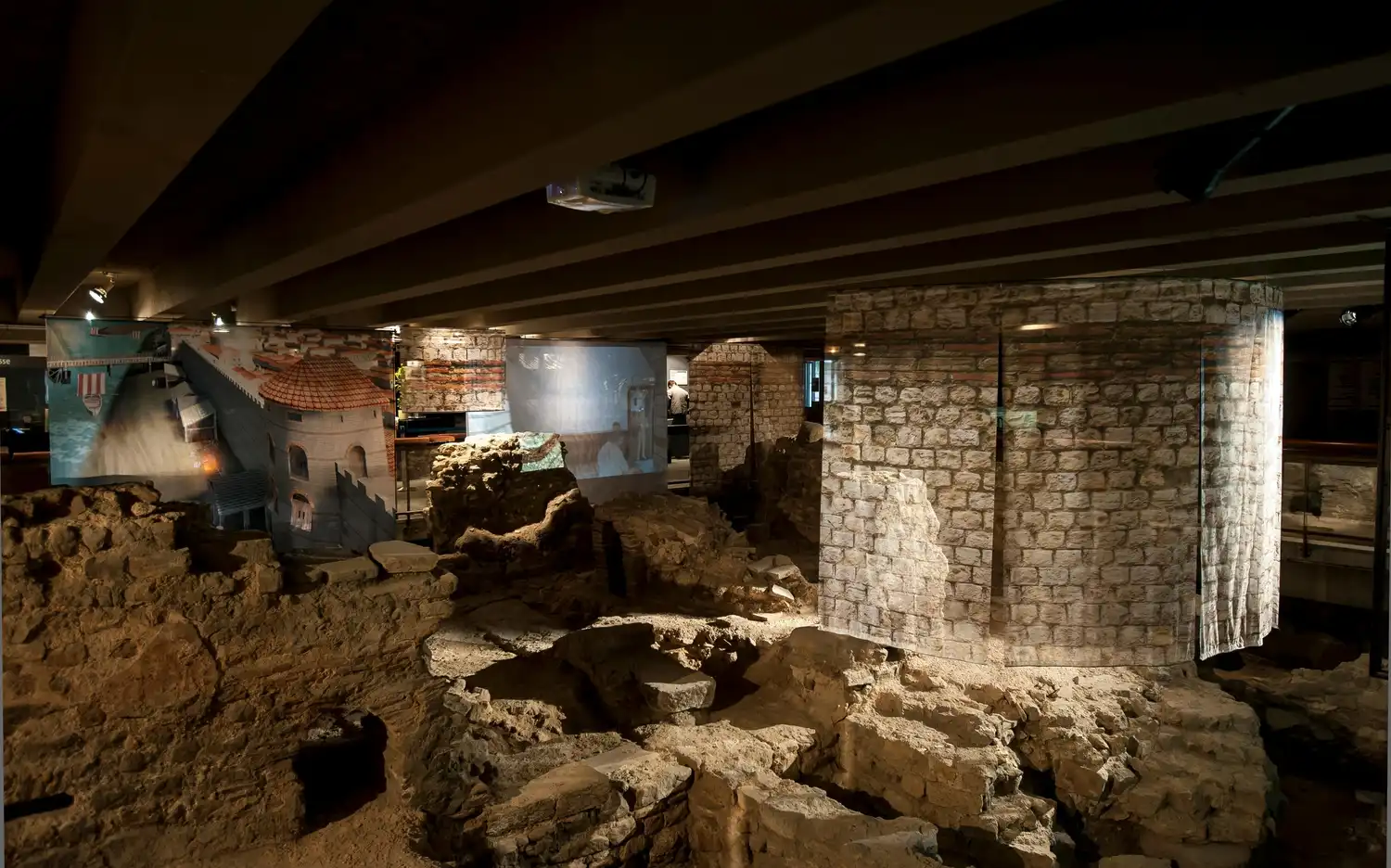
Tucked away beneath the bustling Parvis Notre-Dame, the Archaeological Crypt of the Île de la Cité offers a profound descent into the very foundations of Paris. Spanning over 2,000 years of urban evolution, this subterranean sanctuary was revealed almost by accident during the 1960s while the city prepared to build a parking garage. Today, it stands as one of the largest archaeological crypts in Europe, preserving a complex "historical lasagna" of ruins that reveal how the ancient settlement of Lutetia transformed into the modern capital of France.
Visitors are greeted by a hauntingly beautiful atmosphere of dim, directed lighting that emphasizes the rugged textures of antiquity. The most striking architectural features include the remains of the Gallo-Roman city wall, built in the early 4th century to defend against invasions, and a remarkably preserved Roman quay that once sat directly on the banks of the Seine. Architecture enthusiasts will be captivated by the ruins of public baths and the hypocaust system, an early marvel of Roman engineering that provided underfloor heating to the structures above, showcasing the sophisticated infrastructure of the ancient world.
As you wander along the 200-meter-long circuit, the narrative shifts from the Roman era into the medieval and early modern periods. You can trace the outlines of the Rue Neuve-Notre-Dame, a 12th-century thoroughfare used to transport stone for the construction of the cathedral, and view the foundations of the Hospice des Enfants-Trouvés (Hospice of Found Children). The experience is enriched by modern 3-D animations and interactive displays that overlay the ancient ruins with virtual reconstructions, allowing you to visualize the bustling docks and crowded streets of centuries past.
The atmosphere within the crypt is one of hushed reverence, providing a stark, cool contrast to the crowded square above. Walking through this "time machine," you feel the weight of the city's memory in the stone-mason marks and the remnants of Haussmannian sewers. It is a place where the grand architectural ambitions of different eras—from Roman bathhouses to medieval cellars—overlap in a single, immersive space, offering an essential perspective on the survival and constant reinvention of the historic heart of Paris.
To truly understand the beating heart of Paris, one must look beyond the soaring spires of Notre Dame and descend into the silent, stone-clad world that lies beneath its very feet. This isn't just a museum; it is the ultimate architectural palimpsest, where the frantic energy of the modern capital fades into a profound stillness. While millions walk across the parvis above, only a select few venture below to touch the raw, unvarnished origins of the city, standing in the exact spot where a small riverside settlement began its two-millennium journey toward becoming the cultural capital of the world.
Stepping into the crypt feels like crossing a hallowed threshold into another dimension. The air grows cool and heavy with the scent of ancient earth and damp stone, creating an immediate visceral connection to the generations who lived, worked, and prayed here long before the first stone of the cathedral was ever laid. There is a haunting beauty in the way the dim lighting catches the rugged textures of Roman masonry, making the past feel startlingly present. As you navigate the labyrinthine ruins, the distant, muffled vibrations of the city above serve as a rhythmic reminder of the unceasing passage of time, turning a simple sightseeing stop into a deeply moving meditation on survival and the eternal spirit of Paris.Descending into this subterranean sanctuary is a transformative pilgrimage that reveals the hidden, stony skeleton upon which the entire legend of Paris is built.
Morning Descent Beneath the Parvis
Arriving between 10:00 AM and 11:30 AM on Tuesday, Wednesday, or Thursday offers the most tranquil environment for navigating the narrow subterranean walkways. Since this site is tucked directly beneath the bustling Notre Dame plaza, it often remains overlooked by the massive tour groups congregating above until later in the afternoon. Securing an entry slot within the first ninety minutes of opening ensures you can observe the Lutetian ruins and medieval foundations without the echo of large crowds or significant wait times at the security screening.
Subtle Glow of the Lutetian Foundations
The artificial lighting within the crypt is designed to highlight the varying textures of Roman brickwork and stone masonry, creating a consistent visual experience regardless of the weather outside. While outdoor landmarks rely on the sun, these underground ruins are best viewed when the external light at the entrance is soft, making the transition into the dimly lit excavation site more comfortable for your eyes. Visiting during a mid-week morning ensures that the strategic spotlights and projected historical overlays are the primary focus, undisturbed by the shadows and movement of heavy visitor traffic.
Navigating the layers of history beneath Paris is a rewarding experience, but it requires a bit of logistical planning to get right. You should set aside approximately 60 to 90 minutes to fully explore the 200-meter-long route. While many tourists stand in long queues for the cathedral above, the entrance to the crypt is much simpler to find. Look for the staircase located at the far end of the Parvis Notre-Dame, near the Rue de la Cité. It is tucked away from the main crowd flow, making it a relatively quick transition from the surface to the ruins.
Mastering the Subterranean Circuit
To make the most of your time, follow a chronological path that allows the city's evolution to unfold naturally. The site is exceptionally well-organized with elevated walkways that keep you above the delicate masonry.
The Secret to a Smooth Entry
While the crypt is rarely as overwhelmed as the Louvre, it does have a strict capacity. The best strategy is to arrive roughly 15 minutes before your pre-booked time slot. Use the Main Entrance Staircase on the plaza; there is no secondary hidden gate, but having your digital ticket ready on your phone will save you time at the security checkpoint. If you are traveling with a Paris Museum Pass, you still need to secure a free time-slot reservation online to guarantee immediate access during peak hours. Be sure to check out the 3D animations located near the middle of the circuit; they offer a helpful visual bridge between the stone fragments and the buildings they once supported.
The venue is closed on January 1, May 1, and December 25, with exceptional closures on June 13 and June 14, 2026.
Public holiday openings include Ascension Day, Easter, May 8, July 14, August 15, November 1, and November 11.
Entry is free for all visitors under 18 years old and for EU residents under 26 years old.
Tucked beneath the historic Parvis Notre-Dame in the 4th arrondissement, the Archaeological Crypt of the Île de la Cité sits at the very heart of Paris, making it exceptionally accessible via the city's extensive transport network. Visitors can easily reach this subterranean treasure from either bank of the Seine, as it is surrounded by some of the most well-connected transit hubs in the capital.
Complete your cultural itinerary with the 10 other top-rated exhibitions in Paris in 2026.
Explore the 9 other top-rated cultural attractions to visit in Paris in 2026.