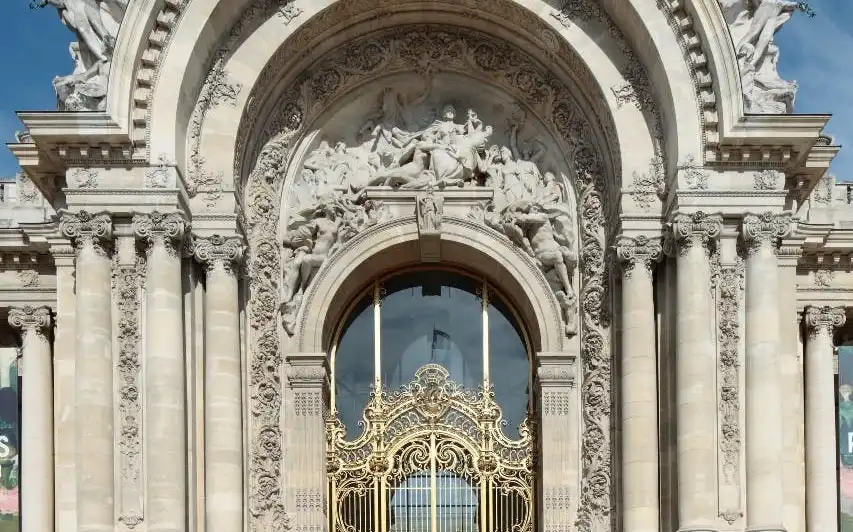
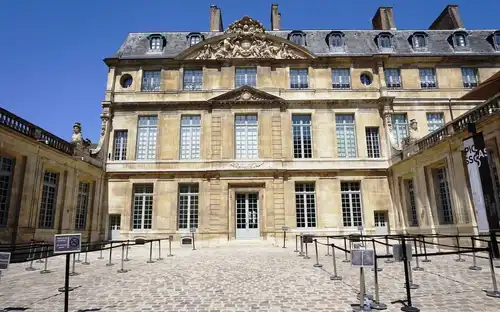
Grand arched entrance of Petit Palais with golden gates, carvings, and sculptures under a clear blue sky.

Petit Palais

  • Paris

Nestled near the Champs-Élysées, the Petit Palais is a Parisian architectural treasure housing a magnificent permanent collection of fine art paintings and sculptures. Its world-class exhibitions offer deep dives into diverse artistic movements, making it an essential destination for cultural explorers in Paris.

Self-portrait of Gustave Courbet with his black dog at the Artists’ Faces exhibition in the Petit Palais.

Artists’ Faces

  • Petit Palais, Paris
18 Mar - 19 Jul 2026
From€14.00

An intimate exploration of creative identity through the lens of profound portraiture.

Luminous plein-air landscape painting Bird Song by Károly Ferenczy on display at the Petit Palais in Paris.

Károly Ferenczy

  • Petit Palais, Paris
14 Apr - 6 Sep 2026
From€17.00

Experience the vibrant synthesis of naturalism and symbolism by the father of Hungarian Impressionism.

The Petit Palais, an architectural jewel of the Belle Époque, was originally constructed for the 1900 Universal Exhibition alongside its imposing neighbor, the Grand Palais. Designed by the renowned architect Charles Girault, it was envisioned as a permanent home for the Musée des Beaux-Arts de la Ville de Paris. Located on Avenue Winston Churchill, the building serves as a testament to early 20th-century Parisian grandeur, featuring a striking Beaux-Arts style that seamlessly blends traditional stone masonry with modern elements of the era. Its exterior is defined by a monumental grand porch, iconic Ionic columns, and a magnificent central dome that echoes the architectural language of Les Invalides across the Seine.

Stepping inside, visitors are immediately greeted by an atmosphere of light and opulence. The museum’s layout is centered around an exquisite octi-circular courtyard and a lush inner garden, which flood the galleries with natural light through expansive windows and skylights. This central peristyle is a masterpiece in its own right, adorned with vibrant frescoes by Paul Albert Baudouin and intricate mosaics that line the floor and courtyard ponds. The interior decoration was a labor of love that spanned decades, featuring decorative murals by masters such as Albert Besnard, Maurice Denis, and Fernand Cormon, whose works transform the hallways and galleries into immersive artistic environments.

The collections within the Petit Palais offer a rich historical journey from antiquity through the turn of the 20th century. Highlights include the Dutuit Collection, which showcases pre-modern treasures ranging from ancient Greek pottery to Flemish and Dutch paintings by Rembrandt and Rubens. However, the museum is perhaps most celebrated for its deep holdings of 19th-century French art. Visitors can admire landmark works by Gustave Courbet, Paul Cézanne, Claude Monet, and Auguste Rodin. A particularly poignant piece is the portrait of Sarah Bernhardt by Georges Clairin, which presides over the galleries with theatrical flair, embodying the artistic spirit of the era.

Today, the Petit Palais remains one of Paris's most inviting cultural escapes, partly due to the fact that its permanent collection is free to the public. The experience is best rounded out by a visit to the garden café, tucked away behind the tall grasses of the inner courtyard. Here, under the shade of the colonnade, one can enjoy the quiet serenity that André Chamson once envisioned as a place of rest and contemplation. This blend of world-class fine arts, masterful architecture, and a tranquil garden atmosphere makes the Petit Palais an essential destination for any traveler seeking the true heart of Parisian culture.

Highlights

  • The Grand Entrance features a massive golden portal designed by Charles Girault that serves as one of the most breathtaking gateways in Paris.
  • The Hall of Mirrors and surrounding galleries are flooded with natural light and house masterpieces spanning from Antiquity to the early 20th century.
  • A lush Inner Garden offers a peaceful oasis with tropical plants, blue and gold mosaic pools, and a charming peristyle decorated with frescoes.
  • The museum's floors are covered in intricate Mosaic Floors crafted by the Italian master Giandomenico Facchina.
  • Notable masterpieces include Rembrandt's Self-Portrait with a Dog, which is a centerpiece of the museum's significant Dutch collection.
  • The collection of 19th-century French art boasts major works such as Monet's Sunset on the Seine at Lavacourt and several renowned paintings by Gustave Courbet.
  • The 1900s Collection highlights the Art Nouveau movement with exquisite jewelry by Lalique and a complete dining room designed by Hector Guimard.

Must-Dos

  • Trace the swirling organic patterns of the Art Nouveau wrought ironwork found along the building's elegant staircases.
  • Pause at a large gallery window to observe how the natural light creates rhythmic shadows across the polished surfaces and artworks.
  • Seek out the whimsical miniature statues hidden throughout the galleries to enjoy a self-guided scavenger hunt of the collection’s small-scale treasures.
  • Settle onto a sculptural gallery bench to transition from a rushed walk to a moment of deep contemplation in front of your favorite painting.
  • Look up to appreciate the soaring neoclassical columns and decorative iron framework that blend traditional aesthetics with turn-of-the-century engineering.
  • Visit the museum's cafe area for a quiet respite where you can reflect on the Belle Époque architecture while overlooking the courtyard views.

Guidelines

  • All visitors must undergo a security screening and pass through metal detectors before entering the museum.
  • Large items such as suitcases, heavy backpacks, and umbrellas must be stored in the cloakroom.
  • Casual photography for personal use is permitted provided that the flash, tripods, and selfie sticks remain turned off and put away.
  • Eating and drinking are strictly prohibited within the exhibition galleries to ensure the preservation of the artwork.
  • Visitors are required to maintain a safe distance from all masterpieces and must not touch the artworks or their frames.
  • Smoking and the use of electronic cigarettes or vaping devices are not allowed anywhere inside the building.
  • Children must remain under the constant supervision of an adult throughout the duration of their visit.

Tips

  • Visit the Petit Palais to explore its permanent collections, which are completely free for all visitors to enjoy throughout the year.
  • Plan your arrival for the morning or a weekday to avoid the larger crowds that typically gather on weekends or during special exhibitions.
  • Take a moment to relax in the charming interior garden and café, a peaceful hidden oasis perfect for a quiet break during your visit.
  • If you are a European Union resident under 26, remember that you have free access to most museums and exhibitions regardless of the day.
  • Double-check the museum's website before you go, as the first Sunday of every month often grants free entry to national museums, which can lead to higher attendance.
  • Wear comfortable shoes for your visit, as the expansive halls and detailed galleries require a significant amount of walking.

Why Visit

While the nearby Louvre commands the world's attention, the Petit Palais offers a far more intimate and sophisticated Parisian encounter that feels like discovering a well-kept secret. Beyond its magnificent golden portal, you are invited to explore a curated world where the crowds vanish, replaced by the ethereal glow of the Hall of Mirrors. It is a rare sanctuary where you can stand mere inches from a Rembrandt masterpiece or a Monet sunset without a velvet rope in sight, all while enjoying the luxury of a collection that remains entirely free to the public.

Stepping into the octi-circular courtyard is like entering a living dream, where the scent of tropical plants mingles with the sight of blue and gold mosaic pools. As you trace the swirling organic patterns of Art Nouveau ironwork, the museum transitions from a mere building into a sensory journey through the Belle Époque. Whether you are losing yourself in the intricate frescoes of the peristyle or enjoying a quiet espresso in the garden cafe, the Petit Palais provides a profound emotional connection to the heart of Parisian culture that grander, busier landmarks simply cannot replicate.The Petit Palais is the ultimate Parisian masterpiece, harmonizing world-class fine arts with a tranquil garden oasis to create an experience that nourishes the soul as much as the eyes.

When to Visit

Mid-Week Morning Solitude

Arriving right as the doors open at 10:00 AM on Tuesday, Wednesday, or Thursday is the most effective way to bypass the groups that congregate later in the day. These midweek slots typically see significantly fewer visitors than weekend afternoons, providing a window where you can often have entire wings of the permanent collection to yourself. Aiming for the period between 10:00 AM and 1:00 PM allows for an unhurried pace before the lunch-hour rush and school groups begin to fill the galleries.

Late Afternoon Interior Glow

Choosing to visit during the final two hours before the 6:00 PM closing time, particularly on weekdays, offers a distinct advantage as the earlier crowds start to thin out. This timing is especially strategic on Fridays when the museum extends its hours, allowing for even more breathing room in the evening. As the sun begins to dip, the natural light filtering through the large windows and glass elements creates a softer, more intimate atmosphere that highlights the intricate textures of the Belle Époque architecture and sculptures.

How to Visit

Navigating the Petit Palais is a delight because it offers a high-reward experience without the high-stress logistics of its neighbors. To truly soak it all in, budget about two hours for the permanent collection and a coffee break. If you are adding a temporary exhibition, add another hour. Most visitors enter via the main golden gate on Avenue Winston Churchill, but if you have a stroller or use a wheelchair, head to the ground floor entrance just to the right of the main staircase for easier access.

Masterful Maneuvering Through the Wings

The layout is a horseshoe, which makes a clockwise route the most intuitive way to see the evolution of art.

  • Start in the basement to view the Classical World and Middle Ages collections; it is a bit darker here, but it sets the stage for the light-filled galleries above.
  • Head upstairs to the North Wing to dive into the 17th Century Dutch and Flemish masters, then move through the 18th Century rooms filled with ornate furniture and tapestries.
  • Continue through the large galleries to find the 19th Century French paintings, where you can find works by Monet and Courbet.
  • Finish your indoor loop at the Paris 1900 section to admire the height of Art Nouveau craftsmanship.

The Garden Gateway to Relaxation

Once you have had your fill of the galleries, do not just head for the exit. The heart of the building is the semi-circular courtyard. It is the perfect place to decompress. You can walk through the frescoed peristyle and then grab a seat at the garden cafe for a quick espresso. It is a fantastic way to transition back to the bustle of the city while remaining surrounded by Belle Époque architecture.

Schedules

Opening Hours

  • The Petit Palais is open from Tuesday to Sunday from 10:00 AM to 6:00 PM.
  • On Fridays and Saturdays, the museum offers late-night hours until 8:00 PM for temporary exhibitions.
  • The last entry to the collections is permitted until 5:15 PM before the galleries begin closing.
  • The venue is strictly closed to the public every Monday and on select major holidays.

Special Days

Access to the permanent collections is completely free for all visitors and does not require a reservation.

The museum is closed every Monday and on public holidays including January 1st, May 1st, July 14th, and December 25th.

Extended late-night hours are available until 8 PM on Fridays and Saturdays for temporary exhibitions only.

How to get there

Located in the heart of the 8th arrondissement on the prestigious Avenue Winston Churchill, the Petit Palais sits elegantly between the Champs-Élysées and the Seine, offering exceptional accessibility from across the city. This architectural masterpiece is easily reached via Paris’s efficient public transit network, ensuring a seamless arrival for art enthusiasts.

  • Metro: Lines 1 and 13 stop at Champs-Élysées - Clemenceau, while Line 9 serves Franklin D. Roosevelt, both placing you just a short stroll from the museum entrance.
  • RER: Take Line C to Invalides, located just across the Pont Alexandre III, providing a scenic walk toward the venue.
  • Bus: Multiple routes including lines 28, 42, 72, 73, 80, 83, and 93 stop at Grand Palais or Champs-Élysées - Clemenceau, offering direct access to the museum's vicinity.
  • Batobus: For a riverside arrival, the Place de la Concorde stop is a beautiful 10-minute walk along the Seine to the museum.
Directions

Frequently Asked Questions about Petit Palais

Access to the permanent collection of the Musee des Beaux-Arts is completely free for all visitors, making it one of the most accessible cultural spots near the Champs-Elysees.
Yes, the museum provides free self-service lockers and a cloakroom where you can leave coats and small bags, though large suitcases and bulky items are not permitted due to security regulations.
The Petit Palais is fully accessible, featuring ramps at the main entrance on Avenue Winston Churchill and elevators to help visitors navigate the different levels of Belle Epoque architecture.
While the permanent collection is free, temporary art exhibitions usually require a paid ticket. It is highly recommended to book these in advance online to secure your preferred time slot and avoid long queues.
The most iconic photo locations include the monumental golden gate at the grand porch entrance and the semi-circular peristyle overlooking the lush inner garden and its mosaic-lined ponds.
Yes, the garden café is located within the interior courtyard and can be accessed by all visitors. It's a perfect spot to enjoy 'rest and contemplation' under the shade of the historic colonnade.
The building was designed by the acclaimed architect Charles Girault, who won a competition to create a permanent home for the Fine Arts Museum of Paris, showcasing a masterclass in Beaux-Arts style.
The museum offers various guided tours and audio guides that detail the history of the 19th-century French art collection and the magnificent decorative murals painted by masters like Maurice Denis.
Don't miss the portrait of 'Sarah Bernhardt' by Georges Clairin, landmark paintings by Claude Monet and Gustave Courbet, and the exquisite sculptures by Auguste Rodin.
Recommended
Vibrant satirical photography by Martin Parr exploring global tourism and consumerism at the Jeu de Paume gallery.
Stark black-and-white landscape photography captures the silent aftermath of South African conflict and memory.
Recommended
Mummified human remains and funerary objects in a modern, respectfully lit gallery at the Musee de l'Homme.
Vibrant street performers and colorful Holi festival celebrations at the historic Jardin d'Acclimatation in Paris.
Crowd at Jardin d'Acclimatation celebrating Holi with a vibrant explosion of colorful powders in the Parisian sky.
Archaeological artifacts from the Seine riverbed displayed in the underground crypt beneath Notre-Dame cathedral.
Sculptures of 20th-century conflict in the modernist Ateliers-musee Chana Orloff gallery in Paris.
Recommended
Digital art projections of Da Vinci and Michelangelo masterpieces illuminate a large immersive gallery space.
A selection of delicate pencil and pastel sketches by Pierre-Auguste Renoir displayed in a gallery.
Antique Korean beauty accessories and traditional paintings displayed in a modern museum gallery at Musée Guimet.
Vibrant interactive garden chapter at Cité des sciences featuring lush plants and sensory science displays.
Recommended
Elegant 18th-century gowns and contemporary couture on display in a grand gallery at Palais Galliera.
Recommended
Visitors walk among sculptures in the vaulted glass hall of Musée d'Orsay, with others seated on benches.
4 exhibitions

Musée d'Orsay

  • Paris

Breathtaking Impressionist masterpieces housed within the timeless elegance of a magnificent Parisian station.

Recommended
Modern curved glass and metal Fondation Louis Vuitton building under a blue sky with trees and parked cars.
1 exhibition

Fondation Louis Vuitton

  • Paris

Where avant-garde art meets Frank Gehry’s breathtaking glass sails in the heart of Paris.

Recommended
Grand mansion at Musée Rodin viewed through manicured gardens with a central pond, statues, and trimmed bushes.
1 exhibition

Musée Rodin Paris

  • Paris

A historic mansion sanctuary where Rodin’s emotive masterpieces breathe amidst rose-filled gardens.

Recommended
Ornate stone Musée de l'Orangerie entrance with large columns and one person standing near the doorway.
2 exhibitions

Musée de l'Orangerie

  • Paris

A luminous sanctuary where Monets panoramic Water Lilies bloom in timeless Impressionist light.

Recommended
Grand neoclassical Palais Garnier with golden statues and a French flag under a blue sky.
1 exhibition

Palais Garnier

  • Paris

A breathtaking masterpiece of nineteenth-century opulence and legendary Parisian high culture.

Recommended
Vibrant abstract projections from the Kandinsky exhibition at the Atelier des Lumières digital art center.
1 exhibition

Atelier des Lumières

  • Paris

Masterpieces come alive through immersive light and sound in a historic Parisian foundry.

Recommended
Intricate metal framework of a large glass dome casting shadows on a mural of historical and mythical scenes.
1 exhibition

Bourse de Commerce - Pinault Collection

  • Paris

A sanctuary of contemporary masterpieces housed within a masterfully restored historic dome.

Neoclassical building with tall columns, large windows, outdoor seating, and a statue holding a spear.
2 exhibitions

Musée d'Art Moderne de Paris

  • Paris

A sanctuary of avant-garde masterpieces and evolving contemporary narratives in the heart of Paris.

Historic courtyard at Musée de l'Armée with arched windows and a golden-domed building under a partly cloudy sky.
1 exhibition

Musée de l'Armée & Napoleon's Tomb

  • Paris

France's storied military legacy rests beneath a majestic golden dome of timeless architectural grandeur.

Grand building with arched windows, statues, and a central fountain, surrounded by lawns and city buildings.
2 exhibitions

Palais Galliera

  • Paris

A grand Renaissance palace enshrining the timeless evolution of French fashion and contemporary artistry.

Exhibit wall with multilingual text about Georges Méliès, surrounded by framed portraits and illustrations.
1 exhibition

La Cinémathèque Française

  • Paris

A stunning Frank Gehry masterpiece housing the world's most prestigious collection of cinematic treasures.

Elegant stone mansion with arched doorways and a columned entrance, set within a manicured courtyard.
1 exhibition

Musée Jacquemart-André

  • Paris

An opulent Haussmann-era mansion housing one of the city's most prestigious private art collections.