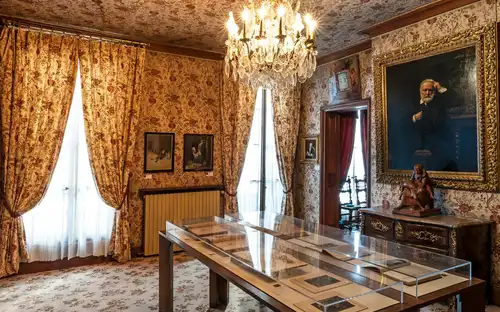
The Musee du Parfum in Paris showcases historic artifacts and the intricate art of French fragrance making.

Perfume Museum

  • Paris

Located in the heart of Paris near the Opéra Garnier, the Musée du Parfum offers an immersive journey through the art of fragrance, from the technical mastery of extraction to the secrets of legendary noses. These exhibitions showcase a prestigious collection of ancient artifacts, tracing olfactory history from the flasks of Ancient Egypt to the ornate pomanders of the 20th century.

Nestled in the heart of the 9th arrondissement, the Musée du Parfum Fragonard offers an olfactory journey that is as much a tribute to French heritage as it is to the art of scent. Housed in a stunning Napoleon III-style townhouse built in 1860, the museum stands just a stone's throw from the iconic Opéra Garnier. This historic site has lived many lives—from an oriental-style theater to a bicycle velodrome and a British furniture store—before the family-run Maison Fragonard, founded in Grasse in 1926, transformed it into a cultural sanctuary. The atmosphere inside is one of refined elegance, where the air is perpetually filled with the delicate notes of orange blossom and jasmine, inviting visitors to step away from the bustling Parisian streets into a world of sensory discovery.

The museum’s architecture and interior design are masterpieces of 19th-century preservation, featuring magnificent ceiling moldings, period furnishings, and grand chandeliers that reflect the opulence of the era. One of the most striking artistic features is the Perfume Organ, a tiered display of over 200 essences used by master "noses" to compose fragrances. This "organ" serves as a visual representation of the complexity behind perfumery. As you wander through the levels of the museum, you transition from the industrial spirit of the Stills Room, which showcases 20th-century copper distillation equipment, to the intimate galleries that house the Jean-François Costa collection. This world-unique assemblage of artifacts includes everything from Ancient Egyptian kohl pots to precious Fabergé flasks, illustrating the evolution of perfume as a sacred ritual and a luxury commodity.

A visit to the Musée du Parfum is a multisensory experience that blends education with interactivity. Guests are guided through the technical secrets of the trade—from the harvesting of raw materials to the delicate chemistry of extraction and bottling. The Olfaction Room provides a modern contrast to the historical galleries, challenging visitors to refine their own senses through interactive maps and scent challenges. For those seeking a deeper connection to the craft, the Perfumer’s Apprentice Workshop offers a rare opportunity to step into the shoes of a "nose" and create a personalized fragrance. The journey concludes in the museum’s elegant boutique, where the legacy of French savoir-faire is bottled and ready to be taken home, ensuring that the memory of this unique Parisian destination lingers long after you leave.

Highlights

  • Explore an exceptional collection of Ancient Perfume Bottles that retrace the history of fragrance from Ancient Egypt to the 20th century.
  • Step into the Stills Room to experience the atmosphere of an early 20th-century perfume factory filled with copper distillation equipment.
  • Admire rare artifacts like the Fabergé Bottle, a masterpiece made of smoked quartz, gold, diamonds, and sapphires.
  • Discover the secrets of the Manufacturing Process by following the journey of scent from raw material extraction to the art of bottling.
  • Learn about the creative genius of the Master Noses and the technical mastery required to compose legendary fragrances.
  • Engage your senses in the Olfaction Room where you can participate in olfactory challenges to refine your sense of smell.
  • Marvel at the museum's setting within a stunning Napoleon III-style Townhouse built in 1860 near the Opéra Garnier.

Must-Dos

  • Join a free guided tour to hear expert storytellers share the history of the Fragonard family and the evolution of Grasse's perfume industry.
  • Test your intuition by identifying different floral and fruity accords hidden within the museum's interactive scent displays.
  • Browse the boutique section to sample a wide variety of fragrances and find exclusive scents only available at this historic location.
  • Take a moment to appreciate the intricate ceiling moldings and period chandeliers that reflect the elegance of nineteenth-century French society.
  • Select a perfumed pebble soap from the gift shop to bring home a piece of the museum's signature artisanal craftsmanship.
  • Inquire about joining a specialized workshop where you can try your hand at basic blending techniques under professional guidance.

Guidelines

  • All visitors must undergo a security inspection of all bags, backpacks, and camera cases before entering the museum.
  • Please ensure that proper attire, including shirts and shoes, is worn at all times during your visit.
  • To preserve the artifacts, visitors are strictly prohibited from touching any of the exhibits or displays.
  • You are welcome to take photos for personal use using a hand-held camera, but the use of flash is prohibited.
  • The use of selfie sticks, tripods, monopods, or any other camera-extension devices is not permitted inside the museum.
  • While personal wheelchairs and electric assistance scooters are welcome, upright Segway scooters are not allowed on the property.
  • Please note that pets are not permitted, although service animals that are twelve months or older and leashed are welcome.

Tips

  • Arrive right when the doors open at 10:00 AM on a weekday to enjoy the olfactory exhibits before the afternoon crowds and school groups arrive.
  • Plan your visit for Tuesday through Friday during the last two hours before closing to experience the museum in a more serene and relaxed environment.
  • While the museum is located at 9 Rue Scribe, consider exploring the surrounding area of the Opéra Garnier before or after your fragrance journey.
  • Take advantage of the museum's free admission to spend extra time in the Stills Room or admiring the collection of Ancient Perfume Bottles.
  • Check the schedule for the perfume-making workshop in advance if you want to design your own signature scent to take home as a personalized souvenir.
  • If you are a member, look for early-access perks that may allow you to enter an hour before the general public to avoid the usual morning rush.

Why Visit

The Perfume Museum is an essential Parisian stop that transcends the typical museum visit by offering a rare, behind-the-scenes look at the world’s most glamorous industry. Beyond the breathtaking 19th-century architecture, you have the chance to witness the evolution of luxury through artifacts like the diamond-encrusted Fabergé Bottle and massive copper stills that look like something out of a steampunk fantasy. It is one of the few places in the city where you can engage in a free guided tour that feels truly personal, revealing the clandestine methods of Master Noses who spend years perfecting a single scent. For those looking to do more than just observe, the opportunity to join a specialized workshop and test your own olfactory intuition transforms a simple afternoon into a masterclass in French savoir-faire.

Stepping into the museum is like entering a living, breathing sensory odyssey where every breath tells a story. The air doesn't just carry a fragrance; it carries the emotional weight of three millennia of history, from the sacred rituals of Ancient Egypt to the opulent courts of Versailles. In the Olfaction Room, the experience becomes deeply personal as you encounter interactive displays that challenge you to unmask hidden accords and rediscover memories long forgotten through the power of scent. It is a profoundly moving experience that shifts your perspective, making you realize that a perfume is not merely a cosmetic, but a liquid masterpiece designed to capture the very essence of the human soul.The Perfume Museum is a transformative sanctuary of elegance where the invisible art of fragrance becomes a tangible, unforgettable journey into the heart of French identity.

When to Visit

Avoiding the Mid-Day Scent Rush

Stepping through the doors at exactly 10:00 AM on a Tuesday or Wednesday remains the most effective way to navigate the 19th-century townhouse before tour groups arrive. Arriving during this early window provides clear access to the interactive olfactory displays and the Stills Room without the competing noise of large crowds. If a morning visit is not feasible, entering between 5:00 PM and 6:00 PM on a weekday allows you to explore the final galleries in a more serene environment as the daytime foot traffic dissipates.

Optimal Luminescence for Ancient Artifacts

Planning your walk through the ancient perfume bottle collection during the late afternoon ensures you see the displays under the museum's carefully controlled artificial lighting. Because many of the most fragile artifacts are kept in low-light environments of roughly 50 lux to prevent degradation, visiting during the quieter hours of Tuesday through Friday allows your eyes to better adjust to the dim, atmospheric lighting. This deliberate lighting scheme is designed to highlight the intricate details of Egyptian kohl pots and 18th-century flasks, which are best appreciated when the surrounding galleries are at their least crowded.

How to Visit

Finding this elegant spot is easy once you know where to look. Head to 9 Rue Scribe in the 9th arrondissement; the entrance is tucked into a beautiful 19th-century townhouse right near the Opéra Garnier. Because admission is free and there is no need for a complex ticketing process, you can usually walk right in after a quick security bag check.

Mapping Out Your Scented Route

To make the most of your visit, I recommend budgeting about 60 to 90 minutes. This gives you enough time to move through the rooms without feeling rushed, especially if you decide to linger over the historic collections. A smart way to navigate the space is as follows:

  • Start on the upper floors to view the Ancient Perfume Bottles collection, moving chronologically from antiquity to the modern era.
  • Descend into the Stills Room to see the massive copper equipment used for traditional extraction.
  • Finish your journey in the Olfaction Room, where you can engage with the interactive displays.

The Art of the Perfect Visit

While the museum is compact, it is rich with detail. If you are interested in the technical side of things, keep an eye out for the Perfumer's Organ, a specialized desk that shows how hundreds of essences are arranged for a creator to use. After you have explored the galleries, the route naturally leads to the boutique area. This is a great place to rest your nose and perhaps find a soap or fragrance to take home, as the staff here are incredibly knowledgeable about the specific notes in each Fragonard creation.

Schedules

Opening Hours

  • The Perfume Museum in Paris is open daily from 10:00 AM to 7:00 PM.
  • The last entry for visitors is allowed until 6:00 PM, which is one hour before the venue closes.

Special Days

The museum is closed annually on May 1st for the Labor Day public holiday.

General admission and guided tours are free of charge for all visitors every day.

The venue remains open during regular hours on most other public holidays throughout the year.

How to get there

Nestled in the heart of the elegant 9th arrondissement, the Musée du Parfum Fragonard is housed in a stunning 19th-century townhouse just steps away from the iconic Opéra Garnier. This central location makes it exceptionally easy to reach from anywhere in Paris via a wide array of public transit links.

  • Metro: Take lines 3, 7, or 8 to Opéra, line 9 to Havre-Caumartin, or lines 12 and 14 to Madeleine.
  • RER: Lines A and E both serve the area, with the closest stops being Auber (RER A) and Haussmann Saint-Lazare (RER E).
  • Bus: Numerous lines stop in the immediate vicinity, including routes 21, 22, 27, 52, 53, 66, 68, 81, and 95.
Directions

Frequently Asked Questions about Perfume Museum

For security and preservation reasons, the Perfume Museum does not have a cloakroom for large suitcases or travel gear. Visitors are encouraged to use luggage storage lockers at nearby 'Saint-Lazare' or 'Opera' stations before starting their olfactory journey.
While the museum is housed in a historic 1860 townhouse with multiple levels, strollers are generally permitted but may be difficult to navigate through some galleries. It is often more convenient to leave them in the designated area near the entrance to fully enjoy the perfume exhibitions.
The most iconic locations for photography are the 'Perfume Organ' with its 200 essences and the 'Stills Room' featuring vintage copper equipment. The grand 19th-century chandeliers and intricate ceiling moldings also provide a stunning backdrop of French savoir-faire.
Yes, to participate in the 'Perfumer’s Apprentice Workshop' and create your own scent, advanced booking is essential. This 90-minute experience is a deep dive into perfume making and often sells out quickly due to its popularity among travelers.
The museum is located within a protected historical townhouse and includes several staircases. While efforts have been made to accommodate visitors, some parts of the fragrance history collection may have limited accessibility; it is recommended to contact the museum staff before your visit.
Absolutely, the elegant boutique showcasing the Fragonard perfume collection and French heritage products is open to the public. You can shop for signature scents like orange blossom and jasmine without completing the full museum tour.
Yes, the modern 'Olfaction Room' features interactive maps and sensory discovery games designed to engage younger visitors. These interactive perfume exhibitions help children understand the technical mastery of extraction in a fun, educational way.
Personal photography is encouraged throughout the olfactory journey, but the use of tripods, professional lighting, or flash is prohibited to protect the delicate Jean-François Costa collection and ensure a smooth flow for other guests.
To experience the refined elegance of the townhouse in a quieter atmosphere, plan your visit for a weekday morning right at opening. This allows you to explore the evolution of fragrance from Ancient Egypt to the 20th century without the afternoon rush.
Recommended
Vibrant satirical photography by Martin Parr exploring global tourism and consumerism at the Jeu de Paume gallery.
Stark black-and-white landscape photography captures the silent aftermath of South African conflict and memory.
Recommended
Mummified human remains and funerary objects in a modern, respectfully lit gallery at the Musee de l'Homme.
Vibrant street performers and colorful Holi festival celebrations at the historic Jardin d'Acclimatation in Paris.
Crowd at Jardin d'Acclimatation celebrating Holi with a vibrant explosion of colorful powders in the Parisian sky.
Archaeological artifacts from the Seine riverbed displayed in the underground crypt beneath Notre-Dame cathedral.
Sculptures of 20th-century conflict in the modernist Ateliers-musee Chana Orloff gallery in Paris.
Recommended
Digital art projections of Da Vinci and Michelangelo masterpieces illuminate a large immersive gallery space.
A selection of delicate pencil and pastel sketches by Pierre-Auguste Renoir displayed in a gallery.
Antique Korean beauty accessories and traditional paintings displayed in a modern museum gallery at Musée Guimet.
Vibrant interactive garden chapter at Cité des sciences featuring lush plants and sensory science displays.
Recommended
Elegant 18th-century gowns and contemporary couture on display in a grand gallery at Palais Galliera.
Recommended
Visitors walk among sculptures in the vaulted glass hall of Musée d'Orsay, with others seated on benches.
4 exhibitions

Musée d'Orsay

  • Paris

Breathtaking Impressionist masterpieces housed within the timeless elegance of a magnificent Parisian station.

Recommended
Modern curved glass and metal Fondation Louis Vuitton building under a blue sky with trees and parked cars.
1 exhibition

Fondation Louis Vuitton

  • Paris

Where avant-garde art meets Frank Gehry’s breathtaking glass sails in the heart of Paris.

Recommended
Grand mansion at Musée Rodin viewed through manicured gardens with a central pond, statues, and trimmed bushes.
1 exhibition

Musée Rodin Paris

  • Paris

A historic mansion sanctuary where Rodin’s emotive masterpieces breathe amidst rose-filled gardens.

Recommended
Ornate stone Musée de l'Orangerie entrance with large columns and one person standing near the doorway.
2 exhibitions

Musée de l'Orangerie

  • Paris

A luminous sanctuary where Monets panoramic Water Lilies bloom in timeless Impressionist light.

Recommended
Grand neoclassical Palais Garnier with golden statues and a French flag under a blue sky.
1 exhibition

Palais Garnier

  • Paris

A breathtaking masterpiece of nineteenth-century opulence and legendary Parisian high culture.

Recommended
Vibrant abstract projections from the Kandinsky exhibition at the Atelier des Lumières digital art center.
1 exhibition

Atelier des Lumières

  • Paris

Masterpieces come alive through immersive light and sound in a historic Parisian foundry.

Recommended
Intricate metal framework of a large glass dome casting shadows on a mural of historical and mythical scenes.
1 exhibition

Bourse de Commerce - Pinault Collection

  • Paris

A sanctuary of contemporary masterpieces housed within a masterfully restored historic dome.

Neoclassical building with tall columns, large windows, outdoor seating, and a statue holding a spear.
2 exhibitions

Musée d'Art Moderne de Paris

  • Paris

A sanctuary of avant-garde masterpieces and evolving contemporary narratives in the heart of Paris.

Historic courtyard at Musée de l'Armée with arched windows and a golden-domed building under a partly cloudy sky.
1 exhibition

Musée de l'Armée & Napoleon's Tomb

  • Paris

France's storied military legacy rests beneath a majestic golden dome of timeless architectural grandeur.

Grand building with arched windows, statues, and a central fountain, surrounded by lawns and city buildings.
2 exhibitions

Palais Galliera

  • Paris

A grand Renaissance palace enshrining the timeless evolution of French fashion and contemporary artistry.

Exhibit wall with multilingual text about Georges Méliès, surrounded by framed portraits and illustrations.
1 exhibition

La Cinémathèque Française

  • Paris

A stunning Frank Gehry masterpiece housing the world's most prestigious collection of cinematic treasures.

Elegant stone mansion with arched doorways and a columned entrance, set within a manicured courtyard.
1 exhibition

Musée Jacquemart-André

  • Paris

An opulent Haussmann-era mansion housing one of the city's most prestigious private art collections.