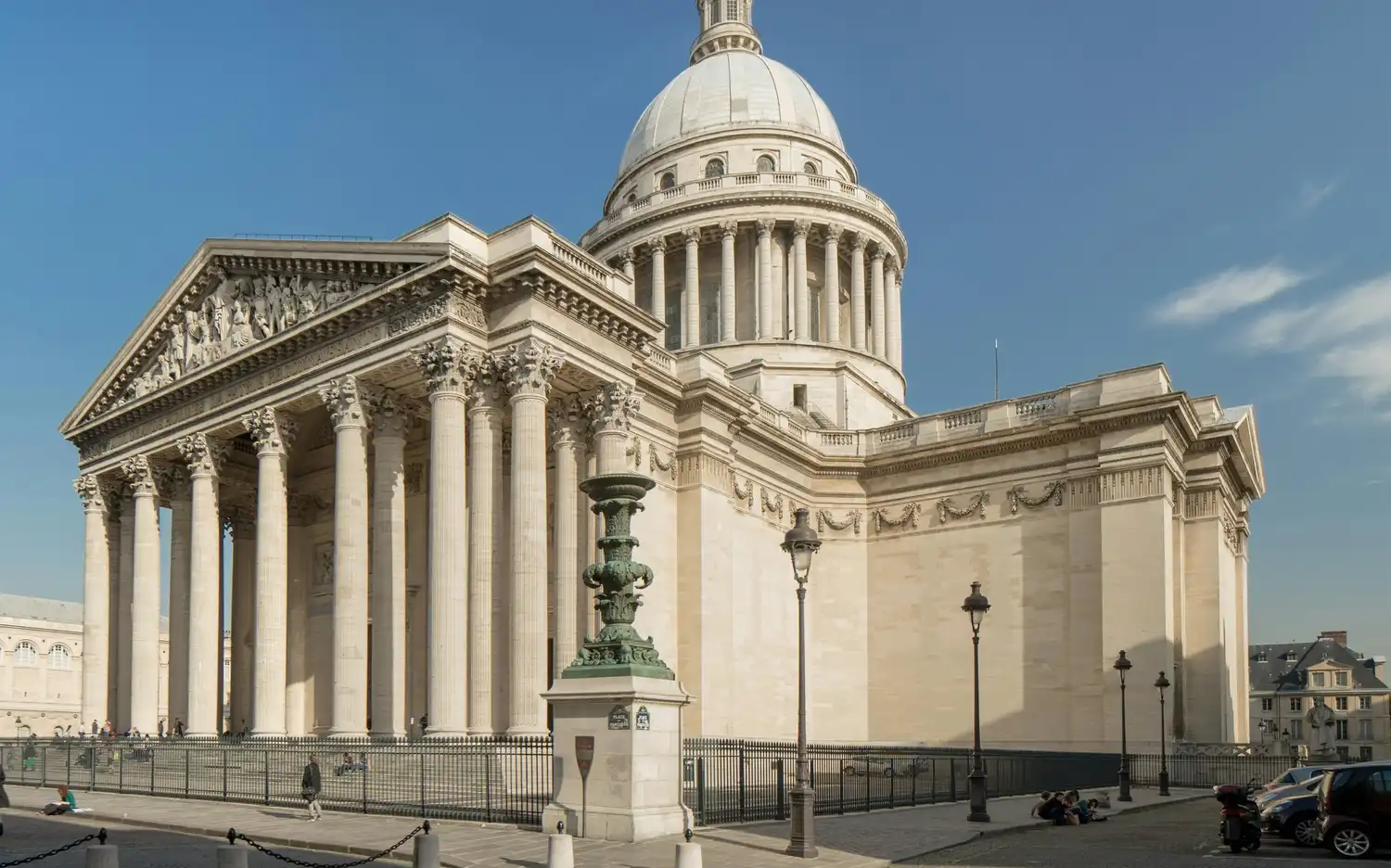
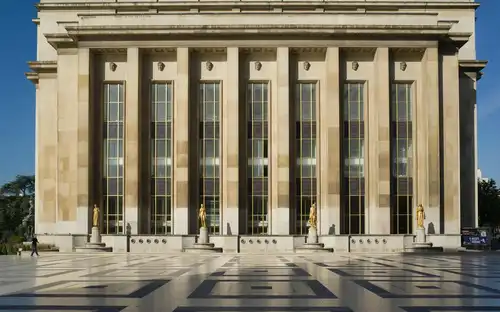
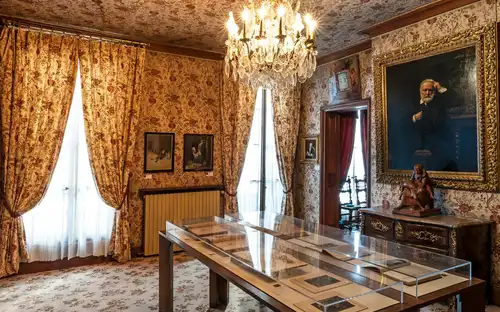
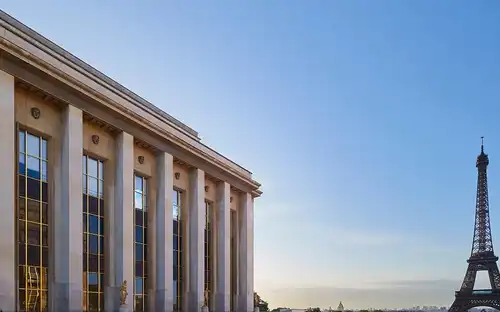
The neoclassical Panthéon with a grand dome and columns stands under a clear blue sky above a cobblestone street.

Panthéon

  • Paris

Perched in the heart of the Latin Quarter, the Panthéon stands as a neoclassical masterpiece of Paris, serving as the final resting place for French luminaries such as Marie Curie, Victor Hugo, and Voltaire. Visitors can explore the grand architecture and rotating cultural exhibitions while discovering the profound history of this iconic secular mausoleum.

The Panthéon, a jewel of the Latin Quarter perched atop Montagne Sainte-Geneviève, stands as one of Paris’s most profound symbols of national identity. Originally commissioned by King Louis XV in 1744 as a grand church dedicated to Saint Genevieve, the city's patron saint, its purpose shifted dramatically following the French Revolution. Completed in 1790, it was transformed into a secular mausoleum to honor the "great men" of a grateful nation. Throughout the 19th century, the building vacillated between a place of worship and a patriotic temple, a "personality disorder" that only definitively ended in 1885 with the monumental funeral of Victor Hugo.

Architecturally, the building is a pioneering masterpiece of Neoclassicism, designed by Jacques-Germain Soufflot to rival St. Peter's in Rome and St. Paul's in London. Soufflot’s visionary design sought to unite the "purity of Greek architecture" with the "lightness and daring of Gothic construction." The facade features a massive portico of Corinthian columns modeled after the Roman Pantheon, while the interior is a vast Greek cross plan. Its most striking feature is the triple-layered dome, which held the title of the highest point in Paris until the construction of the Eiffel Tower. Inside, the atmosphere is airy and solemn, dominated by the hypnotic swing of Foucault’s Pendulum, a 1851 scientific experiment that famously demonstrated the Earth's rotation.

The experience of visiting the Panthéon is one of quiet awe and intellectual reflection. While the upper floor is adorned with magnificent frescoes depicting the life of Saint Genevieve and French history, the true heart of the monument lies beneath in the vast, stone-vaulted Crypt. This subterranean necropolis serves as the final resting place for France's most illustrious luminaries, including Enlightenment philosophers Voltaire and Rousseau, whose tombs face one another in the vestibule. As you wander through the silent corridors, you will encounter the remains of icons like Marie Curie, Émile Zola, and Alexandre Dumas. For those seeking a different perspective, a climb to the external colonnade of the dome offers one of the most spectacular panoramic views of the Paris skyline, placing you in a direct line with the Eiffel Tower and Notre-Dame.

Highlights

  • Marvel at the mesmerizing Foucault’s Pendulum as it swings beneath the grand neoclassical dome to demonstrate the Earth's rotation.
  • Explore the vast Crypt which serves as a secular mausoleum for legendary French figures including Victor Hugo, Voltaire, and Rousseau.
  • Admire the magnificent Neoclassical Facade and its towering Corinthian columns modeled after the ancient Pantheon in Rome.
  • Climb to the top for spectacular Panoramic Views across the Latin Quarter and the rooftops of Paris.
  • Visit the tombs of Marie Curie and Pierre Curie, celebrating their groundbreaking contributions to science within these hallowed walls.

Must-Dos

  • Walk along the upper aisles to study the detailed frescoes by Puvis de Chavannes that depict the life of Saint Genevieve, the patron saint of Paris.
  • Gaze upward into the soaring interior of the dome to appreciate the mathematical precision and lightness of Soufflot’s architectural design.
  • Observe the dramatic light play as natural sunshine filters through the large drum windows to illuminate the white stone interior.
  • Stand in the center of the nave to experience the immense scale and acoustic resonance of the building's cross-shaped layout.
  • Look for the monumental sculptural groups like 'To the Glory of the National Convention' that represent key moments in French revolutionary history.
  • Pause before the commemorative plaques honoring those who fought for French liberty to reflect on the building's transformation into a temple of the nation.

Guidelines

  • All visitors are required to undergo a security screening process similar to airport checks before entering the monument.
  • Only small handheld cameras and cell phones are permitted for personal, non-commercial photography provided the flash is turned off.
  • The use of professional equipment such as tripods, selfie sticks, and lighting is strictly prohibited inside the building.
  • To maintain a respectful environment, visitors are asked to mute mobile phones and avoid loud conversations while in the exhibition areas.
  • It is strictly forbidden to touch any of the exhibits, pedestals, or display cases within the monument.
  • Large luggage is restricted, and only small bags that meet the venue's size requirements are allowed inside.
  • Visitors must remain behind all stanchions and maintain a safe distance from all artwork and historical artifacts.

Tips

  • To avoid long waits at the ticket office, purchase your fast-track tickets online in advance to head straight to the priority security line.
  • Plan your visit for Tuesday, Wednesday, or Thursday when foot traffic is noticeably lighter than on busy weekends.
  • Arrive at Place du Panthéon right at 10:00 AM or after 4:00 PM to enjoy the monument with fewer crowds.
  • Take advantage of free entry on the first Sunday of the month if you are visiting between November 1 and March 31.
  • Be aware that on the first Monday of each month, the monument has a delayed opening and does not welcome visitors until 12:00 PM.
  • Save time by using the dedicated group entrance if you have booked a guided tour, which often bypasses the general admission queues.
  • If you are an EU resident under 26, remember to bring a valid ID to benefit from completely free admission without needing a paid ticket.

Why Visit

The Panthéon is not merely a stop on a tourist itinerary; it is the spiritual and intellectual pulse of France, where the very air feels charged with the legacy of human progress. Standing amidst the historic splendor of the Latin Quarter, this monument offers a rare opportunity to bridge the gap between scientific wonder and artistic mastery. To visit is to engage with a living testament to the values of Reason and Liberty, making it an essential pilgrimage for anyone who wishes to truly understand the soul of the French Republic.

Stepping into the vast nave, you are immediately enveloped by a profound serenity as shafts of natural light dance across the pristine white stone, illuminating the massive sculptural groups with a heavenly glow. The rhythmic, silent arc of the pendulum serves as a hypnotic reminder of our place in the cosmos, while the cool, hushed corridors of the crypt below invite a deeply moving personal connection to the icons of history. It is a sensory journey that transitions from the soaring heights of architectural ambition to the solemn, grounding weight of national memory, leaving every visitor with a lingering sense of quiet awe and inspiration.The Panthéon is a transcendent masterpiece that masterfully weaves together the triumphs of science, the beauty of art, and the enduring spirits of the world's most influential thinkers.

When to Visit

Early Morning Latinitas

Arriving exactly at 10:00 AM provides the most efficient entry through the security screening, which often mirrors the speed of airport checks. Stepping inside during the first hour allows for nearly solitary views of the crypts and the massive central space before the midday tour groups saturate the floor. Aiming for a weekday visit further minimizes the friction of local foot traffic from the neighboring Sorbonne, ensuring the shortest possible queue at the ticket office.

Dome Illumination Dynamics

Optimal viewing of Foucault’s Pendulum occurs when the sun is at its highest, typically between 12:00 PM and 2:00 PM, as light streams directly through the neoclassical dome to illuminate the arc of the swing. Those seeking to study the detailed frescoes by Puvis de Chavannes should consider a late afternoon slot, specifically around 4:00 PM, when the shifting angle of the sun softens the shadows across the upper aisles. Planning a visit during the summer months between 1 April and 30 September grants the longest window of natural light, as the monument remains open until 6:30 PM.

How to Visit

Visiting the Panthéon is a highlight of any trip to the Latin Quarter, but getting the most out of this massive monument requires a bit of a plan. You should budget approximately 1.5 to 2 hours to explore the site from top to bottom, especially if you plan on climbing to the colonnade for the views. Since everyone has to clear a security screening regardless of their ticket type, having your digital pass ready is the best way to keep things moving.

Scaling the Neoclassical Heights

If the weather is clear, make a beeline for the Panorama as soon as you enter. Access to the dome is often managed in timed blocks or requires a separate request to the staff, and the climb is quite steep. However, the 360-degree view of Paris from the base of the dome is one of the best in the city. After you've taken in the skyline, head back down to the main floor to watch the replica of Foucault’s Pendulum—it’s a mesmerizing sight that proves the Earth's rotation right before your eyes.

A Logical Flow Through History

To navigate the space efficiently, I recommend a circular route that saves the most solemn part for last:

  • Start in the Nave to admire the massive proportions and the detailed frescoes by Puvis de Chavannes along the upper walls.
  • Move toward the back of the building to find the stairs leading down into the Crypt.
  • Wander the permanent silence of the lower level to find the tombs of Voltaire, Rousseau, Victor Hugo, and Marie Curie.
  • Finish your tour by exiting back through the main portico, where you can take a moment to look up at the famous pediment before heading back out into the bustling Place du Panthéon.

Schedules

Opening Hours

  • From 1 April to 30 September, the Panthéon is open daily from 10:00 AM to 6:30 PM, with last entry at 5:45 PM.
  • From 1 October to 31 March, the venue welcomes visitors from 10:00 AM to 6:00 PM, with last admission at 5:15 PM.
  • On the first working Monday of each month, the monument opens at 12:00 PM.

Special Days

The monument remains closed annually on January 1, May 1, and December 25.

Entry is free for all visitors on the first Sunday of each month from November to March and during Heritage Days in September.

On the first Monday of every month, the venue has a delayed opening time of 12:00 PM.

How to get there

The Panthéon is majestically situated atop the Montagne Sainte-Geneviève in the heart of the 5th arrondissement's Latin Quarter, offering a historic focal point that is easily reachable via Paris's extensive public transit network. Its central location ensures that visitors can arrive conveniently from either side of the Seine using various modes of transport.

  • Metro: Line 10 to Cardinal Lemoine or Maubert-Mutualité, and Line 7 to Place Monge.
  • RER: Line B to Luxembourg, which provides a scenic 7-minute walk through the gardens to the monument.
  • Bus: Lines 21, 27, 38, 75, 82, 84, 85, and 89 all serve the Panthéon stop or nearby stations within the Latin Quarter.
  • Bicycle: Use the Vélib' bike-share system with stations located directly at Panthéon - Valette and Soufflot-Panthéon.
Directions

Frequently Asked Questions about Panthéon

For security reasons, there are no cloakrooms or luggage storage facilities available inside the Panthéon. Visitors are prohibited from entering with large suitcases or bulky bags, so it is recommended to use external luggage lockers in the Latin Quarter before your visit.
The main floor of the Panthéon is accessible via a ramp, but the historic Paris crypts and the climb to the dome are only accessible via stairs. While strollers are allowed on the ground floor, they cannot be taken into the mausoleum levels where icons like Marie Curie are buried.
The most iconic shots are captured from the center of the nave looking up at the neoclassical architecture and Foucault's pendulum. For an outdoor perspective, the view from Rue Soufflot provides a perfect symmetrical frame of the Corinthian columns against the Parisian sky.
Access to the external colonnade of the dome is available seasonally, typically from April to October, for an additional fee. This climb offers a 'balcony' view of French history, providing a 360-degree look at the Latin Quarter, Eiffel Tower, and Notre-Dame.
Yes, the Panthéon is a participating monument in the Paris Museum Pass. Holders can enjoy skip-the-line access to the main nave and the crypts, though the climb to the dome remains a separate paid supplement that must be arranged on-site.
The most sought-after resting places in the mausoleum include the tombs of Marie Curie, Victor Hugo, and the facing monuments of Enlightenment rivals Voltaire and Rousseau. These 'great men' and women represent the intellectual and scientific peaks of French history.
To experience the solemn atmosphere and see Foucault's pendulum without the crowds, it is best to arrive right at opening at 10:00 AM or during the 'golden hour' shortly before closing, when the light hits the neoclassical facade beautifully.
Personal photography is permitted throughout the building, including the frescoes and the crypts, provided you do not use a flash or tripods. This allows visitors to document the stunning neoclassical architecture while respecting the quiet nature of the mausoleum.
A standard visit to see the Foucault's pendulum and explore the main tombs in the crypts takes about 1 to 1.5 hours. If you plan to climb the dome for the panoramic views of Paris, you should allocate at least 2 hours for the full experience.
Recommended
Vibrant satirical photography by Martin Parr exploring global tourism and consumerism at the Jeu de Paume gallery.
Stark black-and-white landscape photography captures the silent aftermath of South African conflict and memory.
Recommended
Mummified human remains and funerary objects in a modern, respectfully lit gallery at the Musee de l'Homme.
Vibrant street performers and colorful Holi festival celebrations at the historic Jardin d'Acclimatation in Paris.
Crowd at Jardin d'Acclimatation celebrating Holi with a vibrant explosion of colorful powders in the Parisian sky.
Archaeological artifacts from the Seine riverbed displayed in the underground crypt beneath Notre-Dame cathedral.
Sculptures of 20th-century conflict in the modernist Ateliers-musee Chana Orloff gallery in Paris.
Recommended
Digital art projections of Da Vinci and Michelangelo masterpieces illuminate a large immersive gallery space.
A selection of delicate pencil and pastel sketches by Pierre-Auguste Renoir displayed in a gallery.
Antique Korean beauty accessories and traditional paintings displayed in a modern museum gallery at Musée Guimet.
Vibrant interactive garden chapter at Cité des sciences featuring lush plants and sensory science displays.
Recommended
Elegant 18th-century gowns and contemporary couture on display in a grand gallery at Palais Galliera.
Recommended
Visitors walk among sculptures in the vaulted glass hall of Musée d'Orsay, with others seated on benches.
4 exhibitions

Musée d'Orsay

  • Paris

Breathtaking Impressionist masterpieces housed within the timeless elegance of a magnificent Parisian station.

Recommended
Modern curved glass and metal Fondation Louis Vuitton building under a blue sky with trees and parked cars.
1 exhibition

Fondation Louis Vuitton

  • Paris

Where avant-garde art meets Frank Gehry’s breathtaking glass sails in the heart of Paris.

Recommended
Grand mansion at Musée Rodin viewed through manicured gardens with a central pond, statues, and trimmed bushes.
1 exhibition

Musée Rodin Paris

  • Paris

A historic mansion sanctuary where Rodin’s emotive masterpieces breathe amidst rose-filled gardens.

Recommended
Ornate stone Musée de l'Orangerie entrance with large columns and one person standing near the doorway.
2 exhibitions

Musée de l'Orangerie

  • Paris

A luminous sanctuary where Monets panoramic Water Lilies bloom in timeless Impressionist light.

Recommended
Grand neoclassical Palais Garnier with golden statues and a French flag under a blue sky.
1 exhibition

Palais Garnier

  • Paris

A breathtaking masterpiece of nineteenth-century opulence and legendary Parisian high culture.

Recommended
Vibrant abstract projections from the Kandinsky exhibition at the Atelier des Lumières digital art center.
1 exhibition

Atelier des Lumières

  • Paris

Masterpieces come alive through immersive light and sound in a historic Parisian foundry.

Recommended
Intricate metal framework of a large glass dome casting shadows on a mural of historical and mythical scenes.
1 exhibition

Bourse de Commerce - Pinault Collection

  • Paris

A sanctuary of contemporary masterpieces housed within a masterfully restored historic dome.

Neoclassical building with tall columns, large windows, outdoor seating, and a statue holding a spear.
2 exhibitions

Musée d'Art Moderne de Paris

  • Paris

A sanctuary of avant-garde masterpieces and evolving contemporary narratives in the heart of Paris.

Historic courtyard at Musée de l'Armée with arched windows and a golden-domed building under a partly cloudy sky.
1 exhibition

Musée de l'Armée & Napoleon's Tomb

  • Paris

France's storied military legacy rests beneath a majestic golden dome of timeless architectural grandeur.

Grand building with arched windows, statues, and a central fountain, surrounded by lawns and city buildings.
2 exhibitions

Palais Galliera

  • Paris

A grand Renaissance palace enshrining the timeless evolution of French fashion and contemporary artistry.

Exhibit wall with multilingual text about Georges Méliès, surrounded by framed portraits and illustrations.
1 exhibition

La Cinémathèque Française

  • Paris

A stunning Frank Gehry masterpiece housing the world's most prestigious collection of cinematic treasures.

Elegant stone mansion with arched doorways and a columned entrance, set within a manicured courtyard.
1 exhibition

Musée Jacquemart-André

  • Paris

An opulent Haussmann-era mansion housing one of the city's most prestigious private art collections.