Museum interior featuring Egyptian statues, classical sculptures, and chandeliers at the Musee Marmottan Monet.

Musée Marmottan Monet

  • Paris

As a premier cultural destination in Paris, the Musée Marmottan Monet offers an unparalleled look at masterpieces like Impression, Sunrise and the iconic Water Lilies alongside works by Gauguin and Degas. This intimate museum showcases world-class Impressionist exhibitions, making it an essential stop for art connoisseurs exploring the city's rich heritage.

Luminous Alpine landscape painting by Giovanni Segantini featuring vibrant Divisionist brushstrokes and peaks.

Giovanni Segantini

  • Musée Marmottan Monet, Paris
29 Apr - 16 Aug 2026
From€14.50

The master of Alpine light and symbolist landscapes captured through an avant-garde divisionist lens.

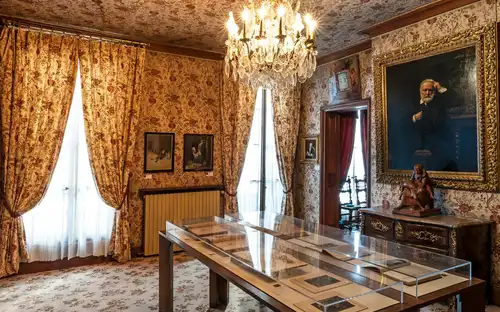
The Musée Marmottan Monet is a true hidden gem of the 16th arrondissement, offering an intimate escape into the world of Impressionism. Originally a hunting lodge for the Duke of Valmy, the property was acquired in 1882 by Jules Marmottan and later expanded by his son, Paul Marmottan. Paul, a scholar and collector, transformed the mansion into a showcase for his vast collection of Empire-style art and furniture. Upon his death in 1932, he bequeathed the townhouse and its treasures to the Académie des Beaux-Arts, leading to the museum's official opening in 1934. The building itself remains a masterpiece of First Empire aesthetics, with elegant salons featuring ornate chandeliers, classical sculptures, and precious antiques that preserve the atmosphere of a private, high-society residence.

The museum’s international renown stems from its status as the home of the world’s largest collection of works by Claude Monet. This extraordinary legacy was made possible by a monumental 1966 bequest from the artist’s son, Michel Monet, which included over 100 masterpieces inherited from his father’s estate. Among these is the seminal 1872 painting, Impression, Sunrise, the very work credited with giving the Impressionist movement its name. Visitors can also marvel at a unique set of Monet’s iconic Water Lilies, as well as his late-career depictions of the Giverny gardens, displayed in a specially designed basement gallery inspired by the circular decorations of the Orangerie des Tuileries.

Beyond the works of Monet, the museum houses a prestigious collection that traces the evolution of light and color through the 19th century. Significant donations have enriched the galleries with masterpieces by Berthe Morisot, Édouard Manet, Edgar Degas, and Pierre-Auguste Renoir. The collection is further distinguished by its rare selection of illuminated medieval manuscripts and Flemish primitive paintings, offering a breadth of human creativity that spans centuries. This diversity makes the museum a vital cultural hub for those seeking to understand the roots and the ultimate triumphs of the French avant-garde.

The atmosphere of the Musée Marmottan Monet is one of quiet contemplation and refined elegance. Located on the edge of the Bois de Boulogne and overlooking the serene Jardin du Ranelagh, the museum feels worlds away from the bustling crowds of the Louvre or Musée d'Orsay. As you wander through the sun-drenched Empire salons or descend into the immersive Monet galleries, you experience art in the way it was meant to be seen: in a personal, evocative setting. It is a place where history, architecture, and nature converge, inviting travelers to connect deeply with the poetic visions of the masters.

Highlights

  • Claude Monet's Impression, Sunrise is a must-see masterpiece that famously gave the Impressionist movement its name.
  • The museum houses the World's Largest Monet Collection, featuring over 100 works including his iconic late-career Water Lilies.
  • Explore the world's leading collection of works by Berthe Morisot, the first woman of Impressionism, including her famous Self-Portrait.
  • The Wildenstein Collection displays a rare and prestigious set of illuminated manuscripts and art from the Middle Ages and Renaissance.
  • The First Empire Collection showcases an extensive array of Napoleonic-era art, furniture, and bronzes curated by Paul Marmottan.
  • Regular Temporary Exhibitions offer unique opportunities to see rotating masterpieces from Impressionist and modern masters.

Must-Dos

  • Admire the ornate chandeliers and classical sculptures throughout the former private mansion to appreciate the refined lifestyle of a 19th-century art collector.
  • Take a moment to peer through the large windows for peaceful views of the neighboring Jardin du Ranelagh, which offers a verdant escape in the heart of the 16th arrondissement.
  • Observe the intricate woodwork and period furniture in the upper-floor salons to see how the Marmottan family's original residence was transformed into a showcase for fine art.
  • Walk through the tiled rooms with pale blue doors to discover the museum's intimate architectural details that complement the soft colors of the Impressionist works.
  • Listen to the curated audio guides while standing in the circular galleries to deepen your understanding of the personal stories and artistic evolution behind the donated collections.

Guidelines

  • All visitors must undergo a security check including metal detector screening before entering the museum.
  • Personal photography is encouraged but must be conducted with the flash turned off to protect the artwork.
  • The use of tripods, lights, and selfie sticks is strictly prohibited within the gallery spaces.
  • Visitors are required to maintain a safe distance from all paintings, sculptures, and decorative arts at all times.
  • It is strictly forbidden to touch any of the artworks, frames, bases, or protective coverings.
  • Only pencils are permitted for writing or drawing in the galleries, as pens and markers are restricted.
  • Large items such as suitcases, skateboards, and oversized bags are not allowed inside the museum.

Tips

  • Plan your visit for a weekday afternoon or a Thursday evening after 6:00 PM to enjoy the collection with much smaller crowds.
  • Take advantage of the museum's location at 2 Rue Louis Boilly by combining your trip with a relaxing stroll through the nearby Jardin du Ranelagh.
  • Although reservations are not strictly required, purchasing your tickets online in advance allows you to select a specific time slot and gain direct access to the museum.
  • Be sure to head to the lower level first to see the world's largest collection of Claude Monet masterpieces, including the famous Impression, Sunrise.
  • If you are coming by public transport, use Métro line 9 and get off at the La Muette or Ranelagh stations for the shortest walk to the entrance.
  • Since the museum is housed in a former private mansion, its intimate layout can feel cramped during peak hours, so early morning right at opening is another great option for peace and quiet.

Why Visit

While the major landmarks of Paris often feel like a crowded stage, the Musée Marmottan Monet offers a rare, front-row seat to the soul of Impressionism. It is an essential pilgrimage for any art lover, housing the world's most significant collection of works by Claude Monet, including the legendary Impression, Sunrise, the very canvas that sparked a global revolution in art. Beyond Monet, the museum serves as a sanctuary for the delicate mastery of Berthe Morisot and a curated journey through Empire-style elegance. Tucked away in the refined 16th arrondissement, it provides an unparalleled opportunity to stand inches away from masterpieces in an environment that feels more like a private home than a public institution.

Stepping into the galleries is a sensory awakening, where the gilded salons of a former mansion give way to an immersive underground gallery dedicated to Monet’s late-career Water Lilies. Here, the play of light on the walls mimics the ethereal atmosphere of a garden at dawn, inviting a profound emotional connection that is often lost in the city's larger, bustling museums. You can truly hear the silence as you observe the textured brushstrokes and vibrant palettes that define the transition from realism to the birth of modern art. It is a place where time slows down, allowing the vivid colors and shifting shadows to transport you directly into the artist's visionary world.The Musée Marmottan Monet is not merely a gallery, but an intimate encounter with the vanishing light and enduring beauty that forever redefined the way we see the world.

When to Visit

Midweek Solitude in the 16th Arrondissement

Arriving on a Tuesday, Wednesday, or Friday afternoon provides the most tranquil environment for navigating the former private mansion without the weekend rush. While the museum opens at 10:00 AM, the midday period often sees a dip in foot traffic as tour groups depart for lunch. Navigating the intimate downstairs gallery—home to the permanent Monet collection—is significantly easier during these off-peak weekday windows.

Late-Night Impressionist Immersion

Extending your visit into the Thursday evening nocturne allows you to stay until 9:00 PM, offering a unique atmosphere far removed from standard daylight hours. Entering after 6:00 PM on this day typically ensures fewer crowds, as most daytime tourists have cleared out. The artificial lighting within the curated spaces is meticulously designed to highlight the texture and brushwork of masterpieces like "Impression, Sunrise" without the interference of shifting natural glare.

How to Visit

Finding your way to the Musée Marmottan Monet feels like discovering a well-kept secret in the 16th arrondissement. Located at 2 Rue Louis Boilly, right across from the Jardin du Ranelagh, the museum is easily accessible via Metro Line 9 (La Muette station). To make the most of your time, plan for a visit of about 2 hours. This gives you enough room to explore the permanent collections and any temporary exhibitions without feeling rushed through the former hunting lodge's intimate rooms.

A Strategically Crafted Route

Once you pass through the main entrance and complete the security check, follow this flow to see the highlights in a logical order:

  • Start on the ground floor to admire the Empire-style salons and the exquisite collection of furniture, bronzes, and classical sculptures that originally belonged to Paul Marmottan.
  • Head to the first floor to discover the world's largest public collection of works by Berthe Morisot, featuring her delicate oil paintings and rare watercolors.
  • Descend to the specially designed underground gallery, the crown jewel of the museum, where you can stand inches away from Monet’s Impression, Sunrise and his iconic, large-scale Water Lilies.
  • Finish back on the ground floor to browse the specialized bookstore, which is excellent for finding high-quality stationery and books on Impressionist history.

The Art of the Quick Entry

While the museum is more tranquil than the Louvre, pre-booking your ticket online is the smartest way to ensure a seamless entry. If you are visiting during the cooler months or rainy days, take advantage of the cloakroom for your coats and large bags, as the interior spaces are designed with the proportions of a private home. This allows you to move freely through the narrow galleries and focus entirely on the vibrant brushstrokes of the masters.

Schedules

Opening Hours

  • The Musée Marmottan Monet is open Tuesday to Sunday from 10:00 AM to 6:00 PM.
  • On Thursdays, the museum offers extended evening hours until 9:00 PM.
  • The last entry for visitors is strictly one hour before closing time each day.
  • The venue remains closed every Monday and on specific public holidays like May 1st.

Special Days

The museum is closed to the public every Monday as well as on January 1, May 1, and December 25.

Special free entry is offered during the Night of Museums which takes place on Saturday, May 23, 2026.

Visitors can enjoy extended evening hours until 9:00 PM every Thursday throughout the year.

How to get there

Nestled in the elegant 16th arrondissement on the edge of the Jardin du Ranelagh, the Musée Marmottan Monet offers a tranquil cultural escape easily reached by Paris's comprehensive transit network. This hidden gem is well-connected to the city center, ensuring a seamless journey for those seeking to admire the world's largest Monet collection.

  • Metro: Line 9 to La Muette or Ranelagh, both of which are a short, pleasant walk from the museum entrance.
  • RER: Line C to Boulainvilliers, which is connected via an underground passageway to the La Muette metro station.
  • Bus: Lines 22, 32, 52, and 70 serve the immediate neighborhood, with stops such as La Muette - Boulainvilliers or Louis Boilly providing direct access.
Directions

Frequently Asked Questions about Musée Marmottan Monet

For security and conservation reasons, large suitcases and bulky luggage are not permitted inside this art museum. While a cloakroom is available for coats and small umbrellas, it is best to leave large items at your hotel before traveling to the 16th Arrondissement.
Yes, 'Impression, Sunrise' is part of the permanent collection and is typically included in the standard admission. As the piece that named the Impressionism movement, it is the museum's most famous resident and a primary reason many travelers visit.
The museum is located in a historic mansion with multiple levels. While there is an elevator to reach the basement gallery where the Water Lilies are displayed, navigating the narrow Empire-style salons with a large stroller can be challenging; using a baby carrier is often recommended.
Yes, the Musée Marmottan Monet features a dedicated circular basement gallery designed specifically to showcase Claude Monet's iconic Water Lilies and late-career works from his Giverny gardens as part of its permanent collection.
Photography for personal use is permitted, and the most stunning shots are found in the sun-drenched Empire salons featuring ornate chandeliers or within the modern, immersive basement gallery that houses the monumental Water Lilies canvases.
While the museum is famous for the world's largest Monet collection, it also holds the premier collection of works by Berthe Morisot. These are often rotated or highlighted in specific galleries alongside other masters like Renoir and Degas.
The most convenient way to reach this hidden gem is by taking Metro Line 9 to the 'La Muette' or 'Ranelagh' stations. From there, it is a pleasant walk through the Jardin du Ranelagh to the museum's entrance.
While walk-ins are often possible because the museum is less crowded than the Orsay, booking your 'Musée Marmottan Monet' tickets online is highly recommended during peak tourist seasons to ensure entry at your preferred time.
The museum does not have an internal restaurant or cafe, but its location in the elegant 16th Arrondissement means you are within a short walk of many charming Parisian bistros and cafes near the Bois de Boulogne.
No, the Musée Marmottan Monet is a private institution and is generally not included in the standard Paris Museum Pass. Visitors should purchase individual tickets or check the museum's official website for specific partnership discounts.
Archaeological artifacts from the Seine riverbed displayed in the underground crypt beneath Notre-Dame cathedral.
Sculptures of 20th-century conflict in the modernist Ateliers-musee Chana Orloff gallery in Paris.
Recommended
Digital art projections of Da Vinci and Michelangelo masterpieces illuminate a large immersive gallery space.
A selection of delicate pencil and pastel sketches by Pierre-Auguste Renoir displayed in a gallery.
Antique Korean beauty accessories and traditional paintings displayed in a modern museum gallery at Musée Guimet.
Vibrant interactive garden chapter at Cité des sciences featuring lush plants and sensory science displays.
Recommended
Elegant 18th-century gowns and contemporary couture on display in a grand gallery at Palais Galliera.
Recommended
Mannequins display vibrant contemporary African haute couture and textiles in a modern gallery space.
Vibrant avant-garde artwork and a Dreamachine light installation on display at the Brion Gysin exhibition in Paris.
Musicians perform an open-air concert on a stage surrounded by the lush trees of Jardin d'Acclimatation in Paris.
Recommended
Vibrant oil painting of a couple dancing outdoors in a sunlit, crowded Parisian cafe by Pierre-Auguste Renoir.
Self-portrait of Gustave Courbet with his black dog at the Artists’ Faces exhibition in the Petit Palais.
Recommended
Visitors walk among sculptures in the vaulted glass hall of Musée d'Orsay, with others seated on benches.
4 exhibitions

Musée d'Orsay

  • Paris

Breathtaking Impressionist masterpieces housed within the timeless elegance of a magnificent Parisian station.

Recommended
Modern curved glass and metal Fondation Louis Vuitton building under a blue sky with trees and parked cars.
1 exhibition

Fondation Louis Vuitton

  • Paris

Where avant-garde art meets Frank Gehry’s breathtaking glass sails in the heart of Paris.

Recommended
Grand mansion at Musée Rodin viewed through manicured gardens with a central pond, statues, and trimmed bushes.
1 exhibition

Musée Rodin Paris

  • Paris

A historic mansion sanctuary where Rodin’s emotive masterpieces breathe amidst rose-filled gardens.

Recommended
Ornate stone Musée de l'Orangerie entrance with large columns and one person standing near the doorway.
2 exhibitions

Musée de l'Orangerie

  • Paris

A luminous sanctuary where Monets panoramic Water Lilies bloom in timeless Impressionist light.

Recommended
Grand neoclassical Palais Garnier with golden statues and a French flag under a blue sky.
1 exhibition

Palais Garnier

  • Paris

A breathtaking masterpiece of nineteenth-century opulence and legendary Parisian high culture.

Recommended
Vibrant abstract projections from the Kandinsky exhibition at the Atelier des Lumières digital art center.
1 exhibition

Atelier des Lumières

  • Paris

Masterpieces come alive through immersive light and sound in a historic Parisian foundry.

Recommended
Intricate metal framework of a large glass dome casting shadows on a mural of historical and mythical scenes.
1 exhibition

Bourse de Commerce - Pinault Collection

  • Paris

A sanctuary of contemporary masterpieces housed within a masterfully restored historic dome.

Neoclassical building with tall columns, large windows, outdoor seating, and a statue holding a spear.
2 exhibitions

Musée d'Art Moderne de Paris

  • Paris

A sanctuary of avant-garde masterpieces and evolving contemporary narratives in the heart of Paris.

Historic courtyard at Musée de l'Armée with arched windows and a golden-domed building under a partly cloudy sky.
1 exhibition

Musée de l'Armée & Napoleon's Tomb

  • Paris

France's storied military legacy rests beneath a majestic golden dome of timeless architectural grandeur.

Grand building with arched windows, statues, and a central fountain, surrounded by lawns and city buildings.
2 exhibitions

Palais Galliera

  • Paris

A grand Renaissance palace enshrining the timeless evolution of French fashion and contemporary artistry.

Exhibit wall with multilingual text about Georges Méliès, surrounded by framed portraits and illustrations.
1 exhibition

La Cinémathèque Française

  • Paris

A stunning Frank Gehry masterpiece housing the world's most prestigious collection of cinematic treasures.

Elegant stone mansion with arched doorways and a columned entrance, set within a manicured courtyard.
1 exhibition

Musée Jacquemart-André

  • Paris

An opulent Haussmann-era mansion housing one of the city's most prestigious private art collections.