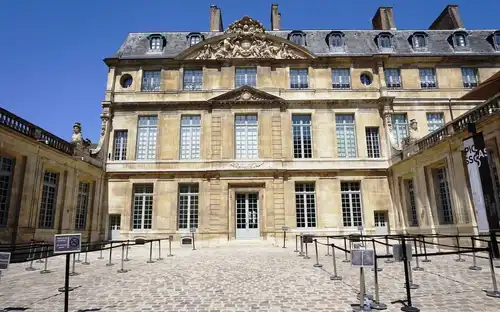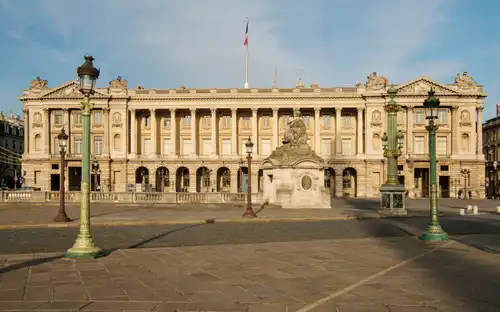
Stone building with archways and windows, partially obscured by trees, with pedestrians on the sidewalk.

Musée de la Libération de Paris - Musée du Général Leclerc - Musée Jean Moulin

  • Paris

Discover the stirring history of the 1944 Resistance through immersive exhibitions at the Musée de la Libération de Paris - Musée du Général Leclerc - Musée Jean Moulin. This essential Paris site chronicling the city's brave struggle against occupation offers a profound look into the lives of two iconic French heroes.

Recommended
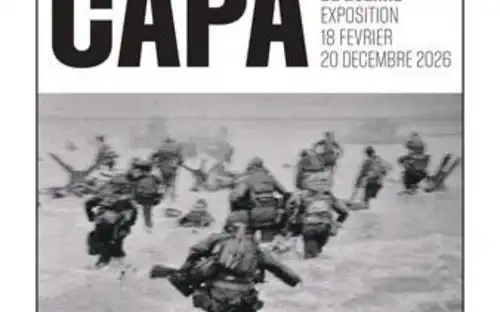
Vintage prints and cameras on display at the Robert Capa War Photographer exhibition in Paris.

Robert Capa: War Photographer

  • Musée de la Libération de Paris - Musée du Général Leclerc - Musée Jean Moulin, Paris
18 Feb - 20 Dec 2026
From€11.00

The definitive visual history of human conflict through a legendary and daring lens.

The Musée de la Libération de Paris - Musée du Général Leclerc - Musée Jean Moulin offers a profound journey into the heart of the French Resistance and the climactic struggle to reclaim the capital during World War II. Relocated in 2019 to the historic Ledoux pavilions at Place Denfert-Rochereau, the museum occupies a site of immense symbolic weight. It was here, at the southern gateway to the city, that General Philippe Leclerc de Hauteclocque and his 2nd Armored Division entered Paris in August 1944. The museum expertly weaves together the parallel lives of two national icons: Jean Moulin, the unifying face of the domestic Resistance, and General Leclerc, the brilliant military leader who spearheaded the fight from abroad.

The architectural centerpiece of the museum is located twenty meters beneath the surface, where visitors can descend 100 steep steps to explore the Command Post of Colonel Rol-Tanguy. This subterranean passive defense shelter served as the nerve center for the French Forces of the Interior (FFI) during the week of the liberation. Preserved in its stark, wartime state, the bunker allows guests to walk through the same corridors where critical orders were dispatched. The atmosphere is thick with history, featuring original ventilation ducts, telephone switchboards, and the bicycle generator used to power the radio equipment, offering a chillingly authentic glimpse into the clandestine operations that occurred beneath the Nazi-occupied streets.

The visitor experience is designed to be both pedagogical and deeply personal, moving from the uneasy shadows of the interwar period and the exodus of 1940 to the eventual triumph of August 25, 1944. The collection is rich with intimate artifacts that bridge the gap between grand military strategy and daily civilian survival, such as Jean Moulin’s matchbox used for hiding microfilmed orders, schoolboys' ration cards, and wooden-soled shoes. Interactive displays and audiovisual archives, including the "Mission Rol-Tanguy" mixed reality experience, help contextualize the immense sacrifices made by ordinary citizens and celebrated heroes alike.

Ultimately, a visit to this museum is a lesson in resilience and the enduring spirit of liberty. By documenting the "small and great stories" of the conflict, the museum provides a vital link between the past and present, inviting visitors to reflect on the meaning of freedom in today’s world. Whether exploring the high-tech galleries in the restored 18th-century pavilions or standing in the silent, echoing rooms of the underground headquarters, visitors are left with a powerful understanding of how Paris was transformed from an occupied city back into the City of Light.

Highlights

  • The underground Colonel Rol-Tanguy Command Post offers a rare glimpse into the secret bunker used to coordinate the 1944 insurrection.
  • Over 300 original objects and documents in the Permanent Collections detail the lives of Jean Moulin and General Leclerc during the war.
  • An innovative Mixed Reality Experience allows visitors to witness the clandestine activity inside the liberation headquarters through HoloLens headsets.
  • The Liberation Video Cubes display a moving synchronized montage of archival footage showing the final days of the Nazi occupation and the city's eventual freedom.
  • The Jean Moulin Gallery features personal items like his iconic scarf and identity cards that tell the story of the famous French Resistance leader.
  • The General Leclerc Gallery showcases military artifacts and maps tracking the 2nd Armored Division's historic journey from Africa to the heart of Paris.

Must-Dos

  • Examine the intricate scale models and dioramas that vividly recreate key battle sites and the tactical layout of 1940s Paris.
  • Listen to the recorded testimonies of former Resistance fighters to hear first-hand accounts of clandestine operations and life during the occupation.
  • Photograph the museum's striking exterior, a historic stone building with grand archways that once served as a pavilion for the city's gates.
  • Explore the diverse temporary exhibitions located on the upper floors which often showcase specific artistic or social aspects of the war era.
  • Engage with the interactive touchscreens scattered throughout the galleries to dive deeper into the biographical timelines of ordinary citizens turned heroes.
  • Stroll through the leafy surroundings of the Place Denfert-Rochereau just outside to appreciate the contrast between the museum’s somber history and the modern city's vibrancy.

Guidelines

  • All visitors must pass through a security check before entering the museum's exhibition spaces.
  • Any luggage, suitcases, or large packages must be left in the cloakroom due to their size.
  • Small backpacks are permitted but must be worn on the front of your body or carried by hand.
  • Non-flash photography and video are encouraged for personal use, but the use of flash is strictly prohibited.
  • The use of tripods, monopods, and selfie sticks is not allowed within the museum to protect the artwork and other visitors.
  • Visitors are prohibited from consuming food and drinks inside the exhibition halls.
  • Children under the age of 12 years old must be accompanied by an adult at all times during the visit.

Tips

  • Make sure to head straight to the reception desk as soon as you arrive to sign up for a timed slot to visit the underground Resistance bunker, as spots are limited and given on a first-come, first-served basis.
  • Plan to spend at least 1.5 to 2 hours to fully explore both the permanent collections and the command post hidden below the museum.
  • Visit on a weekday morning to enjoy a quieter experience and have a better chance of securing a spot for the popular bunker tour.
  • Take advantage of the free admission for the permanent collections, making this a perfect budget-friendly addition to your itinerary when visiting the nearby Catacombs.
  • Download the free companion app on your smartphone before arriving to access additional digital content and immersive audio throughout the galleries.
  • Wear comfortable shoes for your visit, especially if you plan to explore the bunker, which requires climbing 100 steps down and back up.
  • If you are visiting with children, ask for the Mission Rol-Tanguy tablet at the ticket desk to turn the museum into an engaging serious game for the whole family.

Why Visit

While most tourists flock to the Eiffel Tower, the true soul of the city's endurance is found within the walls of the Musée de la Libération de Paris. This is not merely a collection of artifacts; it is a hallowed ground that transforms abstract history into a gripping, lived reality. By walking through the meticulously curated galleries, you witness how ordinary Parisians transformed into extraordinary heroes, navigating the impossible choices of a city under siege. To visit is to connect with the very spirit of resilience that defines the modern identity of Paris, making it an essential pilgrimage for anyone who wishes to understand the "City of Light" beyond its famous facade.

Stepping into the subterranean levels, the air becomes cooler and the silence more profound as you enter the secret nerve center of the insurrection. The emotional weight of the museum is found in the tangible tension of the Colonel Rol-Tanguy Command Post, where every echo off the concrete walls feels like a dispatched order from 1944. Through cutting-edge mixed reality and intimate personal treasures like Jean Moulin's iconic scarf, the museum bridges the gap between the past and the present. You don't just see the history of the Liberation—you feel the pulse of the Resistance and the overwhelming surge of freedom as the archival footage in the video cubes brings a liberated Paris roaring back to life.This museum is a profound testament to the human spirit, proving that even in the deepest shadows of occupation, the light of liberty can never be fully extinguished.

When to Visit

Morning Bunker Slot Acquisition

Securing a spot for the limited-access underground command post requires reaching the reception desk promptly at 10:00 AM. Since reservations are only available on-site for the same day, early arrival on Tuesday or Wednesday minimizes wait times at the security entrance and maximizes the likelihood of a successful booking before the daily quota is met.

Subterranean Visibility and Midday Sheltering

Constant artificial lighting within the command post ensures that the visibility of the underground headquarters remains uniform throughout the day, unaffected by the external position of the sun. Utilizing the 1:00 PM to 3:00 PM window for the bunker allows you to avoid the brightest part of the day when glare might affect the viewing of fragile Resistance documents in the street-level galleries.

Late-Day Gallery Tranquility

Steering clear of the museum during the Saturday rush and instead opting for the final hours before the 6:00 PM closure on Thursday or Friday provides the most peaceful environment for viewing the artifacts. The flow of visitors tapers off significantly after 4:30 PM, creating an ideal window to explore the dioramas and scale models without the distraction of large groups.

How to Visit

To get the most out of your visit to the Musée de la Libération de Paris, you will want to head toward the southern edge of the city to the Denfert-Rochereau neighborhood. Because the museum is situated directly across from a major transit hub, it is incredibly easy to reach via Metro lines 4 and 6 or the RER B.

Navigating the Dual Narrative

The museum is cleverly structured to follow the parallel lives of two key figures, General Leclerc and Jean Moulin, before converging on the liberation of the city itself. To see it all without feeling rushed, I recommend budgeting about 90 minutes. If you are a history buff who likes to examine every scale model and archival document, two hours is a safer bet.

A Strategic March Through History

To move efficiently through the space, follow this logical flow:

  • Start on the ground floor to explore the early years of the Resistance and the distinct paths taken by Leclerc and Moulin.
  • Move through the chronological galleries that detail the occupation and the build-up to the 1944 insurrection.
  • End your journey at the video cubes to see the footage of the city finally reclaiming its freedom.

The Underground Secret

The true hidden gem here is the command post used by Colonel Rol-Tanguy, located 20 meters below the surface. This area is only accessible via a long stairway, so keep that in mind for accessibility. Since this site is part of the City of Paris museum network, the permanent collections are free to enter, though you will still need to pass through a security check at the main entrance on Avenue du Colonel Henri Rol-Tanguy. Small lockers are available if you have a day bag, but try to travel light to breeze through the visual bag check.

Schedules

Opening Hours

  • The museum is open to the public from Tuesday to Sunday between 10:00 and 18:00.
  • Final admission for visitors is granted until 17:30 each day.
  • The museum remains closed to all visitors on Mondays and certain public holidays.

Special Days

The museum is closed annually on January 1st, May 1st, and December 25th.

Access to the permanent collections is free of charge for all visitors year-round.

The venue remains open on other public holidays including Easter Monday, Ascension Day, and July 14th.

How to get there

Situated in the heart of the 14th Arrondissement at Place Denfert-Rochereau, this poignant museum is effortlessly accessible via several of the city's major transit arteries. Its location facing the entrance to the Paris Catacombs makes it a central landmark for visitors exploring the history of the Left Bank.

  • Metro: Lines 4 and 6 to Denfert-Rochereau, which provides a direct link to major hubs like Montparnasse and the Eiffel Tower.
  • RER: Line B to Denfert-Rochereau, offering a fast connection from the city center, Gare du Nord, and Charles de Gaulle Airport.
  • Bus: Lines 38, 59, 64, 68, 88, and 216 to the Denfert-Rochereau stop, as well as the Victor Considérant stop located a few steps away.
  • Airport Shuttle: The Orlybus terminates at Denfert-Rochereau, providing a seamless journey for those arriving from Orly Airport.
Directions

Frequently Asked Questions about Musée de la Libération de Paris - Musée du Général Leclerc - Musée Jean Moulin

The museum provides self-service lockers for small items and coats, but large suitcases or bulky backpacks are not permitted due to security regulations. Visitors are advised to use nearby luggage storage services in the Denfert-Rochereau area for bigger bags.
While the main history exhibitions in the Ledoux pavilions are fully accessible, the Colonel Rol-Tanguy Command Post requires descending and ascending 100 steep steps. A virtual tour is typically available for those who cannot access the subterranean level.
Access to the Resistance bunker is included with your museum entry, but due to its small size and safety limits, you must reserve a specific time slot at the reception desk upon arrival. These slots are allocated on a first-come, first-served basis.
Strollers are permitted throughout the ground and upper floor galleries of the Paris history museum. However, they are strictly prohibited in the underground bunker due to the narrow staircases and confined spaces; you may leave them in a designated area at the entrance.
Iconic photo opportunities include the restored 18th-century Ledoux pavilions at Place Denfert-Rochereau and the authentic wartime radio equipment in the bunker. Please note that flash photography is prohibited to preserve the delicate WWII artifacts and documents.
The 'Mission Rol-Tanguy' experience is a high-tech addition to the visitor route. While standard admission often covers permanent collections, some interactive or mixed reality features may require a small supplemental fee or advanced booking depending on current museum programming.
Yes, the museum uses pedagogical displays and personal items like ration cards and wooden shoes to make the stories of Jean Moulin and General Leclerc relatable. The immersive bunker visit is particularly engaging for students and families interested in the French Resistance.
To thoroughly explore the permanent collections, temporary history exhibitions, and the underground command post, you should allocate approximately 90 minutes to 2 hours. This allows time for the 100-step descent and a complete circuit of the parallel lives of the two heroes.
The museum is conveniently located directly across from the 'Denfert-Rochereau' station, which is served by Metro Lines 4 and 6, as well as the RER B. This makes it an easy stop for travelers exploring the 14th Arrondissement or the nearby Catacombs.
Recommended
Vibrant satirical photography by Martin Parr exploring global tourism and consumerism at the Jeu de Paume gallery.
Stark black-and-white landscape photography captures the silent aftermath of South African conflict and memory.
Recommended
Mummified human remains and funerary objects in a modern, respectfully lit gallery at the Musee de l'Homme.
Vibrant street performers and colorful Holi festival celebrations at the historic Jardin d'Acclimatation in Paris.
Crowd at Jardin d'Acclimatation celebrating Holi with a vibrant explosion of colorful powders in the Parisian sky.
Archaeological artifacts from the Seine riverbed displayed in the underground crypt beneath Notre-Dame cathedral.
Sculptures of 20th-century conflict in the modernist Ateliers-musee Chana Orloff gallery in Paris.
Recommended
Digital art projections of Da Vinci and Michelangelo masterpieces illuminate a large immersive gallery space.
A selection of delicate pencil and pastel sketches by Pierre-Auguste Renoir displayed in a gallery.
Antique Korean beauty accessories and traditional paintings displayed in a modern museum gallery at Musée Guimet.
Vibrant interactive garden chapter at Cité des sciences featuring lush plants and sensory science displays.
Recommended
Elegant 18th-century gowns and contemporary couture on display in a grand gallery at Palais Galliera.
Recommended
Visitors walk among sculptures in the vaulted glass hall of Musée d'Orsay, with others seated on benches.
4 exhibitions

Musée d'Orsay

  • Paris

Breathtaking Impressionist masterpieces housed within the timeless elegance of a magnificent Parisian station.

Recommended
Modern curved glass and metal Fondation Louis Vuitton building under a blue sky with trees and parked cars.
1 exhibition

Fondation Louis Vuitton

  • Paris

Where avant-garde art meets Frank Gehry’s breathtaking glass sails in the heart of Paris.

Recommended
Grand mansion at Musée Rodin viewed through manicured gardens with a central pond, statues, and trimmed bushes.
1 exhibition

Musée Rodin Paris

  • Paris

A historic mansion sanctuary where Rodin’s emotive masterpieces breathe amidst rose-filled gardens.

Recommended
Ornate stone Musée de l'Orangerie entrance with large columns and one person standing near the doorway.
2 exhibitions

Musée de l'Orangerie

  • Paris

A luminous sanctuary where Monets panoramic Water Lilies bloom in timeless Impressionist light.

Recommended
Grand neoclassical Palais Garnier with golden statues and a French flag under a blue sky.
1 exhibition

Palais Garnier

  • Paris

A breathtaking masterpiece of nineteenth-century opulence and legendary Parisian high culture.

Recommended
Vibrant abstract projections from the Kandinsky exhibition at the Atelier des Lumières digital art center.
1 exhibition

Atelier des Lumières

  • Paris

Masterpieces come alive through immersive light and sound in a historic Parisian foundry.

Recommended
Intricate metal framework of a large glass dome casting shadows on a mural of historical and mythical scenes.
1 exhibition

Bourse de Commerce - Pinault Collection

  • Paris

A sanctuary of contemporary masterpieces housed within a masterfully restored historic dome.

Neoclassical building with tall columns, large windows, outdoor seating, and a statue holding a spear.
2 exhibitions

Musée d'Art Moderne de Paris

  • Paris

A sanctuary of avant-garde masterpieces and evolving contemporary narratives in the heart of Paris.

Historic courtyard at Musée de l'Armée with arched windows and a golden-domed building under a partly cloudy sky.
1 exhibition

Musée de l'Armée & Napoleon's Tomb

  • Paris

France's storied military legacy rests beneath a majestic golden dome of timeless architectural grandeur.

Grand building with arched windows, statues, and a central fountain, surrounded by lawns and city buildings.
2 exhibitions

Palais Galliera

  • Paris

A grand Renaissance palace enshrining the timeless evolution of French fashion and contemporary artistry.

Exhibit wall with multilingual text about Georges Méliès, surrounded by framed portraits and illustrations.
1 exhibition

La Cinémathèque Française

  • Paris

A stunning Frank Gehry masterpiece housing the world's most prestigious collection of cinematic treasures.

Elegant stone mansion with arched doorways and a columned entrance, set within a manicured courtyard.
1 exhibition

Musée Jacquemart-André

  • Paris

An opulent Haussmann-era mansion housing one of the city's most prestigious private art collections.