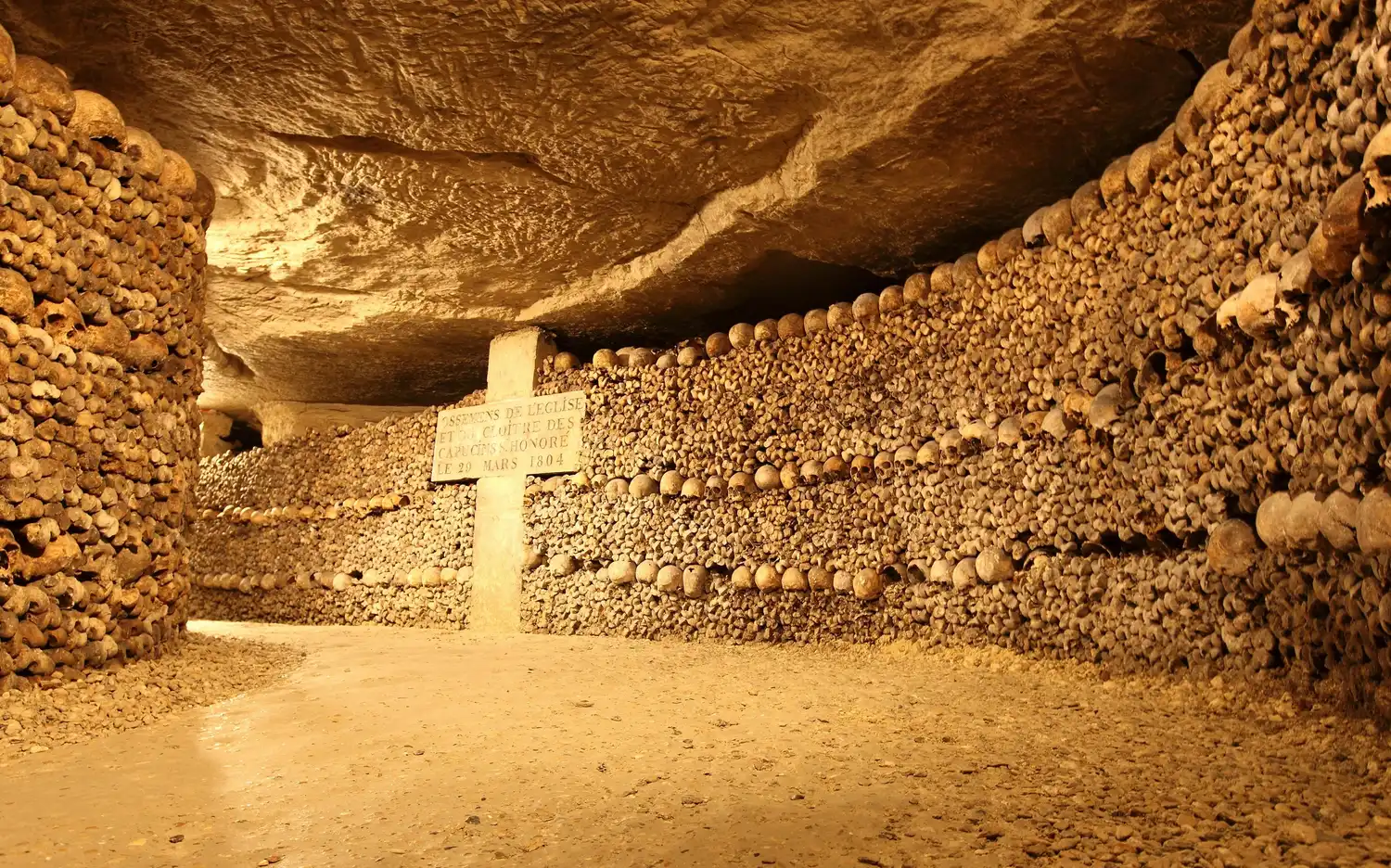
Tunnel with walls of stacked human bones and skulls featuring an inscribed stone pillar in the Paris Catacombs.
Recommended

Les Catacombes de Paris

  • Paris

Explore the haunting depths of the Catacombs of Paris, a macabre subterranean monument housing the remains of six million souls beneath the bustling streets of France's capital. This unique historical site offers one of the most chilling exhibitions in Paris, revealing a silent, skeletal world hidden right beneath your feet.

Deep beneath the bustling streets of the 14th arrondissement, the Les Catacombes de Paris offer a hauntingly beautiful descent into the city’s complex past. This sprawling subterranean labyrinth was born from necessity in the late 18th century, when Paris faced a dire public health crisis due to its overflowing medieval cemeteries, most notably the Les Innocents. Between 1786 and 1860, the remains of approximately six to seven million Parisians were methodically transferred into these former limestone quarries, which had provided the stone to build the city above. Today, it stands as the world’s largest ossuary, a silent "Empire of the Dead" that mirrors the "City of Light" overhead.

The architectural and artistic transformation of these damp tunnels is largely credited to Louis-Étienne Héricart de Thury, who in 1810 reimagined the disorganized bone repository into a visitable mausoleum. Rather than simple piles, the bones are meticulously arranged into intricate displays, where walls of skulls and femurs create patterns of crosses and altars. Visitors pass through a gateway bearing the chilling inscription, "Arrête! C'est ici l'empire de la Mort" (Stop! This is the Empire of the Dead), before discovering unique features like the Barrel of the Passion, a massive cylindrical pillar composed entirely of remains, and the Crypt of the Sepulchral Lamp.

The atmosphere within the Catacombs is one of profound stillness and quiet reflection, isolated from the modern world by twenty meters of earth. As you navigate the 1.5-kilometer public circuit, the temperature drops to a constant 14°C (57°F), adding a physical chill to the macabre surroundings. The dim lighting casts long shadows across the tablets inscribed with philosophical quotes and poetic verses about mortality, encouraging a "timeless journey" through history. This unique site has served as a sanctuary for the French Resistance during World War II and continues to fascinate cataphiles and culture seekers, offering a poignant reminder of the transience of life.

Highlights

  • The Barrière d'Enfer serves as the historic gateway and entrance point for visitors descending into the subterranean network.
  • The Quarryman's Inscription is a poignant tribute etched into stone that honors the laborers who shaped and preserved the underground passages.
  • The Crypt of the Passion features a famous barrel-shaped pillar constructed entirely from stacked human skulls and tibias.
  • The Sepulchral Lamp stands as a symbolic monument within the ossuary that was historically lit to ensure air circulation for workers.
  • The Monuments of Fortitude consist of meticulously arranged bone formations designed to inspire reflection on the strength of the human spirit.
  • The Gilbert’s Tomb area displays one of the few individual memorials amidst the millions of anonymous remains within the galleries.
  • The Altar of the Obelisks showcases the artistic side of the ossuary with bones arranged into monumental, decorative shapes.

Must-Dos

  • Pause for a moment before the entrance to read the ominous warning inscribed above the lintel that translates to "Stop! This is the Empire of Death."
  • Listen for the constant drip of groundwater hitting the limestone floor to fully appreciate the damp, heavy silence of the subterranean tunnels.
  • Take note of the geological layers of Lutetian limestone visible in the roughly-hewn ceilings that provided the stone for Paris's most famous monuments.
  • Observe the meticulously stacked patterns of femurs and humeri that transform a mass grave into a structured, architectural gallery.
  • Scan the stone walls to find historical street signs carved directly into the rock that mirror the Parisian streets directly above your head.
  • Examine the Port-Mahon gallery models created by a veteran of Louis XV's armies to see intricate fortresses carved into the quarry walls.

Guidelines

  • All visitors must undergo a security screening and bag check at the entrance to the site.
  • Only small bags are permitted as large bags, props, or costumes are strictly prohibited inside the tunnels.
  • Photography is allowed for personal use only provided that you do not use a flash, tripod, or any commercial equipment.
  • It is strictly illegal to touch, move, or remove any human remains or bones found within the ossuary.
  • Visitors are required to be respectful and maintain a quiet demeanor throughout the underground journey.
  • You must stay on the designated path and follow all instructions from staff to ensure your safety.

Tips

  • Book your tickets online at the official website several days in advance as timed-entry slots are required and frequently sell out.
  • Aim to visit during the off-season between October and April or on a weekday to experience the tunnels with fewer crowds.
  • Ensure your bag is smaller than 40cm x 30cm x 20cm because there are no storage lockers available and large luggage is strictly prohibited.
  • Wear comfortable, non-slip walking shoes to safely navigate the 131 steps down and the often damp, uneven limestone floors.
  • Carry a light jacket or sweater even in summer because the subterranean temperature remains a constant 14 degrees Celsius year-round.
  • Use a dedicated luggage storage service like Stasher near the 1, Avenue du Colonel Henri Rol-Tanguy entrance if you arrive with a backpack.

Why Visit

To truly understand the heartbeat of Paris, one must look beneath its surface, where a hauntingly beautiful duality exists between the vibrant boulevards above and the silent labyrinth below. Stepping into this subterranean realm is an invitation to witness a profoundly moving side of the city that most tourists merely skim over, trading the sparkle of the Eiffel Tower for the serene gravity of an underground world. It is an exhilarating journey through the literal foundations of the capital, offering a rare, visceral connection to the millions of souls who once walked the same streets you do now.

Descending into the cool, damp tunnels, your senses immediately sharpen as the hum of the city fades into a heavy, ancient stillness. The air carries a distinct, earthy scent, and the dim, flickering light casts elongated shadows across the meticulously arranged walls of remains, turning a mass grave into a breathtaking gallery of mortality. It is a deeply emotional experience that shifts from eerie curiosity to a quiet, transformative reverence, leaving you with a newfound appreciation for the fragility and beauty of the life thriving just twenty meters above your head.Les Catacombes de Paris offer an unparalleled, introspective adventure that bridges the gap between history and art, forcing a powerful reconnection with our shared humanity.

When to Visit

Subterranean Peak and Off-Peak Patterns

Securing a timed-entry slot for Tuesday or Wednesday significantly reduces the likelihood of encountering the dense queues that plague the Denfert-Rochereau entrance on weekends. Arriving exactly at the 9:45 AM opening allows you to descend before the midday bottleneck, while the final slots between 7:00 PM and 7:30 PM provide a similarly tranquil environment as the site prepares for its 8:30 PM closure. Because ticket releases are strictly controlled, booking several days in advance is the only way to ensure access during these lighter windows.

Artificial Illumination and Shadow Play

Atmospheric lighting within the ossuary remains consistent regardless of the sun's position above ground, making the transition from daylight to the dim, amber-hued tunnels quite jarring. Visiting during the late afternoon helps your eyes adjust more naturally to the low-light environment of the limestone quarries, where the shadows cast by stacked femurs and skulls are most dramatic. Since natural light never reaches the depths, the specific hour of your visit won't change the visibility of the inscriptions, but the reduced foot traffic during weekday evenings ensures your view of the macabre patterns isn't obscured by other visitors.

How to Visit

Navigating the depths of the 14th arrondissement requires a bit of logistical foresight to ensure your journey is as smooth as the limestone walls are ancient. You will want to head toward the historic Barrière d'Enfer pavilion to begin your descent. Budgeting about 60 to 90 minutes is the sweet spot for this self-guided trek, as the circuit covers approximately 1.5 kilometers of winding pathways and 131 steps down (plus 112 back up).

Mastering the Descent

The entrance is located at 1, Avenue du Colonel Henri Rol-Tanguy, right by the Denfert-Rochereau metro station. Since the site only allows 200 visitors at a time, having your digital ticket ready for your specific time slot is non-negotiable. Before you go down, keep in mind that there are no cloakrooms, and large bags are strictly prohibited; stick to a small backpack that you can carry in front of you to navigate the narrow corridors without snagging on the delicate bone arrangements.

Navigating the Bone-Lined Corridors

  • Begin your walk through the Portefeuille de l'Ossuaire, where the transition from standard quarry tunnels to the official "Empire of the Dead" begins.
  • Look for the Samaritaine Fountain, a small well originally used by the quarry workers that serves as a landmark roughly halfway through the ossuary.
  • Pay close attention to the Crypt of the Passion (also known as the Tibia Rotunda), where the remains are stacked in a massive, circular pillar of skulls and bones.
  • Your journey concludes by ascending the spiral staircase and exiting at 21 bis, Avenue René-Coty, which is about a ten-minute walk back to the starting metro station.

Schedules

Opening Hours

  • Les Catacombes de Paris is open from Tuesday to Sunday starting at 9:45 AM.
  • The venue closes at 8:30 PM each evening except on Mondays when it is closed.
  • Final admission to the site is strictly at 7:30 PM for all visitors.

Special Days

The site is traditionally closed on January 1st, May 1st, and December 25th.

While generally open on other public holidays like Bastille Day, advance booking is mandatory due to high demand.

The venue remains closed to the public every Monday throughout the year for maintenance and geological inspections.

How to get there

Located in the heart of the 14th arrondissement at Place Denfert-Rochereau, Les Catacombes de Paris sits well-integrated into the city's southern transport hub, making it easily accessible from anywhere in the capital. This historic subterranean ossuary is situated directly across from one of the city's most significant transit intersections, ensuring a seamless arrival for visitors.

  • Metro: Lines 4 and 6 to the Denfert-Rochereau station.
  • RER: Line B to the Denfert-Rochereau station.
  • Bus: Lines 38 and 68 to the Denfert-Rochereau stop.
Directions

Frequently Asked Questions about Les Catacombes de Paris

No, there are no cloakrooms or luggage storage facilities available at the site. For security reasons, bags larger than 40x30x20 cm are strictly prohibited inside the subterranean tunnels to protect this delicate piece of French heritage.
Unfortunately, Les Catacombes de Paris are not accessible to visitors with reduced mobility or strollers. The tour involves descending 131 steps and climbing 112 steps back to the surface, and the municipal ossuary pathways can be narrow and uneven.
Even in summer, the temperature inside the limestone quarries remains a constant 14°C (57°F). It is highly recommended to bring a light jacket or sweater and wear sturdy, closed-toe walking shoes for the 1.5-kilometer journey through Parisian history.
The most iconic locations include the 'Stop! This is the Empire of the Dead' entrance gate, the intricate bone arrangements in the Barrel of the Passion, and the Crypt of the Sepulchral Lamp. Please note that using a flash or tripod is strictly forbidden.
Due to high demand and a strict limit of 200 visitors at a time, it is essential to book your tickets online in advance. Tickets for this unique underground exhibition usually go on sale seven days before the visit date and sell out very quickly.
There are no toilet facilities within the subterranean tunnels themselves. Visitors are advised to use the restrooms located at the entrance on Avenue du Colonel Henri Rol-Tanguy before beginning their descent into the ossuary.
Parents should exercise discretion as the sight of millions of human remains in the municipal ossuary can be distressing for young children. The dark, confined environment of the tunnels may also be challenging for those prone to claustrophobia.
The most convenient way to reach the site is by taking the Metro (Lines 4 or 6) or the RER B to the Denfert-Rochereau station. The entrance is located just a short walk away, directly across from the station exit.
Eating and drinking are strictly prohibited within the Catacombs to help preserve the limestone quarries and the skeletal remains. It is best to finish any snacks before entering the site to respect the solemn nature of this historic space.
Archaeological artifacts from the Seine riverbed displayed in the underground crypt beneath Notre-Dame cathedral.
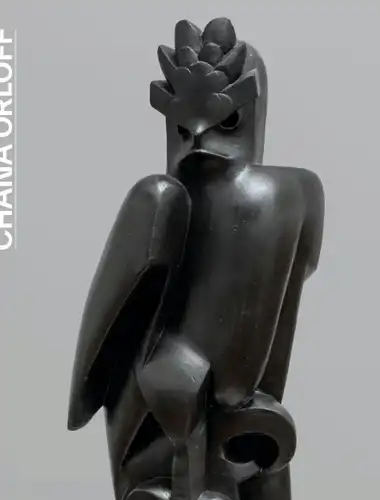
Sculptures of 20th-century conflict in the modernist Ateliers-musee Chana Orloff gallery in Paris.
Recommended
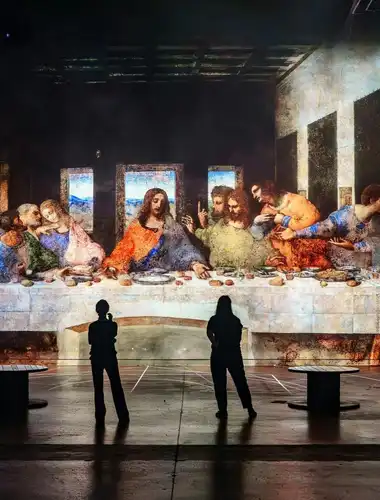
Digital art projections of Da Vinci and Michelangelo masterpieces illuminate a large immersive gallery space.
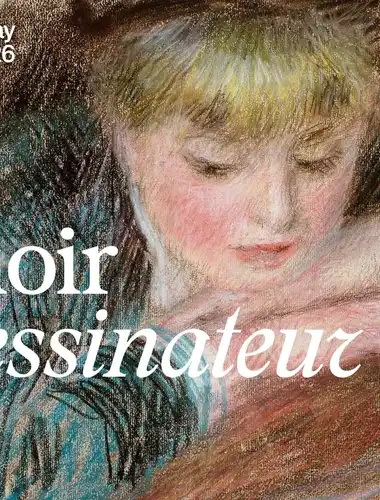
A selection of delicate pencil and pastel sketches by Pierre-Auguste Renoir displayed in a gallery.
Antique Korean beauty accessories and traditional paintings displayed in a modern museum gallery at Musée Guimet.
Vibrant interactive garden chapter at Cité des sciences featuring lush plants and sensory science displays.
Recommended
Elegant 18th-century gowns and contemporary couture on display in a grand gallery at Palais Galliera.
Recommended
Mannequins display vibrant contemporary African haute couture and textiles in a modern gallery space.
Vibrant avant-garde artwork and a Dreamachine light installation on display at the Brion Gysin exhibition in Paris.
Musicians perform an open-air concert on a stage surrounded by the lush trees of Jardin d'Acclimatation in Paris.
Recommended
Vibrant oil painting of a couple dancing outdoors in a sunlit, crowded Parisian cafe by Pierre-Auguste Renoir.
Self-portrait of Gustave Courbet with his black dog at the Artists’ Faces exhibition in the Petit Palais.
Recommended
Visitors walk among sculptures in the vaulted glass hall of Musée d'Orsay, with others seated on benches.
4 exhibitions

Musée d'Orsay

  • Paris

Breathtaking Impressionist masterpieces housed within the timeless elegance of a magnificent Parisian station.

Recommended
Modern curved glass and metal Fondation Louis Vuitton building under a blue sky with trees and parked cars.
1 exhibition

Fondation Louis Vuitton

  • Paris

Where avant-garde art meets Frank Gehry’s breathtaking glass sails in the heart of Paris.

Recommended
Grand mansion at Musée Rodin viewed through manicured gardens with a central pond, statues, and trimmed bushes.
1 exhibition

Musée Rodin Paris

  • Paris

A historic mansion sanctuary where Rodin’s emotive masterpieces breathe amidst rose-filled gardens.

Recommended
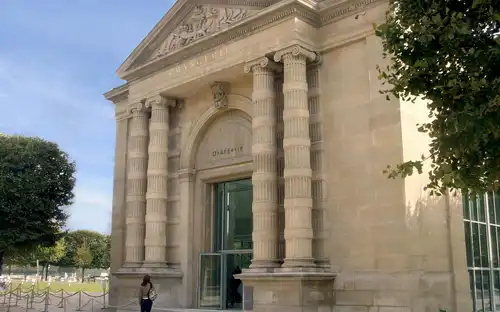
Ornate stone Musée de l'Orangerie entrance with large columns and one person standing near the doorway.
2 exhibitions

Musée de l'Orangerie

  • Paris

A luminous sanctuary where Monets panoramic Water Lilies bloom in timeless Impressionist light.

Recommended
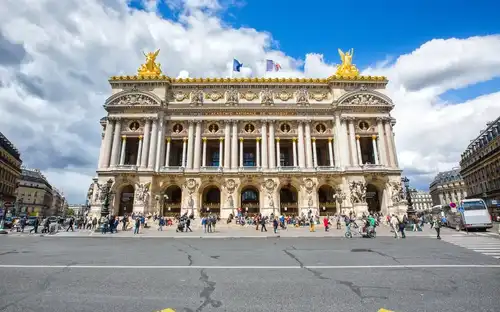
Grand neoclassical Palais Garnier with golden statues and a French flag under a blue sky.
1 exhibition

Palais Garnier

  • Paris

A breathtaking masterpiece of nineteenth-century opulence and legendary Parisian high culture.

Recommended
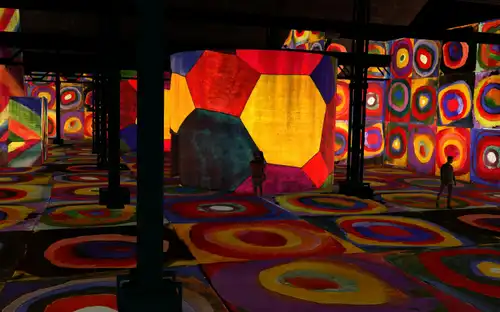
Vibrant abstract projections from the Kandinsky exhibition at the Atelier des Lumières digital art center.
1 exhibition

Atelier des Lumières

  • Paris

Masterpieces come alive through immersive light and sound in a historic Parisian foundry.

Recommended
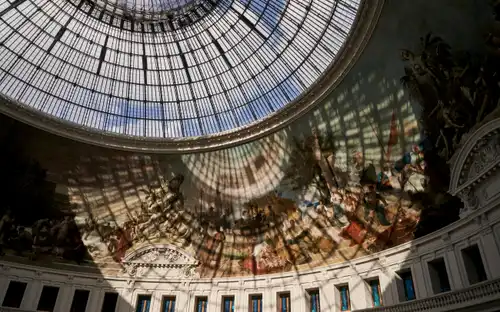
Intricate metal framework of a large glass dome casting shadows on a mural of historical and mythical scenes.
1 exhibition

Bourse de Commerce - Pinault Collection

  • Paris

A sanctuary of contemporary masterpieces housed within a masterfully restored historic dome.

Neoclassical building with tall columns, large windows, outdoor seating, and a statue holding a spear.
2 exhibitions

Musée d'Art Moderne de Paris

  • Paris

A sanctuary of avant-garde masterpieces and evolving contemporary narratives in the heart of Paris.

Historic courtyard at Musée de l'Armée with arched windows and a golden-domed building under a partly cloudy sky.
1 exhibition

Musée de l'Armée & Napoleon's Tomb

  • Paris

France's storied military legacy rests beneath a majestic golden dome of timeless architectural grandeur.

Grand building with arched windows, statues, and a central fountain, surrounded by lawns and city buildings.
2 exhibitions

Palais Galliera

  • Paris

A grand Renaissance palace enshrining the timeless evolution of French fashion and contemporary artistry.

Exhibit wall with multilingual text about Georges Méliès, surrounded by framed portraits and illustrations.
1 exhibition

La Cinémathèque Française

  • Paris

A stunning Frank Gehry masterpiece housing the world's most prestigious collection of cinematic treasures.

Elegant stone mansion with arched doorways and a columned entrance, set within a manicured courtyard.
1 exhibition

Musée Jacquemart-André

  • Paris

An opulent Haussmann-era mansion housing one of the city's most prestigious private art collections.