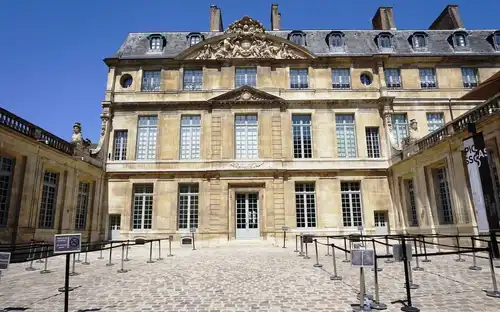
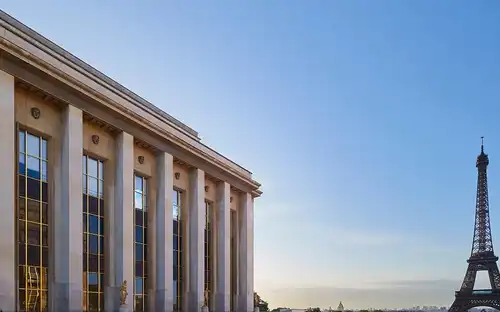
Exterior view of the Fondation Cartier glass and steel building on Boulevard Raspail in Paris.

Fondation Cartier pour l'Art Contemporain

  • Paris

Housed in a striking Jean Nouvel-designed glass building, the Fondation Cartier pour l'Art Contemporain in Paris hosts premier contemporary art exhibitions and unique artist commissions. This cultural landmark offers an ever-evolving look into global creativity within one of the city's most iconic architectural settings.

The Fondation Cartier pour l'Art Contemporain stands as a beacon of creative innovation in Paris, marking a significant evolution from its original 1984 roots in Jouy-en-Josas. As a pioneer of corporate philanthropy in France, the institution has redefined the relationship between the private sector and the arts. In late 2025, the Foundation entered a transformative new chapter by relocating to a historic site at 2, place du Palais-Royal, directly opposite the Louvre. This monumental move places the avant-garde institution in the heart of the 1st arrondissement, creating a fascinating dialogue between the "art of today" and the classical masterpieces of the past.

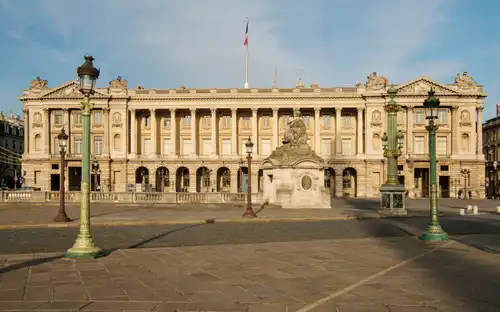
The architectural identity of the new venue is an extraordinary achievement by the Pritzker Prize-winning architect Jean Nouvel. Housed within a 19th-century building originally constructed as the Grand Hôtel du Louvre for the 1855 Exposition Universelle, the design masterfully preserves the historic Haussmannian limestone facades and famous arcades along the Rue de Rivoli. Inside, however, Nouvel has staged a radical intervention, stripping away interior walls to create a modular, industrial laboratory. The centerpiece of this design is a series of five mobile steel platforms that can be raised or lowered, allowing the 6,500 square meters of exhibition space to be completely reconfigured for every new project.

Visitors to the Foundation will experience an atmosphere of transparency and constant motion. Large picture windows and a new glass canopy on the Rue Saint-Honoré side blur the boundaries between the bustling city and the quietude of the gallery. This "dynamic architecture" allows natural light and urban life to flow through the building, ensuring that no two visits are ever the same. Whether exploring the vast basement levels or the soaring ground-floor spaces, guests are immersed in a "living laboratory" where multidisciplinary programming—ranging from painting and sculpture to video and sound installations—pushes the boundaries of contemporary creation.

Beyond its physical structure, the Foundation is celebrated for its commitment to a diverse, global community of artists. Over the decades, it has hosted legendary figures like César, Damien Hirst, and Ron Mueck, while frequently introducing international talents such as Cai Guo-Qiang and Sally Gabori to European audiences. With its permanent collection of over 1,500 works and a focus on art education through its dedicated space known as The Manufacture, the Fondation Cartier remains a vital, inclusive crossroads for intellectual and sensory exploration in the center of Paris.

Highlights

  • The Jean Nouvel-designed glass building serves as a striking transparent sanctuary where indoor and outdoor art spaces merge seamlessly.
  • The Lush Garden provides a tranquil cedar-shaded retreat that serves as a living canvas for contemporary sculptures.
  • Rotating Thematic Exhibitions offer visitors fresh perspectives through diverse contemporary art collections and site-specific installations.
  • Interactive Creative Workshops allow children and families to engage directly with artistic and scientific concepts through hands-on entertainment.
  • The Exposition Générale at the new Place du Palais-Royal location showcases a significant selection from the foundation's vast international collection.
  • Specialized Architectural Tours provide deep insights into the innovative structural design and the unique history of the landmark venue.

Must-Dos

  • Stand on the reflective floors to experience the optical illusion of the surrounding city skyline multiplying infinitely around you.
  • Visit during late afternoon to watch the natural light transform the interior into a vibrant tapestry of ruby reds and emerald greens.
  • Navigate through the floating silver reflective balls to experience a surreal and interactive environment that mirrors the city lights.
  • Time your visit for sunset to witness the dramatic transition of the skyline and exhibits from day to night.
  • Listen to the rhythmic sounds of nature and soft footsteps through high-quality headphones to fully immerse yourself in the garden’s tranquil atmosphere.
  • Pause on a garden bench to observe the small, quiet moments and the cycle of the seasons revealed in the outdoor spaces.

Guidelines

  • All visitors must undergo a security screening upon arrival at the venue.
  • All bags must be carried on the side or front of your body rather than on your back.
  • Visitors are required to stay at least 18 inches away from all artworks at all times.
  • Non-flash photography for personal use is permitted, but the use of tripods, selfie sticks, and flash is strictly prohibited.
  • Food and beverages are not allowed in the galleries and should be consumed in designated dining areas.
  • It is strictly prohibited to touch any artwork, frames, or display cases within the museum.
  • Only service animals are permitted inside the building, while pets and emotional support animals are not allowed.

Tips

  • We strongly recommend booking your tickets online in advance to secure your entry, as on-site ticket sales are subject to availability.
  • Take advantage of the late opening on Tuesdays until 10 pm to enjoy the contemporary exhibitions with a more intimate, evening atmosphere.
  • If you are visiting between exhibitions, you can access the specialized bookshop for free through its dedicated entrance on Rue de Rivoli.
  • Look for the Flash Tours meeting points on each floor to join free, hourly introductory talks led by guides that are included with your admission.
  • While the main entrance is at Place du Palais-Royal, those who purchased tickets at the Rue Saint-Honoré office must still join the reservation line.
  • Travel light as only rucksack-sized items fit in the available lockers, and larger luggage like cabin bags or bicycles are strictly prohibited inside.
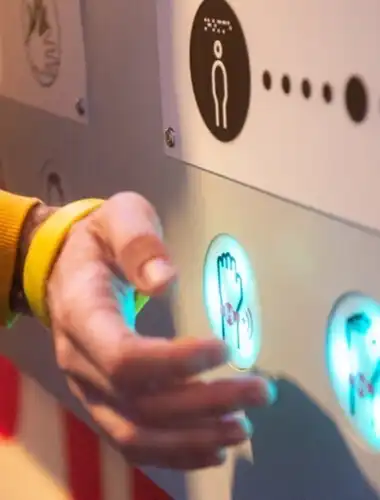
  • Families should look for the manu pictograms throughout the galleries, which indicate artworks with labels and trails specifically adapted for children.

Why Visit

If you seek the pulse of modern Paris, look no further than the Fondation Cartier pour l'Art Contemporain. While the nearby Louvre preserves the echoes of history, this avant-garde sanctuary serves as a living, breathing laboratory for the 21st century. Stepping inside is a revelation; the dynamic architecture of the new Palais-Royal site strips away the traditional boundaries of a museum, replacing static walls with massive mobile steel platforms that shift to accommodate the wildest dreams of today’s most provocative artists. It is a rare chance to stand at the absolute intersection of heritage and innovation, where the historic 19th-century facade opens into a futuristic world of total creative freedom.

To visit during the late afternoon is to witness a masterpiece of light as the setting sun spills through the vast glass canopies, painting the industrial steel interior in a vibrant tapestry of ruby and emerald. As you wander, the reflective floors create a dizzying optical illusion, making the Parisian skyline appear to multiply and dance around you, while the floating silver spheres mirror the flickering city lights in a surreal, interactive ballet. It is not just an exhibition space; it is a sensory voyage that invites you to lose yourself in the rhythmic sounds of nature and the silent, turning cycles of the seasons within its hidden garden.The Fondation Cartier is a transcendent gateway where the vanishing limits of architecture allow every visitor to become a participant in the infinite evolution of contemporary art.

When to Visit

Midweek Morning Serenity

Arriving right at 11:00 AM on Tuesday, Wednesday, or Thursday offers the most tranquil environment for navigating Jean Nouvel’s transparent masterpiece. Since the museum is closed on Mondays, the initial morning rush on Tuesday is often lighter than weekend peaks, allowing you to move through the glass-walled galleries before the local lunch-break crowds arrive. Choosing a midweek slot ensures that the reflective surfaces and open-plan layouts remain unobstructed by heavy foot traffic, preserving the intended optical illusions of the building.

Luminous Twilight in the Glass Sanctuary

Scheduling your visit for Tuesday evenings when the foundation stays open until 10:00 PM provides a unique opportunity to see the architecture transform as daylight fades. The interplay between internal exhibition lighting and the darkening Parisian sky creates a kaleidoscopic effect against the glass facade that is entirely absent during midday hours. Visiting during the final two hours of operation on any weekday typically results in the thinnest crowds, as most tour groups and families depart by late afternoon, leaving the galleries significantly more peaceful for contemplative viewing.

How to Visit

If you are heading to the new 2 Place du Palais-Royal site, you will want to budget at least two hours to properly engage with the rotating exhibitions and the radical architecture. Unlike traditional museums, this space is constantly evolving, so checking the current program before you go is essential. To keep your visit smooth, make sure you have your digital tickets ready for the security screening at the main entrance.

Master the Modular Flow

The beauty of this venue lies in its shifting levels and open-plan design. To get the most out of your visit without feeling overwhelmed by the scale, try this logical flow:

  • Start at the ground level to get your bearings and view the largest installations that often take advantage of the soaring glass ceilings.
  • Use the elevators or stairs to reach the mezzanine levels; these offer the best vantage points for photographing the industrial steelwork and seeing how the mobile platforms have been configured for the current show.
  • Don't miss the lower levels, which frequently house more intimate digital works or specialized collection highlights.
  • End your journey at the Bookshop on the ground floor, which is a destination in its own right for rare art monographs and limited-edition prints.

Strategic Entry and Amenities

While the main entrance is at 2 Place du Palais-Royal, keep in mind that specific programming or events might utilize the Porte Saint-Honoré or Porte Oratoire for quicker access to the Studio Marie-Claude Beaud or future dining areas. If you have bags, head straight to the Lockers in the lobby after passing security so you can explore the galleries unencumbered. If you need a quick break, Le Petit Café is accessible with your entry ticket and provides a perfect spot to recharge before heading back into the city.

Schedules

Opening Hours

  • The Fondation Cartier pour l'Art Contemporain is open Tuesday from 11 AM to 10 PM and Wednesday through Sunday from 11 AM to 8 PM.
  • The venue remains closed to the public every Monday.
  • Last entry is permitted up until 30 minutes before the scheduled closing time.

Special Days

The venue is closed on January 1st, May 1st, and December 25th.

Early closing times occur at 6:00 PM on December 24th and December 31st.

Free entry was offered during the grand opening weekend on October 25th and October 26th.

How to get there

Situated in the 1st arrondissement opposite the Louvre Museum, the Fondation Cartier pour l’art contemporain is a cornerstone of Parisian culture easily reached by various transit networks. Its central location at 2 Place du Palais-Royal makes it one of the most accessible art spaces in the heart of the city.

  • Metro: Lines 1 or 7 to Palais-Royal - Musée du Louvre
  • Bus: Lines 21, 27, 39, 48, 67, 68, 69, 72, 81, or 95 to Palais-Royal - Musée du Louvre
  • RER: Line A to Châtelet - Les Halles followed by a short walk or metro transfer
Directions

Frequently Asked Questions about Fondation Cartier pour l'Art Contemporain

Yes, the Fondation Cartier provides a cloakroom for visitors to store coats and small personal items. However, for security reasons and to preserve the contemporary art, large suitcases or bulky items exceeding standard cabin luggage dimensions are generally not permitted inside the galleries at Palais Royal.
The modern art museum is fully accessible, featuring elevators and wide galleries that accommodate strollers and pushchairs. This Jean Nouvel-designed space ensures all families can explore the 'living laboratory' of art comfortably within its historic Haussmannian shell.
The most striking photos can be captured from the mobile steel platforms or beneath the glass canopy on the Rue Saint-Honore side, where natural light interacts with the industrial design. The contrast between the historic Grand Hotel du Louvre facade and the avant-garde interior offers a unique 'Parisian' backdrop.
As a private institution for contemporary art, the Fondation Cartier is typically not included in the standard Paris Museum Pass. Visitors are encouraged to book tickets specifically for the current art exhibitions directly via the official website to ensure entry to the Palais Royal site.
The most convenient way to reach this cultural heritage site is via the Paris Metro. Take Lines 1 or 7 to the 'Palais Royal - Musee du Louvre' station, which exits right near the foundation's entrance, directly opposite the Louvre museum.
The Fondation Cartier frequently offers guided tours and workshops within 'The Manufacture', focusing on contemporary artists and the creative process. It is recommended to check the seasonal schedule for specific programming related to the Exposition Generale and multidisciplinary projects.
To fully experience the rotating art exhibitions and the architectural innovation of Jean Nouvel, most visitors spend between 1.5 to 2 hours. The modular nature of the 6,500 square meter space means the layout and experience change significantly with every new project.
The new venue at 2, place du Palais-Royal includes a specialized bookstore featuring rare catalogues on contemporary artists and modern art. While the surrounding 1st arrondissement offers many cafes, the foundation often hosts pop-up sensory installations that may include culinary elements.
Absolutely, the foundation is committed to being an inclusive crossroads for all ages. Dedicated educational spaces and interactive video or sound installations often appeal to younger audiences, making it a vibrant destination for families interested in 'art of today'.
Recommended
Vibrant satirical photography by Martin Parr exploring global tourism and consumerism at the Jeu de Paume gallery.
Stark black-and-white landscape photography captures the silent aftermath of South African conflict and memory.
Recommended
Mummified human remains and funerary objects in a modern, respectfully lit gallery at the Musee de l'Homme.
Vibrant street performers and colorful Holi festival celebrations at the historic Jardin d'Acclimatation in Paris.
Crowd at Jardin d'Acclimatation celebrating Holi with a vibrant explosion of colorful powders in the Parisian sky.
Archaeological artifacts from the Seine riverbed displayed in the underground crypt beneath Notre-Dame cathedral.
Sculptures of 20th-century conflict in the modernist Ateliers-musee Chana Orloff gallery in Paris.
Recommended
Digital art projections of Da Vinci and Michelangelo masterpieces illuminate a large immersive gallery space.
A selection of delicate pencil and pastel sketches by Pierre-Auguste Renoir displayed in a gallery.
Antique Korean beauty accessories and traditional paintings displayed in a modern museum gallery at Musée Guimet.
Vibrant interactive garden chapter at Cité des sciences featuring lush plants and sensory science displays.
Recommended
Elegant 18th-century gowns and contemporary couture on display in a grand gallery at Palais Galliera.
Recommended
Visitors walk among sculptures in the vaulted glass hall of Musée d'Orsay, with others seated on benches.
4 exhibitions

Musée d'Orsay

  • Paris

Breathtaking Impressionist masterpieces housed within the timeless elegance of a magnificent Parisian station.

Recommended
Modern curved glass and metal Fondation Louis Vuitton building under a blue sky with trees and parked cars.
1 exhibition

Fondation Louis Vuitton

  • Paris

Where avant-garde art meets Frank Gehry’s breathtaking glass sails in the heart of Paris.

Recommended
Grand mansion at Musée Rodin viewed through manicured gardens with a central pond, statues, and trimmed bushes.
1 exhibition

Musée Rodin Paris

  • Paris

A historic mansion sanctuary where Rodin’s emotive masterpieces breathe amidst rose-filled gardens.

Recommended
Ornate stone Musée de l'Orangerie entrance with large columns and one person standing near the doorway.
2 exhibitions

Musée de l'Orangerie

  • Paris

A luminous sanctuary where Monets panoramic Water Lilies bloom in timeless Impressionist light.

Recommended
Grand neoclassical Palais Garnier with golden statues and a French flag under a blue sky.
1 exhibition

Palais Garnier

  • Paris

A breathtaking masterpiece of nineteenth-century opulence and legendary Parisian high culture.

Recommended
Vibrant abstract projections from the Kandinsky exhibition at the Atelier des Lumières digital art center.
1 exhibition

Atelier des Lumières

  • Paris

Masterpieces come alive through immersive light and sound in a historic Parisian foundry.

Recommended
Intricate metal framework of a large glass dome casting shadows on a mural of historical and mythical scenes.
1 exhibition

Bourse de Commerce - Pinault Collection

  • Paris

A sanctuary of contemporary masterpieces housed within a masterfully restored historic dome.

Neoclassical building with tall columns, large windows, outdoor seating, and a statue holding a spear.
2 exhibitions

Musée d'Art Moderne de Paris

  • Paris

A sanctuary of avant-garde masterpieces and evolving contemporary narratives in the heart of Paris.

Historic courtyard at Musée de l'Armée with arched windows and a golden-domed building under a partly cloudy sky.
1 exhibition

Musée de l'Armée & Napoleon's Tomb

  • Paris

France's storied military legacy rests beneath a majestic golden dome of timeless architectural grandeur.

Grand building with arched windows, statues, and a central fountain, surrounded by lawns and city buildings.
2 exhibitions

Palais Galliera

  • Paris

A grand Renaissance palace enshrining the timeless evolution of French fashion and contemporary artistry.

Exhibit wall with multilingual text about Georges Méliès, surrounded by framed portraits and illustrations.
1 exhibition

La Cinémathèque Française

  • Paris

A stunning Frank Gehry masterpiece housing the world's most prestigious collection of cinematic treasures.

Elegant stone mansion with arched doorways and a columned entrance, set within a manicured courtyard.
1 exhibition

Musée Jacquemart-André

  • Paris

An opulent Haussmann-era mansion housing one of the city's most prestigious private art collections.