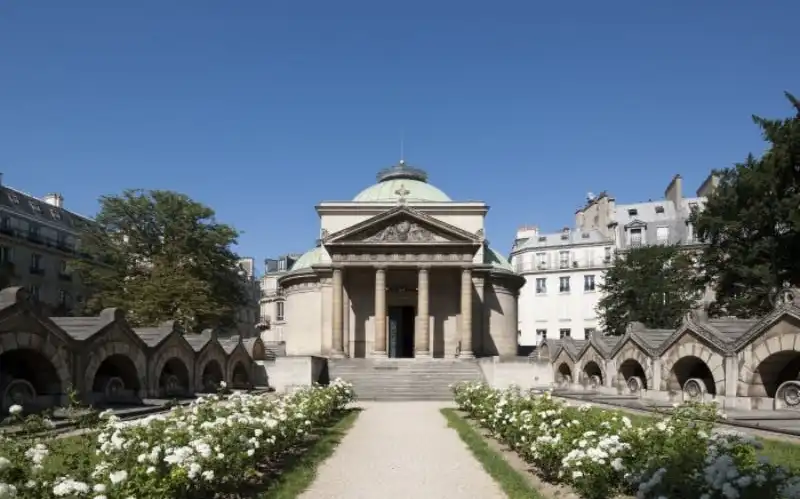
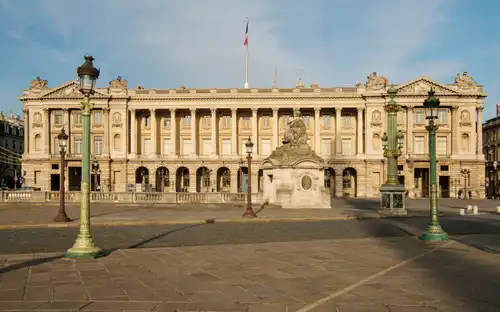
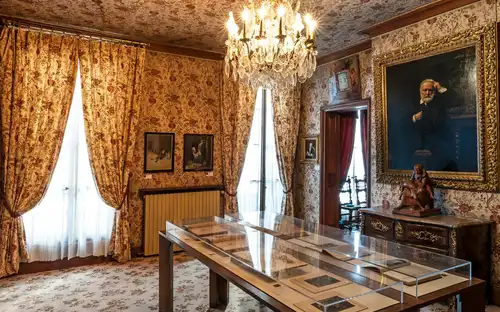
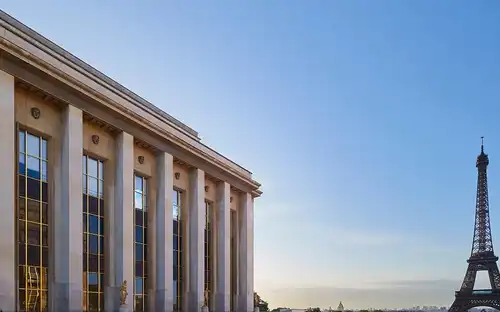
Classical domed building with columns, white flowers, and shrubs under a clear blue sky at the Expiatory Chapel.

Expiatory Chapel

  • Paris

Tucked away in the heart of Paris, the Expiatory Chapel is a poignant neo-classical masterpiece marking the original burial site of Louis XVI and Marie Antoinette. This hidden gem in the 8th arrondissement offers a somber and striking glimpse into the city's royal history through its evocative architecture and commemorative exhibitions.

Tucked away in the 8th arrondissement on the site of the former Madeleine Cemetery, the Expiatory Chapel (Chapelle expiatoire) stands as one of Paris’s most poignant and hidden historical gems. Commissioned in 1815 by King Louis XVIII, the chapel was built as an act of atonement for the execution of his brother, Louis XVI, and Queen Marie Antoinette, during the French Revolution. Though the royal remains were moved to the Basilica of Saint-Denis in 1815, this site remains a powerful monument of remembrance, marking the exact location where the monarchs were once buried in a mass grave alongside hundreds of other victims of the guillotine, including Charlotte Corday and Madame du Barry.

Architecturally, the chapel is a masterpiece of late Neo-Classical design and early Romanticism, envisioned by the renowned architect Pierre-François-Léonard Fontaine. The structure is designed as a solemn promenade, leading visitors through an enclosed, cloister-like courtyard lined with symbolic tombs dedicated to the Swiss Guards who died defending the Tuileries Palace. The building’s facade features a austere Doric peristyle, while the interior is organized around a Greek cross plan topped by three coffered domes. Natural light filters through central skylights, casting a dramatic and ethereal glow over the sacred space.

Inside the upper chapel, visitors are met by two monumental white marble sculptures that define the artistic experience: François-Joseph Bosio’s "Louis XVI, Called to Immortality, Supported by an Angel" and Jean-Pierre Cortot’s "Marie Antoinette Supported by Religion." These emotive works capture the monarchs in their final moments of earthly life. Below, the Lower Chapel houses a black marble altar in the Crypt, which marks the precise spot where the King’s body was recovered. The atmosphere is one of profound silence and "serenity," offering a stark, contemplative contrast to the bustling Saint-Lazare district just outside its walls.

Stepping into the surrounding Square Louis XVI, visitors experience a rare sense of "tranquility" in the heart of Paris. The complex was designed to feel like an oasis of calm, intended to provoke reflection on the "trajectory of the French Republic" and the complex legacy of the Bourbon Restoration. Whether viewed as a site of royalist rehabilitation or a significant architectural "jewel," the chapel provides a unique historical perspective on the end of the Ancien Régime, making it an essential stop for those looking to explore the deeper, more intimate layers of Parisian history.

Highlights

  • The Neoclassical Architecture of the exterior showcases a solemn and balanced design that serves as a powerful memorial to the French monarchy.
  • The Statue of Louis XVI by Joseph Bosio depicts the king being comforted by an angel as he faces his execution.
  • The Statue of Marie Antoinette by Jean-Pierre Cortot captures the queen in a prayerful pose, supported by a figure representing Religion.
  • The Crypt marks the exact historical location where the remains of the royal couple were originally interred before being moved to Saint-Denis.
  • The Cenotaphs within the chapel provide a space for quiet reflection on the turbulent history of the French Revolution.
  • The Altar of the Underground Chapel features a black marble plaque that commemorates the exact spot where the King’s body was found.

Must-Dos

  • Stroll through the Square Louis XVI, a quiet public park that isolates the chapel from the bustling city streets and provides a peaceful entrance.
  • Read the engraved testaments of Louis XVI and Marie Antoinette, which offer a moving look into their final thoughts before their executions.
  • Walk along the Campo Santo, the raised galleries that house the symbolic tombs of the Swiss Guards who perished defending the Tuileries Palace.
  • Observe the delicate light filtering through the dome, which creates a somber and reverent atmosphere throughout the interior space.
  • Stand in the inner courtyard to appreciate the transition from the chaotic urban environment to this secluded, historic sanctuary.
  • Examine the intricate floral carvings and decorative details that soften the chapel's austere Neoclassical stone surfaces.

Guidelines

  • Visitors must pass through security checks and have all bags, purses, and personal items inspected before entering the chapel.
  • Large items such as luggage, oversized backpacks, and carry-on bags are strictly prohibited inside the monument.
  • Non-flash photography is permitted for personal use, but the use of flashes, tripods, selfie sticks, and professional video equipment is forbidden.
  • To preserve the solemn atmosphere of this memorial site, visitors are asked to speak softly and maintain a quiet presence throughout their visit.
  • All electronic devices, including cell phones, must be placed on silent mode to avoid disrupting other visitors.
  • The consumption of food and beverages, including water and gum, is not allowed within the chapel or the museum galleries.
  • Visitors should remain on designated paths and maintain a distance of at least 18 inches from all artwork and monuments to ensure their protection.

Tips

  • Plan your visit for a Tuesday, Wednesday, or Thursday to avoid the larger weekend crowds and enjoy the chapel’s serene atmosphere in relative solitude.
  • Arrive at 29 Rue Pasquier at least 30 minutes before the afternoon closing time to ensure you have enough time to explore the interior before the last entry.
  • Take advantage of free admission if you are under 18 years old or a European Union resident under 26, as you can enter without a prior reservation.
  • Consider visiting during the low season between October and March when the site is typically less busy, though keep in mind it remains closed on Sundays, Mondays, and Tuesdays.
  • Pack a light snack or a book to enjoy in the surrounding Square Louis XVI gardens, which offer a peaceful retreat from the bustle of the nearby Boulevard Haussmann.
  • Combine your trip with a stop at the nearby Saint-Augustin area to find reasonably priced local bistros that are popular with Parisian residents.

Why Visit

For those who believe they have seen all of Paris, the Expiatory Chapel offers a rare, unfiltered encounter with the ghosts of the French Revolution. This is not just another monument; it is a meticulously preserved Neo-Classical time capsule that stands as a silent witness to the fall of the Ancien Régime. While the masses flock to the gilded halls of Versailles, the discerning traveler seeks out this secluded sanctuary to stand upon the very ground that once held the remains of Louis XVI and Marie Antoinette. Navigating the solemn Campo Santo and the symbolic tombs of the Swiss Guards, you will discover a hauntingly beautiful perspective on the fragility of power and the endurance of memory that most tourists simply overlook.

Stepping through the threshold, the roar of the 8th arrondissement instantly dissolves into a profound, heavy silence that commands reverence. The interior experience is defined by a dramatic interplay of natural light filtering through the coffered domes, illuminating the ethereal white marble of the monumental sculptures with a ghostly radiance. Descending into the Lower Chapel, the air cools as you approach the black marble altar in the crypt—the precise, hallowed spot of the original royal interment. It is a sensory journey that moves from the architectural grandeur of the upper galleries to a deeply personal, emotional stillness at the heart of the earth, leaving even the most casual visitor with an undeniable sense of goosebumps and historical awe.The Expiatory Chapel is a hauntingly beautiful architectural jewel that invites you to step out of the modern world and into a sacred space where the tragic echoes of French history are still vibrantly felt.

When to Visit

Midweek Solitude in the 8th Arrondissement

Securing a peaceful walkthrough of this neoclassical memorial is most effective on a Tuesday, Wednesday, or Thursday. Visitors who arrive between 10:00 AM and 11:00 AM typically encounter the fewest people, as larger tour groups often prioritize the more famous landmarks nearby during these early hours. Avoiding the first Sunday of the month between November and March is highly recommended for those seeking a quiet atmosphere, as the free admission policy consistently draws significantly higher foot traffic than standard paid days.

Neoclassical Shadows and Dome Illumination

Natural light interacts uniquely with the chapel’s stone interior depending on the position of the sun over the Square Louis XVI. Arriving between 1:30 PM and 3:30 PM allows the sun to reach its highest point, casting a direct glow through the upper openings that illuminates the intricate details of the white marble statues. During the winter months of October to March, the lower angle of light creates long, dramatic shadows against the austere walls, heightening the solemnity of the original burial site of the French monarchy.

How to Visit

Finding your way to the Expiatory Chapel is part of its charm. Located at 29 Rue Pasquier, the entrance is a discrete gateway that leads you away from the Parisian bustle and into the quiet greenery of Square Louis XVI. Budget about 45 to 60 minutes for your visit; this is a compact site, but the architecture and history are dense, inviting a slow, contemplative pace rather than a hurried walkthrough.

Navigating the Royal Memorial

  • Start your journey by walking through the vestibule and into the Campo Santo. This interior courtyard, lined with symbolic cenotaphs for the Swiss Guards, acts as a transition zone that prepares you for the solemnity of the main building.
  • Move into the Upper Chapel, where the focus shifts to the two massive marble sculpture groups. Take a moment to look up at the neoclassical dome, which provides the soft, natural light that defines the interior atmosphere.
  • Finally, descend the stairs into the Lower Chapel or crypt. This is the structural heart of the monument, featuring a black marble altar that marks the exact location where the remains of the monarchs were discovered.

Practical Essentials for a Seamless Visit

Since the chapel is managed by the Centre des Monuments Nationaux, your Paris Museum Pass is a golden ticket here, allowing you to bypass the ticket desk and head straight to the security check. Keep in mind that as a site of remembrance, large bags and suitcases are strictly prohibited. If you are coming from a nearby shopping spree at the grands magasins, you will need to store your bags elsewhere before arriving at the Rue Pasquier gate. For the best experience, try to visit during the shoulder seasons—April or September—when the surrounding gardens are in full bloom, adding a layer of natural beauty to the austere stone facade.

Schedules

Opening Hours

  • From April to September, the venue is open Tuesday to Saturday from 10:00 AM to 12:30 PM and 1:30 PM to 6:30 PM.
  • From October to March, it operates Wednesday to Saturday from 10:00 AM to 12:30 PM and 1:30 PM to 5:00 PM.
  • The last entry allowed into the monument is 30 minutes before the scheduled closing time.

Special Days

The monument is closed on January 1, May 1, and December 25 but remains open on other public holidays like Bastille Day and Easter Monday.

Free entry is offered every first Sunday of the month from November to March and during the European Heritage Days on the third weekend of September.

How to get there

Tucked away in the elegant 8th arrondissement, the Expiatory Chapel sits within the Square Louis XVI, offering a serene retreat just a short walk from the bustling Saint-Lazare district. Its central location makes it exceptionally accessible via Paris's extensive public transport network, with several major hubs nearby.

  • Metro: Lines 3, 12, 13, and 14 to Saint-Lazare, line 9 to Saint-Augustin, or lines 8, 12, and 14 to Madeleine.
  • RER: Line A to Auber or line E to Haussmann Saint-Lazare.
  • Bus: Lines 32, 43, 49, 84, and 94 to the Saint-Lazare or Pasquier - Anjou stops.
  • Train: SNCF lines J and L to the Gare Saint-Lazare terminus.
Directions

Frequently Asked Questions about Expiatory Chapel

No, the Chapelle expiatoire does not have cloakrooms or lockers for large items. Due to security measures surrounding this historical monument, suitcases and large backpacks are strictly prohibited inside the site and cannot be left at the entrance.
While the surrounding Square Louis XVI is accessible, the interior of the royal memorial involves stairs and narrow passages, making it difficult for strollers. It is recommended to use a baby carrier to fully explore the neoclassical architecture of both the upper chapel and the crypt.
The most iconic photo spot is from the center of the cloister-like courtyard, looking toward the Doric peristyle. This angle captures the solemn symmetry of Pierre-François-Léonard Fontaine's design and the contrast between the stone structure and the greenery of the square.
Yes, like many national monuments in Paris, the Expiatory Chapel offers free admission to EU residents under the age of 26. Visitors should bring a valid ID to take advantage of this benefit when exploring this significant site of the Bourbon Restoration.
Photography for personal use is permitted inside the chapel. However, the use of flash, tripods, and selfie sticks is generally restricted to preserve the quiet atmosphere and protect the delicate white marble sculptures by Bosio and Cortot.
Yes, the Expiatory Chapel is one of the participating historical monuments included in the Paris Museum Pass. This makes it a convenient addition for travelers interested in French Revolution history who are already visiting nearby sites like the Louvre or the Conciergerie.
The chapel is centrally located in the 8th arrondissement and is most easily reached via the Saint-Augustin metro station (Line 9) or the Saint-Lazare hub (Lines 3, 12, 13, and 14), which is just a short walk away from the entrance at 29 Rue Pasquier.
While individual visits are the most common way to experience the chapel’s 'serenity,' the monument occasionally offers guided tours that delve into its origins as the Madeleine Cemetery and its role as a royal memorial. It is best to check the official schedule in advance for tour availability.
Yes, visitors can descend into the Lower Chapel or Crypt. This sacred space houses the black marble altar marking the exact spot where the remains of Louis XVI were discovered, providing a profound connection to the events of the French Revolution.
Recommended
Mummified human remains and funerary objects in a modern, respectfully lit gallery at the Musee de l'Homme.
Vibrant street performers and colorful Holi festival celebrations at the historic Jardin d'Acclimatation in Paris.
Crowd at Jardin d'Acclimatation celebrating Holi with a vibrant explosion of colorful powders in the Parisian sky.
Archaeological artifacts from the Seine riverbed displayed in the underground crypt beneath Notre-Dame cathedral.
Sculptures of 20th-century conflict in the modernist Ateliers-musee Chana Orloff gallery in Paris.
Recommended
Digital art projections of Da Vinci and Michelangelo masterpieces illuminate a large immersive gallery space.
A selection of delicate pencil and pastel sketches by Pierre-Auguste Renoir displayed in a gallery.
Antique Korean beauty accessories and traditional paintings displayed in a modern museum gallery at Musée Guimet.
Vibrant interactive garden chapter at Cité des sciences featuring lush plants and sensory science displays.
Recommended
Elegant 18th-century gowns and contemporary couture on display in a grand gallery at Palais Galliera.
Recommended
Mannequins display vibrant contemporary African haute couture and textiles in a modern gallery space.
Vibrant avant-garde artwork and a Dreamachine light installation on display at the Brion Gysin exhibition in Paris.
Recommended
Visitors walk among sculptures in the vaulted glass hall of Musée d'Orsay, with others seated on benches.
4 exhibitions

Musée d'Orsay

  • Paris

Breathtaking Impressionist masterpieces housed within the timeless elegance of a magnificent Parisian station.

Recommended
Modern curved glass and metal Fondation Louis Vuitton building under a blue sky with trees and parked cars.
1 exhibition

Fondation Louis Vuitton

  • Paris

Where avant-garde art meets Frank Gehry’s breathtaking glass sails in the heart of Paris.

Recommended
Grand mansion at Musée Rodin viewed through manicured gardens with a central pond, statues, and trimmed bushes.
1 exhibition

Musée Rodin Paris

  • Paris

A historic mansion sanctuary where Rodin’s emotive masterpieces breathe amidst rose-filled gardens.

Recommended
Ornate stone Musée de l'Orangerie entrance with large columns and one person standing near the doorway.
2 exhibitions

Musée de l'Orangerie

  • Paris

A luminous sanctuary where Monets panoramic Water Lilies bloom in timeless Impressionist light.

Recommended
Grand neoclassical Palais Garnier with golden statues and a French flag under a blue sky.
1 exhibition

Palais Garnier

  • Paris

A breathtaking masterpiece of nineteenth-century opulence and legendary Parisian high culture.

Recommended
Vibrant abstract projections from the Kandinsky exhibition at the Atelier des Lumières digital art center.
1 exhibition

Atelier des Lumières

  • Paris

Masterpieces come alive through immersive light and sound in a historic Parisian foundry.

Recommended
Intricate metal framework of a large glass dome casting shadows on a mural of historical and mythical scenes.
1 exhibition

Bourse de Commerce - Pinault Collection

  • Paris

A sanctuary of contemporary masterpieces housed within a masterfully restored historic dome.

Neoclassical building with tall columns, large windows, outdoor seating, and a statue holding a spear.
2 exhibitions

Musée d'Art Moderne de Paris

  • Paris

A sanctuary of avant-garde masterpieces and evolving contemporary narratives in the heart of Paris.

Historic courtyard at Musée de l'Armée with arched windows and a golden-domed building under a partly cloudy sky.
1 exhibition

Musée de l'Armée & Napoleon's Tomb

  • Paris

France's storied military legacy rests beneath a majestic golden dome of timeless architectural grandeur.

Grand building with arched windows, statues, and a central fountain, surrounded by lawns and city buildings.
2 exhibitions

Palais Galliera

  • Paris

A grand Renaissance palace enshrining the timeless evolution of French fashion and contemporary artistry.

Exhibit wall with multilingual text about Georges Méliès, surrounded by framed portraits and illustrations.
1 exhibition

La Cinémathèque Française

  • Paris

A stunning Frank Gehry masterpiece housing the world's most prestigious collection of cinematic treasures.

Elegant stone mansion with arched doorways and a columned entrance, set within a manicured courtyard.
1 exhibition

Musée Jacquemart-André

  • Paris

An opulent Haussmann-era mansion housing one of the city's most prestigious private art collections.