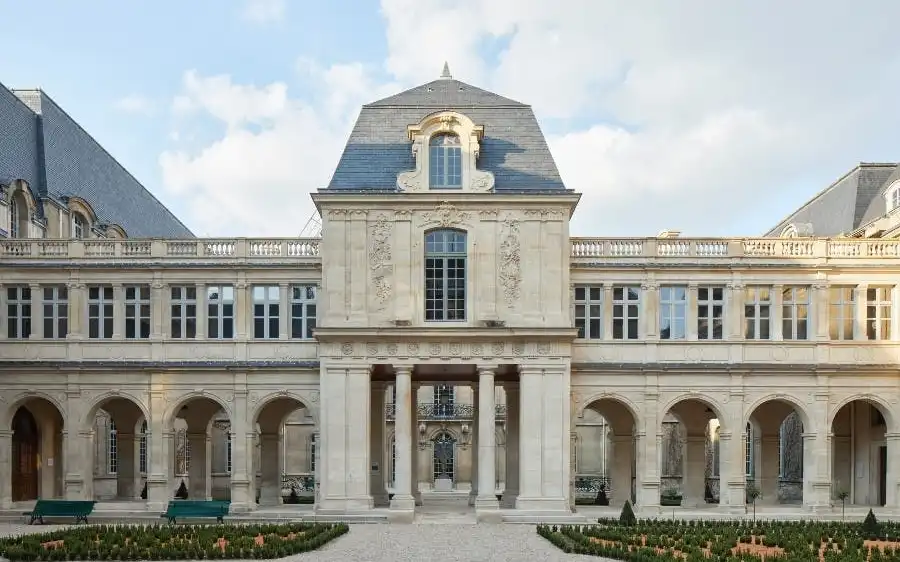
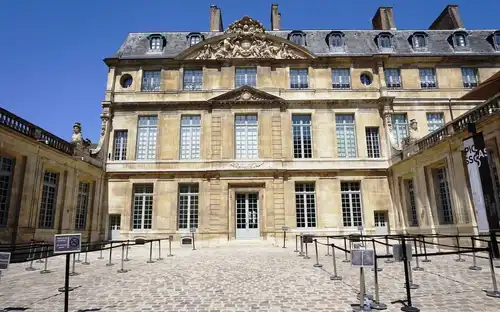
Historic building with arched windows and a green courtyard with benches under a blue sky at Carnavalet Museum.

Carnavalet Museum

  • Paris

Step into the revitalized Carnavalet Museum, the oldest municipal museum in Paris, where immersive exhibitions showcase over 625,000 works detailing the city's rich history. Following an extensive renovation, this cultural landmark offers a fresh, expert perspective on the captivating story of the French capital.

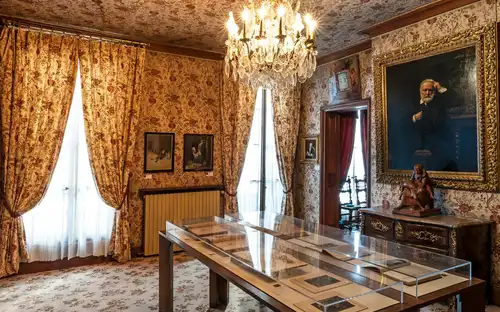
A 17th-century portrait of Madame de Sévigné inside the historic Hôtel Carnavalet gallery.

Madame De Sévigné

  • Carnavalet Museum, Paris
15 Apr - 23 Aug 2026
From€15.00

A refined exploration of the 17th century’s most celebrated epistolary voice and Parisian wit.

The Carnavalet Museum, or Musée Carnavalet – Histoire de Paris, stands as the oldest municipal museum in the French capital, offering an unparalleled journey through the city's evolution from prehistory to the present day. Nestled in the heart of the historic Marais district, the museum is housed within two spectacular private mansions: the Hôtel Carnavalet, a rare jewel of Renaissance architecture completed in the 16th century, and the 17th-century Hôtel Le Peletier de Saint-Fargeau. This institution serves not only as a repository of facts but as the very "memory of Paris," preserving the essence of the city's identity through centuries of radical transformation, from its Roman roots as Lutetia to the modern metropolis of today.

Architecturally, the museum is a masterpiece of preservation and reuse. The Hôtel Carnavalet features exquisite sculptures by Jean Goujon and was once the residence of the celebrated epistolary writer Madame de Sévigné. Following a major multi-year renovation completed in 2021, the museum has seamlessly integrated contemporary design elements, such as the striking new staircases by Snøhetta, with its heritage-listed structures. Visitors can admire the Cour d’Honneur, dominated by a grand statue of Louis XIV, and explore the "period rooms"—meticulously reconstructed interiors featuring decorative wood paneling, furniture, and art rescued from demolished Parisian buildings. These spaces, such as the Louis XVI rooms or the opulently decorated Ballroom of the Wendel Mansion, allow visitors to literally step into different epochs of Parisian high society.

The collection itself is vast and eclectic, numbering over 625,000 works. Art enthusiasts and history buffs alike will be captivated by the extensive section dedicated to the French Revolution, which houses poignant relics like the final portraits of the royal family and original keys to the Bastille. Other highlights include the Sign Gallery, featuring charming wrought-iron shop signs from old Paris, and the reconstructed bedroom of Marcel Proust, where the author wrote his masterpiece. Artistic treasures range from archaeological finds like Neolithic pirogues to paintings by masters such as Jean Béraud, who captured the vibrant street life of the Belle Époque.

The atmosphere of the Carnavalet is one of tranquil immersion. Unlike the often-crowded halls of the Louvre, this museum offers a more intimate, domestic scale that invites slow exploration. The formal gardens and quiet courtyards provide a serene escape from the bustling streets of the 3rd arrondissement, offering a moment of reflection amidst the stone walls that have witnessed nearly five centuries of history. To walk through its galleries is to experience the "Parisian spirit" firsthand, making it an essential destination for anyone seeking to understand the soul of the City of Light.

Highlights

  • Examine a collection of Neolithic pirogues dating back to 2700 BC that were carved from single tree trunks.
  • Step into the French Revolution galleries to see a stone from the Bastille and commemorative memorabilia from the period.
  • Admire the jewelry shop of Georges Fouquet, a stunning masterpiece of Art Nouveau design by Alphonse Mucha.
  • Explore the period rooms which meticulously recreate the interiors of Parisian private residences from the 15th to the 19th centuries.
  • Discover the signs and introduction rooms featuring a vast array of historic wrought-iron shop signs from the streets of old Paris.
  • Marvel at the statue of King Louis XIV by Antoine Coysevox, which stands as a centerpiece in the museum's historic courtyard.

Must-Dos

  • Stroll through the landscaped parterre gardens to experience the serenity of a hidden green space nestled within the historic Renaissance architecture.
  • Observe the intricate scale models of pre-Haussmann Paris to visualize the narrow, winding streets that defined the city center before its 19th-century transformation.
  • Study the personal writing desk of Voltaire in the literary collections to feel a tangible connection to the influential mind of the Enlightenment.
  • Walk beneath the soaring limestone arches of the interior courtyards to appreciate the grandeur and structural detail of these historic Parisian mansions.
  • Look for the fragmented medieval sculptures salvaged from lost city landmarks to discover the religious and civic artistry of ancient Paris.

Guidelines

  • All visitors must undergo a security screening and bag inspection before entering the museum.
  • Large bags and suitcases exceeding 55 x 35 x 20 cm are strictly prohibited inside the exhibition rooms.
  • You may take photographs for personal use in the permanent collections, but the use of flash, lighting, or selfie sticks is forbidden.
  • To ensure the preservation of history, visitors are strictly prohibited from touching any of the artifacts or displays.
  • Please keep your mobile phone on silent or vibrate and take any necessary phone calls outside of the gallery spaces.
  • Children under the age of 18 must be accompanied by an adult chaperone at all times during their visit.
  • Outside food and beverages are not permitted inside the museum galleries to help protect the artwork.

Tips

  • Plan your visit for weekday mornings to enjoy the vast collections of the oldest municipal museum in Paris with significantly fewer crowds.
  • Take advantage of the fact that entry to the permanent collections is free every day, allowing you to explore the history of Paris without a ticket.
  • Download the official Musée Carnavalet app before you arrive to access five chronological itineraries and audio guides in multiple languages.
  • Look for the Neolithic pirogues in the archaeology section, which are remarkable artifacts carved from single tree trunks dating back to 2700 BC.
  • After exploring the interior, spend some time relaxing in the museum's rose gardens and beautiful courtyard located on Rue de Sévigné.
  • If you are visiting with children, use the app's specially designed children's itineraries to keep younger audiences engaged with the masterpieces.

Why Visit

To truly grasp the elusive spirit of Paris, one must bypass the tourist-heavy monuments and seek the intimate narrative held within the Carnavalet Museum. This isn't just a collection of artifacts; it is a sprawling urban memory where you can stand before the personal belongings of Marie Antoinette, touch the revolutionary fervor in rooms filled with Bastille relics, or lose yourself in the Art Nouveau splendor of a meticulously preserved jewelry boutique. As you move from the ancient Neolithic pirogues in the atmospheric basement to the vibrant paintings of Belle Époque street life, you aren't just observing history—you are walking through the very genetic code of the City of Light.

The experience is as much about the serene atmosphere as the world-class exhibits. Imagine the tactile thrill of passing under soaring limestone arches into hidden parterre gardens, where the city’s frantic pace dissolves into a tranquil architectural embrace. There is a profound, almost haunting emotional connection found in the "period rooms," where the salvaged wood paneling and furniture of lost mansions allow you to inhabit the private worlds of the Enlightenment's greatest thinkers and the Revolution's most tragic figures. To visit the Carnavalet is to finally understand that Paris is built not just of stone, but of the accumulated dreams and struggles of its people.To walk through the Carnavalet is to peel back the layers of time and discover the pulsing, authentic heart of Paris that remains hidden from the casual traveler.

When to Visit

Weekday Mornings in the Marais

Securing a quiet path through the 625,000 artifacts is most successful on weekday mornings, particularly shortly after the doors open at 10:00 AM. Aim for Tuesday, Wednesday, or Thursday to bypass the weekend rush and the influx of local visitors. Arriving early allows you to explore the extensive collections of the oldest municipal museum in Paris before the Marais district hits its mid-day peak.

Courtyard Glow and Gallery Shadows

Natural light plays a significant role in the museum's atmosphere, especially within the landscaped parterre gardens and rooms featuring large period windows. Visiting during the mid-afternoon on a clear day provides the best illumination for the architectural details and the courtyard's greenery. The transition of light as the museum nears its 6:00 PM closing time creates a contemplative environment, though you should ensure you enter well before the final access to fully appreciate the shift in shadows across the historic facades.

How to Visit

To make the most of your time at the Carnavalet Museum, head to the main entrance at 23 Rue de Sévigné. While the museum is expansive, you should budget at least two hours for a satisfying overview, though history buffs could easily spend a half-day lost in the details. Because the museum layout spans two interconnected mansions, a bit of pre-planning helps avoid the feeling of walking in circles.

Master the Marais Layout

  • Start in the basement to view the Neolithic pirogues, which provide a grounding look at the very earliest origins of the city.
  • Work your way up chronologically, making sure to prioritize the French Revolution galleries on the first floor; these are widely considered the museum's crown jewels.
  • Don't miss the meticulously reconstructed Period Rooms, especially the Hôtel de Uzès salon, which offers a literal window into the opulent domestic lives of the 18th-century elite.
  • Conclude your visit by exiting through the landscaped parterre gardens, an ideal spot to sit and decompress before heading back into the lively streets of the Marais.

Navigating the Historic Dual Mansions

The museum is a beautiful labyrinth composed of the Hôtel Carnavalet and the Hôtel Le Peletier de Saint-Fargeau. To keep your bearings, remember that the transition between these two grand buildings often involves small sets of stairs and changing floor levels. If you find yourself overwhelmed by the 625,000 potential artifacts, look for the designated Highlights Itinerary signage, which focuses on 30 essential works to keep your visit focused and manageable. Always remember to check for any temporary closures of specific wings before you begin your climb through the centuries.

Schedules

Opening Hours

  • The Carnavalet Museum is open from Tuesday to Sunday between 10:00 AM and 6:00 PM.
  • Final entry to the museum is permitted until 5:15 PM when the ticket office and last admission close.
  • The museum remains closed every Monday and on specific public holidays including January 1st, May 1st, and December 25th.

Special Days

The museum is closed annually on January 1st, May 1st, and December 25th.

Access to the permanent collections is free of charge for all visitors every day throughout the year.

Operating hours are reduced on December 24th and December 31st with exhibition rooms closing at 5:00 PM.

How to get there

Nestled in the heart of the historic 3rd arrondissement, the Carnavalet Museum is a cornerstone of the Marais district, offering effortless accessibility from some of the city's most charming boulevards. This cultural treasure is perfectly positioned for visitors to arrive via a short, scenic walk from several major transit hubs.

  • Metro: Line 1 to Saint-Paul, Line 8 to Chemin Vert, or Line 5 to Bréguet-Sabin.
  • Bus: Lines 29, 69, 76, or 96 to the Saint-Paul, Saint-Gilles - Chemin Vert, or Payenne stops.
  • RER: Line A to Châtelet - Les Halles, followed by a connection to Metro Line 1 toward Saint-Paul.
Directions

Frequently Asked Questions about Carnavalet Museum

Access to the permanent collections of the Carnavalet Museum, which showcase the vast history of Paris and Parisian heritage, is free for all visitors. However, a paid ticket is required for certain temporary art exhibitions held throughout the year.
The museum provides free self-service lockers for visitors to store small items and coats. For security reasons, large suitcases or bulky items exceeding 55cm x 35cm x 20cm are not permitted inside the mansions and cannot be stored on-site.
Yes, following its major 2021 renovation, the Carnavalet Museum is fully accessible to people with reduced mobility and families with strollers. Elevators and ramps have been integrated into the historic buildings to ensure everyone can view the historical artifacts.
The Cour d'Honneur featuring the statue of Louis XIV and the Sign Gallery with its vintage wrought-iron signs are top locations for photos. Additionally, the formal gardens offer a beautiful backdrop of Renaissance architecture perfect for capturing the essence of the Marais district.
While the permanent collection is free, it is highly recommended to reserve a free time slot online in advance to guarantee entry, especially during peak tourist seasons. This helps manage the flow of visitors within the intimate scale of the private mansions.
The museum features a charming courtyard restaurant and cafe called 'Les Jardins d'Olympe', located within the formal gardens. It provides a seasonal menu and a peaceful setting to enjoy a meal away from the busy streets of the 3rd arrondissement.
To properly appreciate the extensive collection of over 625,000 works, including Neolithic pirogues and relics from the French Revolution, you should plan to spend at least 2 to 3 hours. History buffs may find they need half a day to explore both the Hotel Carnavalet and Hotel Le Peletier.
Photography for personal use is permitted throughout the permanent collections; however, the use of flash, tripods, and selfie sticks is strictly prohibited to preserve the delicate historical artifacts and ensure a pleasant experience for all guests.
The most convenient metro stations for visiting the Carnavalet Museum are Saint-Paul (Line 1) or Chemin Vert (Line 8). Both stations are just a short 5 to 10-minute walk through the historic streets of the Marais.
Recommended
Vibrant satirical photography by Martin Parr exploring global tourism and consumerism at the Jeu de Paume gallery.
Stark black-and-white landscape photography captures the silent aftermath of South African conflict and memory.
Recommended
Mummified human remains and funerary objects in a modern, respectfully lit gallery at the Musee de l'Homme.
Vibrant street performers and colorful Holi festival celebrations at the historic Jardin d'Acclimatation in Paris.
Crowd at Jardin d'Acclimatation celebrating Holi with a vibrant explosion of colorful powders in the Parisian sky.
Archaeological artifacts from the Seine riverbed displayed in the underground crypt beneath Notre-Dame cathedral.
Sculptures of 20th-century conflict in the modernist Ateliers-musee Chana Orloff gallery in Paris.
Recommended
Digital art projections of Da Vinci and Michelangelo masterpieces illuminate a large immersive gallery space.
A selection of delicate pencil and pastel sketches by Pierre-Auguste Renoir displayed in a gallery.
Antique Korean beauty accessories and traditional paintings displayed in a modern museum gallery at Musée Guimet.
Vibrant interactive garden chapter at Cité des sciences featuring lush plants and sensory science displays.
Recommended
Elegant 18th-century gowns and contemporary couture on display in a grand gallery at Palais Galliera.
Recommended
Visitors walk among sculptures in the vaulted glass hall of Musée d'Orsay, with others seated on benches.
4 exhibitions

Musée d'Orsay

  • Paris

Breathtaking Impressionist masterpieces housed within the timeless elegance of a magnificent Parisian station.

Recommended
Modern curved glass and metal Fondation Louis Vuitton building under a blue sky with trees and parked cars.
1 exhibition

Fondation Louis Vuitton

  • Paris

Where avant-garde art meets Frank Gehry’s breathtaking glass sails in the heart of Paris.

Recommended
Grand mansion at Musée Rodin viewed through manicured gardens with a central pond, statues, and trimmed bushes.
1 exhibition

Musée Rodin Paris

  • Paris

A historic mansion sanctuary where Rodin’s emotive masterpieces breathe amidst rose-filled gardens.

Recommended
Ornate stone Musée de l'Orangerie entrance with large columns and one person standing near the doorway.
2 exhibitions

Musée de l'Orangerie

  • Paris

A luminous sanctuary where Monets panoramic Water Lilies bloom in timeless Impressionist light.

Recommended
Grand neoclassical Palais Garnier with golden statues and a French flag under a blue sky.
1 exhibition

Palais Garnier

  • Paris

A breathtaking masterpiece of nineteenth-century opulence and legendary Parisian high culture.

Recommended
Vibrant abstract projections from the Kandinsky exhibition at the Atelier des Lumières digital art center.
1 exhibition

Atelier des Lumières

  • Paris

Masterpieces come alive through immersive light and sound in a historic Parisian foundry.

Recommended
Intricate metal framework of a large glass dome casting shadows on a mural of historical and mythical scenes.
1 exhibition

Bourse de Commerce - Pinault Collection

  • Paris

A sanctuary of contemporary masterpieces housed within a masterfully restored historic dome.

Neoclassical building with tall columns, large windows, outdoor seating, and a statue holding a spear.
2 exhibitions

Musée d'Art Moderne de Paris

  • Paris

A sanctuary of avant-garde masterpieces and evolving contemporary narratives in the heart of Paris.

Historic courtyard at Musée de l'Armée with arched windows and a golden-domed building under a partly cloudy sky.
1 exhibition

Musée de l'Armée & Napoleon's Tomb

  • Paris

France's storied military legacy rests beneath a majestic golden dome of timeless architectural grandeur.

Grand building with arched windows, statues, and a central fountain, surrounded by lawns and city buildings.
2 exhibitions

Palais Galliera

  • Paris

A grand Renaissance palace enshrining the timeless evolution of French fashion and contemporary artistry.

Exhibit wall with multilingual text about Georges Méliès, surrounded by framed portraits and illustrations.
1 exhibition

La Cinémathèque Française

  • Paris

A stunning Frank Gehry masterpiece housing the world's most prestigious collection of cinematic treasures.

Elegant stone mansion with arched doorways and a columned entrance, set within a manicured courtyard.
1 exhibition

Musée Jacquemart-André

  • Paris

An opulent Haussmann-era mansion housing one of the city's most prestigious private art collections.