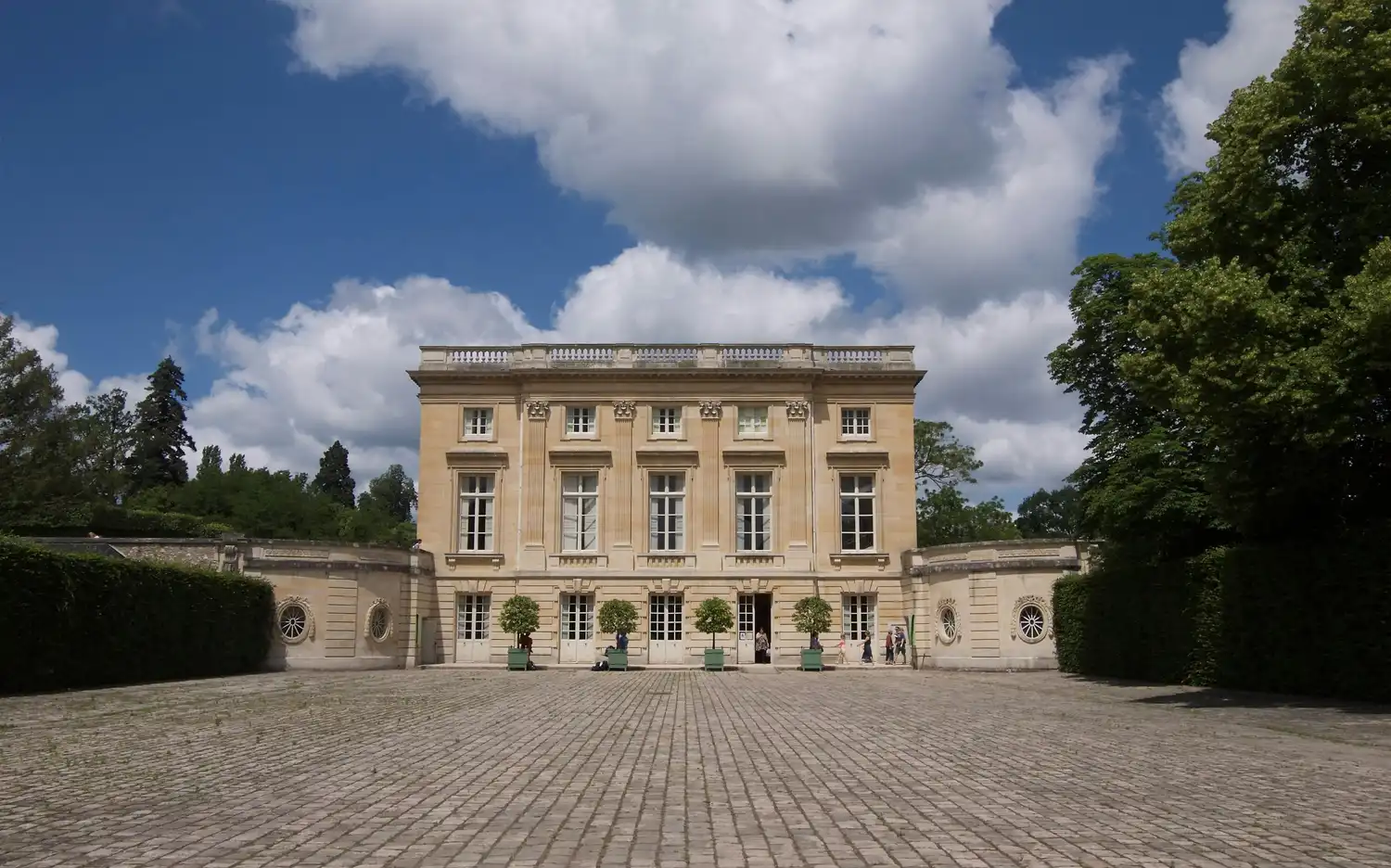
Classical beige building with tall windows and trees overlooking a cobbled courtyard under a blue sky.

Marie-Antoinette's Estate

  • Versailles

Discover the intimate refuge of Marie-Antoinette's Estate near Paris, where the elegantly furnished Petit Trianon and rustic Queen's Hamlet offer a serene escape into 18th-century royal life. Wander through lush English-style gardens and a picturesque Normandy village, showcasing one of the most enchanting historical exhibitions of French heritage.

Beyond the rigid etiquette of the main palace, Marie-Antoinette’s Estate serves as a poignant testament to the Queen's desire for privacy and a simpler, rustic life. Gifted to her by Louis XVI in 1774, this sprawling sanctuary allowed the young sovereign to escape the suffocating scrutiny of the French court. The estate represents a shift in royal lifestyle, transitioning from the heavy Baroque opulence of the Palace of Versailles toward a more intimate, Neoclassical elegance and a deep fascination with the natural world, inspired by Enlightenment ideals.

At the heart of the domain stands the Petit Trianon, an architectural masterpiece designed by Jacques-Ange Gabriel. Unlike the grand state apartments, this "small palace" prioritizes light, soft colors, and delicate floral motifs. Notable spaces like the Méridienne Room, with its irregular walls designed for rest, and the Gold Room, featuring exquisite wood paneling by the Rousseau brothers, showcase the Queen's refined personal taste. Innovative features, such as the mechanical "flying" dining table that could be raised and lowered to the kitchens, underscore the estate's purpose as a space where the royals could dine without the constant presence of servants.

The most enchanting and controversial feature of the estate is the Hameau de la Reine (The Queen’s Hamlet). Designed by the Queen's favorite architect, Richard Mique, this rustic model village includes a Mill, a Working Dairy, and the charming Marlborough Tower. Built around an artificial lake, the hamlet’s thatched roofs and timbered facades were intended to evoke the French countryside. While often dismissed by critics as a frivolous "plaything," it was actually a functioning farm where the royal children were educated about nature and agriculture, providing fresh products for the Queen's table and a pastoral backdrop for intimate gatherings.

Visitors to the estate will experience an atmosphere of profound serenity and "sylvan charisma" that feels worlds away from the main palace. Strolling through the English Gardens, characterized by winding paths, hidden grottos, and the iconic Temple of Love, one can easily imagine the Queen seeking the "normality" she so craved. Today, the estate stands as one of the most personal corners of Versailles, offering a window into the private life and aesthetic legacy of one of history’s most misunderstood figures, beautifully preserved amidst the lush landscapes of Versailles.

Highlights

  • The Petit Trianon is an elegant Neoclassical palace that served as the Queen’s private residence away from court life.
  • The Queen's Hamlet features a charming rustic model village, including a mill and a dairy, built for her leisure.
  • The Temple of Love is a romantic neoclassical structure located on a small island within the estate's lush gardens.
  • The English Garden offers a picturesque landscape of rolling lawns, winding streams, and diverse botanical collections.
  • The Queen's Theatre remains a hidden gem where Marie Antoinette performed private theatrical productions for her closest friends.
  • The Grotto provides a mysterious, shaded stone retreat designed to look like a natural cave within the manicured grounds.

Must-Dos

  • Walk through the French Pavilion to admire the octagonal drawing room where the King and Queen hosted intimate musical salons and games.
  • Stroll past the Belvedere pavilion at sunset to catch the golden light reflecting off its stone facade and the surrounding ornamental pond.
  • Climb the steps to the Rock, a massive artificial mountain overlooking the gardens, for a panoramic view of the Petit Trianon and its lush scenery.
  • Visit the Farm within the hamlet to see the variety of animals that still inhabit this rustic retreat today.
  • Follow the winding pathways through the shaded groves to discover the intricate lead and stone sculptures depicting children representing the four seasons.
  • Pause on the stone bridge crossing the stream near the mill to listen to the gentle sound of falling water and birdsong from the nearby trees.

Guidelines

  • Visitors are strictly prohibited from touching any of the historic objects, artwork, or furniture on display to ensure their long-term preservation.
  • The use of flash photography, audio or video recording, and specialized equipment like tripods or selfie sticks is not permitted inside the historic buildings.
  • All guests must undergo security screening and have their belongings vetted by the TSA before being granted access to the secure side of the estate.
  • Visitors are encouraged to limit their belongings to one personal item, such as a small bag or purse, to facilitate easier passage through security checkpoints.
  • Outside food and beverages are not allowed within the galleries, though bottled water with a closed cap is typically permitted.
  • For a respectful environment, please keep voices low and silence all mobile devices while exploring the intimate rooms of the Petit Trianon.
  • To gain entry, you must present a valid, REAL ID-compliant government-issued photo ID or a passport alongside your individual QR code pass.

Tips

  • Arrive at the estate for its 12:00 PM opening to enjoy the Petit Trianon and Queen's Hamlet with much lighter crowds than the main palace.
  • Plan your visit for a Wednesday or Thursday to avoid the heavy weekend traffic and the Tuesday surge when the nearby Louvre is closed.
  • Enter the grounds through the Queen's Gate to bypass the main palace congestion if you are heading directly to the Trianon estate by car or bike.
  • Take the Petit Train shuttle from the main terrace for a quick and comfortable transfer to the estate, saving you the 25-minute walk through the gardens.
  • Book a Passport ticket online in advance to guarantee your timed entry and grant seamless access to the entire estate, including the Hamlet and gardens.
  • Wear sturdy walking shoes as you will likely cover several miles exploring the expansive pastoral grounds and rustic pathways of the Normandy-style village.
  • Bring a refillable water bottle to stay hydrated during your outdoor exploration, as shops and facilities are more spread out in this secluded corner of Versailles.

Why Visit

While the main palace stuns with its sheer scale, Marie-Antoinette’s Estate offers a rare, confidential glimpse into the human heart behind the crown. This is where the heavy mask of royalty was finally cast aside, replaced by a world of delicate Neoclassical light and the whimsical charm of a storybook village. To walk these grounds is to leave the tourist crowds behind and enter a clandestine sanctuary where every room and garden path was designed for the ultimate luxury of the 18th century: the freedom to be oneself.

The true magic of the estate lies in its immersive sensory journey, from the cool, mysterious shadows of the stone Grotto to the gentle lowing of animals at the working farm. Imagine the scent of rare blossoms in the English Garden mingling with the sound of water rushing past the mill, or the surreal experience of standing in the Queen’s Theatre, a hidden jewel where a sovereign once traded her throne for the stage. As the sun sets, casting a golden glow over the Belvedere and reflecting off the ornamental ponds, the estate transcends history to become a place of profound serenity and timeless elegance.Marie-Antoinette’s Estate is a masterpiece of intimacy, offering a poignant and beautiful escape into the private soul of Versailles’ most iconic queen.

When to Visit

The Midday Rush for Trianon Interiors

Since the Petit Trianon and the Queen’s Hamlet buildings typically do not open until 12:00 PM, visitors who arrive right at the doors can bypass the heavy waves of tourists migrating from the main palace later in the afternoon. Securing a spot in the queue by 11:45 AM ensures you are among the first to enter the intimate Neoclassical salons before the narrow corridors become congested. If you are visiting during the high season, prioritizing the Hamlet’s cottages immediately at opening provides the clearest paths for navigating the rustic village.

Soft Glow over the Queen’s Hamlet

Photographers and those seeking optimal lighting should aim for the final two hours before closing, when the sun begins to dip over the thatched roofs and the Grand Lac. The late afternoon light casts long, dramatic shadows across the English Garden, highlighting the textured stone of the Marlborough Tower and the Temple of Love. This period also coincides with the departure of most day-trippers returning to central Paris, leaving the grounds significantly quieter for those staying until the 6:00 PM or 6:30 PM final exit.

How to Visit

If you want to experience the Trianon Estate without the exhaustion of a cross-park hike, skip the main palace queue and head straight to the Queen's Gate. For just a few euros, you can park your car almost at the doorstep of Marie-Antoinette's world, or take a brisk walk from the Versailles Rive Droite station to enter this northern sector of the park. You will need to budget at least two to three hours here; anything less and you will find yourself rushing past the very details that make this escape so special.

A Royal Detour to the Hamlet

The best way to see the grounds is to start at the Grand Trianon and work your way toward the rustic north. By the time you finish exploring the pink marble corridors, you will be perfectly positioned to enter the Petit Trianon and then drift into the winding paths of the English Garden.

  • Begin at the Grand Trianon to see the Peristyle and the Malachite Room.
  • Follow the garden path through the Chemin Creux Bridge to reach the Petit Trianon.
  • After touring the Queen’s private chambers, seek out the Temple of Love and the octagonal Belvedere.
  • End your journey at the Queen's Hamlet, circling the lake to see the Mill and the Farm.

The Shortcut to Serenity

If you are already at the main Palace of Versailles, do not underestimate the distance. It is a solid 25-minute walk through the gardens, so if your feet are already tired, hop on the Petit Train near the Terrace. It drops you off right between the two Trianon palaces. Remember that while the gardens open early, the interiors of the buildings stay locked until noon, so use your morning to explore the fountains and Groves before making your way to the Trianon gates.

Schedules

Opening Hours

  • During high season, the estate is open from 10:00 AM to 6:30 PM with last entry at 6:00 PM.
  • During low season, the estate operates from 12:00 PM to 5:30 PM with last entry at 5:00 PM.
  • The venue remains open from Tuesday to Sunday throughout the year but is closed on Mondays.

Special Days

The estate is strictly closed every Monday as well as on January 1st, May 1st, and December 25th.

Access to the gardens is free on most days except during the Musical Fountains Show and Musical Gardens events.

While the palace closes on certain holidays, the estate remains open on all other national public holidays that do not fall on a Monday.

How to get there

Tucked away in the far reaches of the Versailles grounds, Marie-Antoinette's Estate offers a serene, rustic escape from the city and is accessible via several convenient rail and bus links from central Paris. While the estate is approximately a 25-minute walk from the main palace gates, it is well-connected through the town's multiple train stations and local shuttle services.

  • RER: Line C to Versailles Château Rive Gauche, followed by a 25-minute walk or a short local bus ride to the estate entrance.
  • Train: Transilien Line L from Paris Saint-Lazare to Versailles Rive Droite or Transilien Line N from Paris Montparnasse to Versailles Chantiers.
  • Bus: Line 171 from Pont de Sèvres (at the end of Metro Line 9) to the Versailles Château stop near the main palace entrance.
  • Shuttle: A small electric "Petit Train" operates within the park, providing transport from the main palace to the Grand Trianon and Petit Trianon for a small fee.
Directions

Frequently Asked Questions about Marie-Antoinette's Estate

Access to the estate, including the Petit Trianon and the Queen's Hamlet, is not included in the basic 'Palace' ticket. To explore these areas, you must purchase a 'Passport' ticket or a specific 'Estate of Trianon' ticket, which grants entry to this private royal sanctuary.
While the main Palace of Versailles has extensive storage, the Petit Trianon has very limited facilities. It is highly recommended to leave large bags or suitcases at the main palace entrance cloakrooms, as bulky items are strictly prohibited inside the delicate French Neoclassical rooms.
The outdoor paths around the Trianon gardens and the Queen's Hamlet are generally accessible, though some trails are made of uneven gravel. However, for the preservation of 18th century art and flooring, strollers are not permitted inside the Petit Trianon and must be left in the designated parking area outside.
For the best photography, visit the Temple of Love during the 'golden hour' or capture the reflection of the Marlborough Tower in the artificial lake of the Queen's Hamlet. The grand staircase inside the Petit Trianon also offers a stunning perspective of the Queen's refined personal taste.
Marie-Antoinette's Estate typically opens later than the main palace, usually at 12:00 PM. This schedule allows visitors to tour the Hall of Mirrors in the morning before heading to the Trianon gardens in the afternoon to see where the Queen escaped the French Revolution's early tensions.
The Petit Trianon itself functions as a permanent exhibition of the Queen's life, showcasing her preference for intimacy over Baroque opulence. Temporary displays often highlight her collections of 18th century art, musical instruments, or botanical interests in the adjacent French Pavilion.
The walk from the main palace to the heart of the estate takes approximately 25 to 30 minutes through the Versailles gardens. If you prefer not to walk, you can take the 'Petit Train' shuttle or rent an electric golf cart to reach the Trianon area more comfortably.
There are small refreshment stands near the entrance of the Petit Trianon and a casual cafe located near the Grand Trianon. While picnicking is not allowed in the formal gardens, there are designated picnic lawns in the Park area just outside the estate's boundaries.
Yes, the Paris Museum Pass includes entry to the Estate of Trianon, including the Petit Trianon and the Queen's Hamlet. However, you must still book a specific time slot online in advance to ensure entry during peak tourist seasons.
Lush 18th-century landscape paintings and architectural plans displayed in a grand gallery at the Palace of Versailles.
Neon art installations by François Morellet contrast with the Baroque architecture of the Palace of Versailles.
Recommended
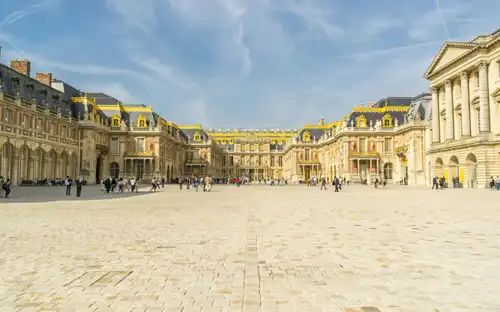
Visitors walk through the sunny courtyard of the Palace of Versailles, featuring ornate golden rooftop decorations.
2 exhibitions

Palace of Versailles

  • Versailles

The gilded residence of Marie Antoinette and the infinite brilliance of the Hall of Mirrors.