
Visitors walk through the sunny courtyard of the Palace of Versailles, featuring ornate golden rooftop decorations.
Recommended

Palace of Versailles

  • Versailles

The Palace of Versailles is a masterclass in 17th-century opulence, featuring the legendary Hall of Mirrors, vast landscaped gardens, and a premier collection of French Renaissance art near Paris. This UNESCO World Heritage Site offers a glimpse into royal history through its 2,300 rooms and world-class cultural exhibitions.

Lush 18th-century landscape paintings and architectural plans displayed in a grand gallery at the Palace of Versailles.

Gardens of the Enlightenment: 1750-1800

  • Palace of Versailles, Versailles
5 May - 27 Sep 2026
From€25.00

A poetic journey through the irregular beauty and philosophical landscapes of the eighteenth century.

Neon art installations by François Morellet contrast with the Baroque architecture of the Palace of Versailles.

François Morellet: At the Château de Versailles

  • Palace of Versailles, Versailles
30 Jun - 1 Nov 2026
From€25.00

Minimalist geometric rigor meets the Baroque splendor of Versailles in a centennial dialogue.
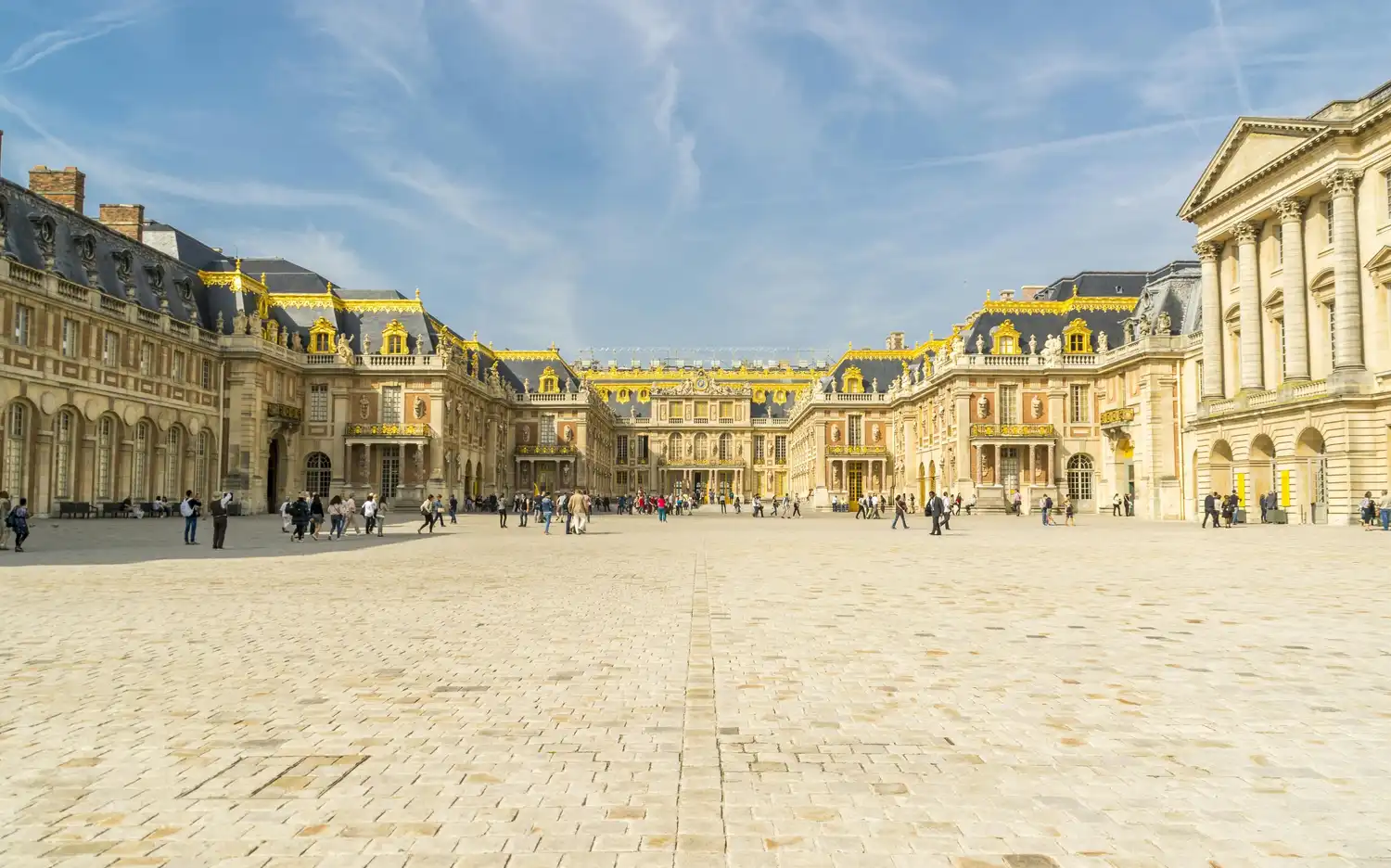
The Palace of Versailles stands as the ultimate monument to French absolute monarchy and 17th-century artistic mastery. Originally a humble hunting lodge built by Louis XIII, it was transformed into a staggering seat of power by his son, Louis XIV, the "Sun King." From 1682 until the French Revolution in 1789, this sprawling estate served as the official residence of the royal court and the epicenter of French political authority. Today, as a UNESCO World Heritage site, it preserves the memory of the Ancien Régime, housing over 2,300 rooms that showcase the transition from a royal residence to the Museum of the History of France.

Architecturally, the palace is a masterclass in French Baroque and Classical styles, characterized by its rigid symmetry and immense scale. The crown jewel of the interior is undoubtedly the Hall of Mirrors (Galerie des Glaces), a 73-meter gallery where 357 mirrors face 17 arched windows, designed to reflect the majesty of the gardens and the wealth of the crown. Visitors can explore the Grand Apartments of the King and Queen, adorned with lavish ceiling paintings by Charles Le Brun, and the Royal Chapel, a soaring example of palatine architecture. Beyond the main palace, the Estate of Trianon—including the Grand Trianon, Petit Trianon, and the rustic Queen's Hamlet—offers a glimpse into the more intimate, private lives of figures like Marie Antoinette.

The atmosphere at Versailles is one of overwhelming opulence and historical weight. Walking through the Marble Court or the vast Gardens of Versailles, designed by the legendary landscape architect André Le Nôtre, visitors experience the same sense of awe intended to subdue the 18th-century nobility. The meticulously manicured lawns, geometric pathways, and spectacular fountains, such as the Fountain of Apollo, represent a proud assertion of human dominion over nature. Whether marveling at the gold-leafed gates or the priceless art collections in the Gallery of Battles, a visit to Versailles provides a profound immersion into the glory, excess, and eventual downfall of the French monarchy.

Highlights

  • The Hall of Mirrors features 357 mirrors and 17 glass doors that reflect the stunning palace gardens.
  • The King's State Apartments showcase seven opulent rooms dedicated to different Roman gods and celestial bodies.
  • The expansive Gardens of Versailles contain over 800 hectares of meticulously landscaped lawns, sculptures, and fountains.
  • The Grand Trianon serves as a private refuge built of pink marble for the monarch to escape court etiquette.
  • The Queen's Hamlet is a rustic model village and farm designed as a bucolic retreat for Marie Antoinette.
  • The Royal Chapel displays impressive Baroque architecture with its soaring vaulted ceilings and intricate marble floors.
  • The Gallery of Coaches houses a vast collection of ornate royal carriages used during major historic ceremonies.

Must-Dos

  • Stand on the veranda overlooking the Orangery to admire the perfect symmetry of over 1,000 potted citrus and palm trees.
  • Stroll through the Potager du Roi to discover rare and forgotten fruit varieties grown using 17th-century pruning techniques.
  • Walk around the Latona Fountain to interpret the mythological story of the goddess transforming peasants into frogs through its tiered sculptures.
  • Visit the Grand Trianon during the weekend to take a self-guided tour of the Trianon-sous-Bois wing's intimate royal chambers.
  • Attend the Night Fountains Show on a summer Saturday to see the gardens illuminated by thousands of candles and a fireworks display.
  • Experience the Orangery parterre in the summer to breathe in the scents of blooming oleander, pomegranate, and orange blossoms.

Guidelines

  • All visitors must undergo security checks and metal detector screening before entering the palace grounds.
  • Large items such as suitcases, bulky luggage, or bags exceeding 40cm x 20cm x 25cm are strictly prohibited inside the venue.
  • Non-flash photography and filming for personal use are permitted, but the use of flash, tripods, selfie sticks, and drones is forbidden.
  • Smoking and the use of electronic cigarettes are not allowed anywhere inside the palace or within the estate buildings.
  • Eating and drinking are prohibited inside the museum galleries to protect the artwork and historical furnishings.
  • Visitors are required to maintain a safe distance and must not touch any artworks, statues, or decorative elements.
  • Strollers and pushchairs may be restricted in certain areas and often must be checked in for the safety of the collections.

Tips

  • Aim to arrive right at the 9:00 am opening or after 3:00 pm to avoid the heaviest mid-day tour group crowds in the Hall of Mirrors.
  • Always book a Passport ticket with timed entry online in advance to guarantee access within half an hour of your chosen slot and skip the long ticket-purchase lines.
  • Plan your visit for Tuesday, Wednesday, or Thursday mornings to enjoy a quieter experience, as the palace is closed on Mondays and weekends are typically the busiest.
  • If you have a timed ticket or are eligible for free admission, head directly to Entrance A at the Dufour Pavilion to clear security and enter the palace.
  • Consider exploring the Gardens first when they open at 8:00 am and then visiting the interior apartments in the afternoon for a more efficient flow.
  • If you are visiting on a budget, take advantage of free admission to the entire estate on the first Sunday of the month between November and March.

Why Visit

To visit the Palace of Versailles is to step beyond the velvet rope of history and into a world of unparalleled architectural bravado. While the main palace dazzles with its legendary gold-leafed gates and the celestial themes of the King’s State Apartments, the true magic lies in the discovery of its more intimate escapes. Wander toward the Grand Trianon to witness the sun hitting its exquisite pink marble, or lose yourself in the rustic charm of the Queen’s Hamlet, where the air feels thick with the pastoral dreams of Marie Antoinette. From the sheer scale of the Gallery of Coaches to the hidden botanical treasures of the Potager du Roi, every corner of this 800-hectare estate serves as a testament to a level of luxury that redefined the very concept of power.

The experience of Versailles is as much about the atmosphere as it is the art; it is a multi-sensory journey that stays with you long after you leave. Imagine standing on the veranda as the scent of a thousand blooming orange blossoms wafts up from the Orangery, or feeling the rhythmic spray of the Latona Fountain as it tells its mythological tale of transformation. On a summer Saturday, the Night Fountains Show transforms the grounds into an ethereal dreamscape illuminated by the flickering glow of thousands of candles, culminating in a firework display that makes the sky itself seem part of the royal court. Whether you are interpreting the intricate marble floors of the Royal Chapel or breathing in the history of the Trianon-sous-Bois wing, a visit here is a profound emotional immersion into the most gilded chapter of the human story.A pilgrimage to Versailles is more than a simple tour; it is a mandatory descent into the breathtaking excess and artistic genius that forged the soul of France.

When to Visit

Morning Arrival for the Gilded Gates

Arriving at the Palace of Versailles right at the 9:00 am opening is the most effective way to stay ahead of the massive tour groups that typically descend on the estate by mid-morning. Entering during this first hour allows for a much smoother transit through the security checks and gives you the best chance of viewing the State Apartments before the rooms become densely packed. If a morning start is not feasible, delaying your entry until after 3:00 pm can also work well, as the heaviest crowds often begin to depart by late afternoon, leaving the galleries significantly quieter before the 6:30 pm closing time during high season.

Hall of Mirrors Light Cycles

Photographers and visitors seeking the best visual experience should plan their route based on the sun's position relative to the palace's western-facing facade. The late afternoon provides a spectacular display in the Hall of Mirrors, as the sun begins its descent and casts direct, warm light through the seventeen arched windows, reflecting brilliantly off the 357 mirrors. Conversely, visiting the formal gardens and the Trianon estate during the midday hours ensures the outdoor sculptures and manicured landscapes are fully illuminated without the long shadows cast by the palace structure itself.

How to Visit

To make the most of your trip to this sprawling royal estate, you will need to allocate a significant amount of time. While the main palace itself can be toured in about 90 minutes, the gardens and the Trianon estate are vast. To truly see everything without feeling rushed, budget at least five to six hours for your total visit.

Navigating the Royal Threshold

When you arrive at the Place d'Armes, head straight for the Dufour Pavilion. This is where you will find Entrance A, the designated primary entry point for all individual visitors with pre-booked tickets. Once through security, you can pick up a free audio guide to help bring the history of the rooms to life as you walk.

A Logical Loop through the Gilded Halls

  • Start with the first floor of the main palace to view the King's State Apartments, a sequence of seven prestigious rooms dedicated to the planets.
  • Continue directly into the iconic Hall of Mirrors, which serves as the architectural heart of the building.
  • Move through the Queen's Apartments and the Hall of French History before heading outside.
  • Exit the palace into the Water Parterre and walk down the Royal Way toward the Apollo Fountain.
  • If your legs are up for it, continue to the Grand Trianon and the Estate of Trianon to see the more private quarters of the French monarchy.

Schedules

Opening Hours

  • The Palace of Versailles is open Tuesday to Sunday from 9:00 am to 6:30 pm during the high season and until 5:30 pm in the low season.
  • The last entry to the palace is permitted until 5:45 pm during the high season and 4:45 pm during the low season.
  • The estate remains closed on Mondays, as well as on January 1st, May 1st, and December 25th.

Special Days

The Palace and the Estate of Trianon are closed on Mondays, December 25th, January 1st, and May 1st.

Free entry is offered to all visitors on the first Sunday of the month from November to March.

The Gardens and Park remain open free of charge on Friday, May 1st, even when the Palace is closed.

How to get there

Located approximately 20 kilometers southwest of central Paris, the Palace of Versailles is a majestic escape from the city, easily reached through an efficient network of regional trains and buses. This historic estate is highly accessible for day-trippers seeking to experience the opulence of the French monarchy.

  • RER: Take Line C to the Versailles Château Rive Gauche station, which is the closest stop to the palace, located just a 10-minute walk from the entrance.
  • Train (SNCF): Take Line N from Gare Montparnasse to Versailles Chantiers or Line L from Gare Saint-Lazare to Versailles Rive Droite, both of which are within a 15- to 20-minute walk of the gates.
  • Bus: Take Route 171 from the Pont de Sèvres station (at the end of Metro Line 9), which drops passengers off directly at the Place d'Armes in front of the palace.
Directions

Frequently Asked Questions about Palace of Versailles

To experience the estate with fewer tourists, it is best to arrive right at opening at 9:00 am or wait until after 3:00 pm when the large group tours begin to depart. Weekdays, specifically Tuesday through Thursday, are generally quieter than weekends.
For the preservation of the historic floors, strollers and metal-frame baby carriers are not permitted inside the Palace rooms. You can leave them at the complimentary cloakrooms located at the entrance before starting your tour of the King's Apartments and the Hall of Mirrors.
The Hall of Mirrors offers iconic shots of French Baroque opulence, while the Water Parterre provides a stunning perspective of the palace reflected in the pools. For a unique view of human dominion over nature, stand on the veranda overlooking the Orangery to capture its perfect geometric symmetry.
Access depends on your ticket type; a basic 'Palace' ticket only covers the main residence. To see the Petit Trianon and the rustic Queen's Hamlet where Marie Antoinette sought privacy, you should purchase a 'Passport' ticket, which grants entry to the entire royal estate.
Yes, free cloakrooms are available at the entrances to the Palace and the Estate of Trianon. However, for security reasons, large suitcases and high-capacity bags are not accepted; only small items that pass security checks can be stored during your visit.
Most self-guided tours include a view of the Royal Chapel from the ground floor and the first-floor vestibule. The Gallery of Battles, which showcases centuries of French history through massive paintings, is also part of the standard visitor circuit through the Grand Apartments.
The gardens are generally free to enter except on days of the Musical Fountains Show or Musical Gardens exhibitions. On those specific event days, you will need to purchase a dedicated ticket or a Passport ticket to access the manicured pathways and fountain displays.
The Palace is equipped with elevators and ramps to ensure access to the main circuits, including the Hall of Mirrors. For the vast gardens and the Estate of Trianon, electric vehicles and a small train are available for a fee to help visitors navigate the sprawling 17th-century grounds.
To fully appreciate the Palace, the permanent Versailles exhibitions, the gardens, and the Trianon estate, you should plan to spend at least 5 to 6 hours. Many visitors choose to make it a full-day trip from Paris to ensure they don't have to rush through the 2,300 rooms.
You are welcome to take photos for personal use, but flash photography is strictly prohibited to protect the delicate artworks and ceiling paintings. Tripods and selfie sticks are also banned inside the Palace to ensure a smooth flow of visitors and prevent accidental damage to the decor.