
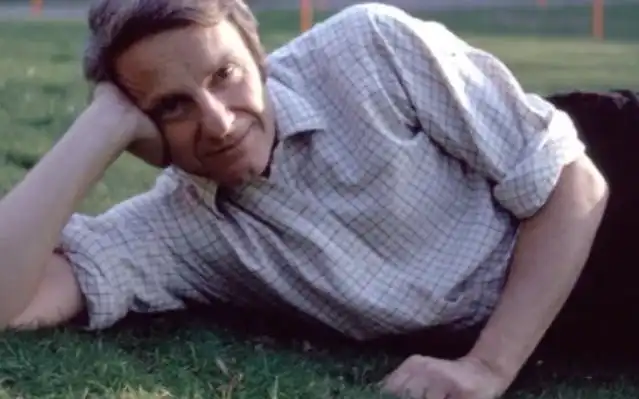


The exhibition François Morellet at Versailles marks a spectacular confrontation between the radical, geometric abstraction of one of France’s most influential contemporary artists and the baroque splendor of the Palace of Versailles. Curated by Laurent Salomé, this showcase is a cornerstone of the national 100 x Morellet celebration, commemorating the centenary of the artist's birth. By placing six major works within the State Apartments and the meticulously ordered gardens, the exhibition seeks to create a "conversation" between Morellet’s minimalist protocols and the historic weight of the Sun King’s residence, highlighting a shared obsession with mathematical order and theatrical perspective.
Inside the Château, the curatorial narrative begins with a profound dialogue between modern materials and royal architecture. In the vestibule of the Royal Chapel, the installation Le Lamentable features white neon tubes arranged in drooping arcs that seem to collapse onto the stone floor, contrasting the rigid verticality of the surrounding columns. This is paired with the striking Beaming π, a black sculpture whose segments are meticulously angled according to the decimals of the mathematical constant π. This juxtaposition of geometric rigor and the jubilation of chance serves to destabilize the viewer’s perception of the familiar marble interiors, inviting a more playful, intellectual engagement with the space.
The emotional resonance of the exhibition extends into the iconic gardens designed by André Le Nôtre. Here, Morellet’s work engages with the legendary perspectives and water features of the estate. A double installation overlooking the Latona Parterre plays with the visual hiatus between the perfect horizontal lines of the artwork and the actual declivities of the terrain. This intervention transforms the landscape into a living laboratory of perception and movement, where the viewer’s physical position dictates the shifting alignment of the forms. It is a masterful exercise in site-specific intervention, honoring the historical legacy of the site while asserting the timeless relevance of Morellet’s "facetious" abstraction.
Ultimately, this tribute encapsulates the dual nature of François Morellet as a painter of both rule and disorder. By integrating industrial materials like neon tubes and steel into a setting of gold leaf and manicured hedges, the exhibition highlights the historical significance of a career that spanned over six decades. The dialogue created here is not one of subservience to the past, but a vibrant, humorous, and intellectually stimulating exchange that reassesses the boundaries between art, architecture, and the public, ensuring Morellet’s legacy remains a vital force in the contemporary landscape.
Highlights
- The installation Le Lamentable features arc-shaped neon lights that appear to slump across the paving of the Royal Chapel's lower vestibule.
- The black sculpture Beaming π unfurls its segments across the nave's marble marquetry at angles determined by the decimals of the number pi.
- A suspended Sphère-trame provides a striking geometric contrast to the profusion of Baroque decoration in the Salon of Abundance.
- The monumental work Super Position reinstates François Morellet’s radical minimalist protocols within the historic King's State Apartments.
- A double installation overlooking the Latona Parterre creates a visual conversation between the artist’s horizontality and the garden's natural slopes.
- Six major works are strategically placed to disrupt classical perspectives and celebrate the centenary of François Morellet's birth.
Frequently Asked Questions about François Morellet: At the Château de Versailles
Palace of Versailles
- Versailles
The Palace of Versailles is a masterclass in 17th-century opulence, featuring the legendary Hall of Mirrors, vast landscaped gardens, and a premier collection of French Renaissance art near Paris. This UNESCO World Heritage Site offers a glimpse into royal history through its 2,300 rooms and world-class cultural exhibitions.
Schedules
Opening Hours
- The Palace of Versailles is open Tuesday to Sunday from 9:00 am to 6:30 pm during the high season and until 5:30 pm in the low season.
- The last entry to the palace is permitted until 5:45 pm during the high season and 4:45 pm during the low season.
- The estate remains closed on Mondays, as well as on January 1st, May 1st, and December 25th.
Special Days
The Palace and the Estate of Trianon are closed on Mondays, December 25th, January 1st, and May 1st.
Free entry is offered to all visitors on the first Sunday of the month from November to March.
The Gardens and Park remain open free of charge on Friday, May 1st, even when the Palace is closed.
How to get there
Located approximately 20 kilometers southwest of central Paris, the Palace of Versailles is a majestic escape from the city, easily reached through an efficient network of regional trains and buses. This historic estate is highly accessible for day-trippers seeking to experience the opulence of the French monarchy.
- RER: Take Line C to the Versailles Château Rive Gauche station, which is the closest stop to the palace, located just a 10-minute walk from the entrance.
- Train (SNCF): Take Line N from Gare Montparnasse to Versailles Chantiers or Line L from Gare Saint-Lazare to Versailles Rive Droite, both of which are within a 15- to 20-minute walk of the gates.
- Bus: Take Route 171 from the Pont de Sèvres station (at the end of Metro Line 9), which drops passengers off directly at the Place d'Armes in front of the palace.