I Love: by Marie Khouri
- Cité Internationale de la Langue Française – Château de Villers-Cotterêts, Villers-Cotterêts
A sculptural exploration of affection and form through the lens of Marie Khouri.

Discover the 3 major exhibitions currently showing at Cité Internationale de la Langue Française – Château de Villers-Cotterêts in 2026.
A sculptural exploration of affection and form through the lens of Marie Khouri.
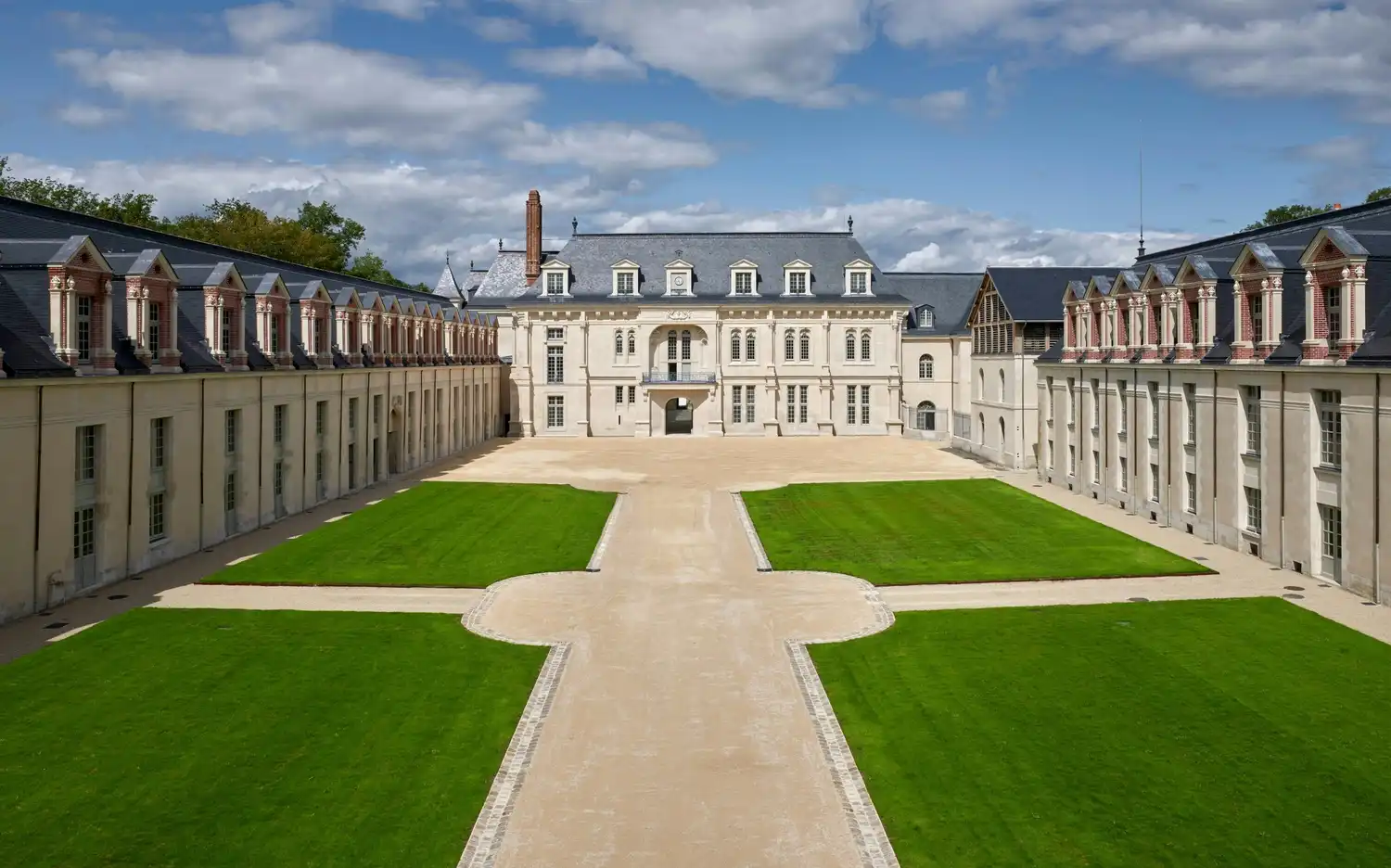
Nestled on the edge of the majestic Forest of Retz in the Picardy region, the Château de Villers-Cotterêts stands as a profound symbol of French identity. Originally built in 1532 by King François I as a royal hunting lodge, this Renaissance jewel was the site of a pivotal moment in history: the signing of the Ordinance of Villers-Cotterêts in 1539. This historic decree mandated the use of the French language in all administrative and legal acts, effectively laying the foundation for a unified national tongue. After centuries of diverse uses—from a decadent residence for the House of Orléans to a revolutionary prison and a Napoleonic beggar's hospice—the castle has been meticulously restored and reimagined as the Cité Internationale de la Langue Française, the world's first cultural institution entirely dedicated to the French language.
The architecture is a masterclass in French Renaissance style, seamlessly blending 16th-century grandeur with bold contemporary interventions. Visitors are greeted by the breathtaking Cour du Jeu de Paume, now covered by a sophisticated glass and steel Verrière designed by architect Olivier Weets. This courtyard features the enchanting Ciel Lexical (Lexical Sky), where one hundred suspended words, chosen by the local community, float above the space. Inside the Logis Royal, the preservation of historical details is exquisite; the Escalier du Roi (King’s Staircase) and Escalier de la Reine (Queen’s Staircase) showcase intricate coffered ceilings and sculptures of the King's emblem, the Salamander, while the royal chapel stands as a rare example of early Renaissance ecclesiastical design that broke away from Gothic traditions.
The atmosphere within the Cité is one of intellectual playfulness and immersive discovery. The Permanent Visitor Circuit is spread across 15 interactive rooms, using state-of-the-art digital displays and rare documents—including a loan of the original 1539 Ordinance—to tell the story of the "adventure of French." Rather than a dry academic study, the experience is designed to be sensory; visitors can hear the voices of historical figures like Jeanne d'Arc or Alexandre Dumas (who was born in this very town), engage with giant word-search puzzles, and explore the global reach of the Francophonie. The transition from the town's central square, through the open courtyards, and out toward the verdant forest creates a sense of openness and continuity, reflecting the living, breathing nature of the language itself.
A visit to the Cité is completed by its vibrant community spaces, including a specialized Librairie-Boutique and a charming café-salon de thé. The transformation of the former tennis court into a multifunctional Auditorium provides a modern stage for concerts, debates, and performances, ensuring the castle remains a "beating heart" of culture. For the traveler, it offers a rare opportunity to walk through a site where the very words they hear spoken in the streets of Paris were officially given their status, all while enjoying some of the most impressive architectural restoration work in modern France.
For the traveler seeking to move beyond the typical Parisian crowds, a journey to the Cité Internationale de la Langue Française offers an unparalleled encounter with the soul of French culture. This is not a static repository of the past, but a living, breathing epicenter where architectural mastery meets the future of communication. Standing beneath the Lexical Sky, you are witness to a daring dialogue between 16th-century stonework and a soaring, modern glass atrium. It is a rare chance to engage with the physicality of history, from the tactile discovery of ancient mason marks on the facades to the vibrant, global pulse of the interactive dome, which illuminates how a single tongue unites millions across every continent.
The experience at Villers-Cotterêts is a multisensory masterpiece that transforms academic heritage into an emotional voyage. You don't just view exhibits; you inhabit the narrative of a language that conquered the world. The air in the Logis Royal feels charged with the presence of literary giants, while the King's staircase—with its meticulously restored salamander carvings—serves as a silent witness to centuries of royal intrigue. Whether you are exploring the vibrant literary trails once trodden by Alexandre Dumas or finding a moment of quiet reflection in the bordering Retz Forest, the Cité offers a profound sense of continuity. It is a place where every word suspended in the air and every meticulously restored chapel stone invites you to become part of a global cultural legacy.Beyond the gilded monuments of the capital, the Cité Internationale de la Langue Française stands as a revolutionary sanctuary where the heritage of the past and the digital innovation of the future converge to celebrate the enduring power of human expression.
Midweek Seclusion in the Renaissance Wings
Aim for Tuesday through Thursday if your goal is to explore the permanent collections without the weekend influx of visitors from nearby Paris. Arriving exactly when doors open at 10:00 provides a significant advantage, allowing you to traverse the interactive galleries before the arrival of school groups or afternoon tourists. The castle's expansive layout feels most intimate during these early hours, ensuring you have unobstructed access to the various digital displays and historical artifacts.
Natural Illumination beneath the Lexical Sky
The Jeu de Paume courtyard features a spectacular glass roof that transforms with the movement of the sun, making mid-morning or early afternoon the prime window for photography. Soft light filters through the glass at these times, casting the suspended words of the "lexical sky" into sharp relief against the historic stone walls. If you visit during the winter months, aim for 14:00 to 16:00 to catch the low-angled sun as it creates dramatic shadows across the Cour d'Honneur, highlighting the architectural transition between the Renaissance facade and modern glass interventions.
Visiting the Cité Internationale de la Langue Française at the Château de Villers-Cotterêts is a refreshing departure from the usual Parisian tourist circuit. To make the most of your trip to this historic site, you should budget at least 2 to 3 hours for the interior galleries alone. If you plan to enjoy the surrounding greenery, factor in an extra hour for a leisurely stroll through the adjacent parklands.
Arriving at the Royal Gates
The primary point of access for all visitors is located at 1 Place Aristide Briand. Upon arrival, you will need to pass through a mandatory security screening before entering the main courtyard. To ensure a smooth start to your visit, have your digital or printed tickets ready for scanning as you approach the Logis Royal entrance.A Smart Route Through History
Admission is free for individuals under the age of 26 years old as well as for teachers and those with disabilities.
The venue is typically closed on Mondays and observes standard operating hours from 10:00 to 18:30 during the rest of the week.
Located approximately 80 kilometers northeast of the city center, this majestic Renaissance castle is nestled on the edge of the historic Forest of Retz in the Picardy region. Despite its distance from central Paris, the venue remains remarkably accessible via a direct rail link, offering a scenic escape into the heart of French linguistic heritage.