
Recommended

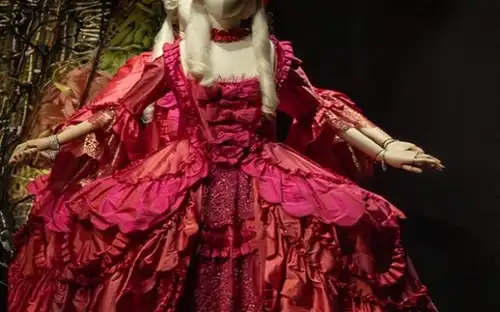
Marie-Antoinette from Avant-Garde to Avant-Garde
- Château de Fontainebleau, Fontainebleau
5 Jun - 2 Nov 2026
From€17.00
Marie Antoinette’s enduring legacy through an exploration of radical style and avant-garde evolution.
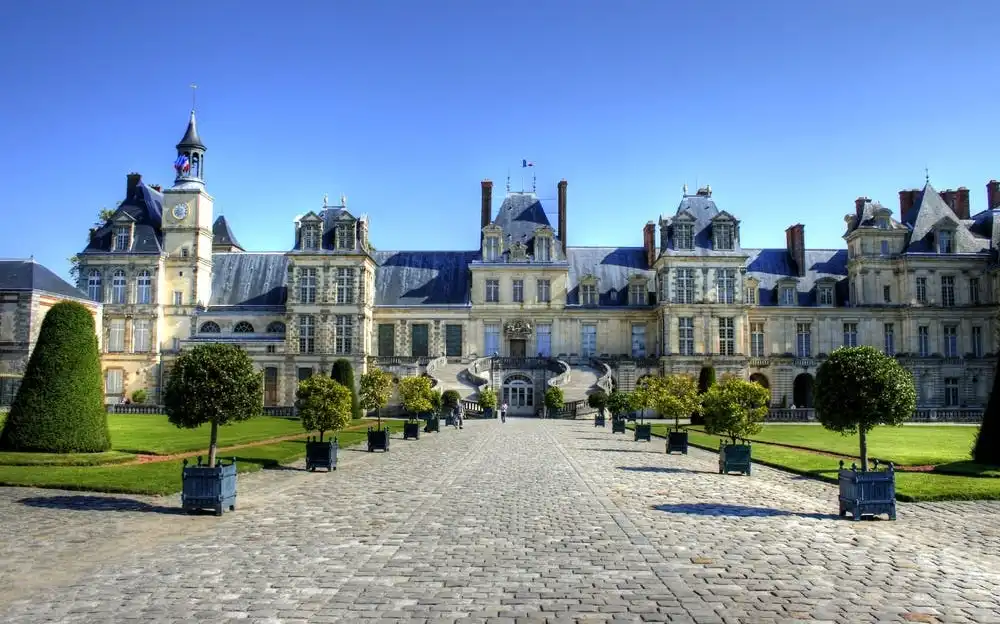
Discover the current major exhibition showing at Château de Fontainebleau in 2026.
Nestled within a vast, ancient forest just an hour from Paris, the Château de Fontainebleau stands as a monumental chronicle of French history, earning its reputation as the "true home of kings." Unlike other palaces that were built in a single burst of creative energy, Fontainebleau evolved over eight centuries, serving as a residence for 34 monarchs and two emperors, from Louis VII to Napoleon III. This unbroken chain of habitation has created a unique historical layers, where medieval foundations support Renaissance galleries and Imperial apartments, making it the only royal château in France to be continuously inhabited for such an extensive period.
Architecturally, the palace is a masterclass in the evolution of French style, most notably serving as the cradle of the French Renaissance. Under the patronage of Francis I, Italian masters like Rosso Fiorentino and Primaticcio were invited to decorate the interior, leading to the birth of the School of Fontainebleau. The Francis I Gallery, with its innovative marriage of high-relief stucco and vibrant frescoes, remains one of the most significant artistic achievements in Europe. Visitors can also marvel at the Throne Room, the only one in France to retain its original imperial furnishings, and the iconic Horseshoe Staircase, where Napoleon I delivered his emotional farewell to the Old Guard before his exile.
The atmosphere at Fontainebleau is one of intimate grandeur and refined elegance, offering a quieter, more contemplative alternative to the often-crowded halls of Versailles. Walking through its 1,500 rooms, one feels the personal tastes of the rulers who once called this "house of centuries" home. The transition from the opulent Grand Apartments to the more private, secluded boudoirs of Marie-Antoinette and the Empress Josephine reveals the dual nature of the palace as both a seat of absolute power and a sanctuary from the rigid etiquette of the court.
Extending beyond the golden gates, the estate's 130 hectares of parks and gardens provide a breathtaking synthesis of nature and design. The Grand Parterre, designed by the legendary André Le Nôtre, is the largest formal garden in Europe, offering a serene landscape of symmetrical flowerbeds and tranquil fountains. Whether exploring the Italianate Cour Ovale, which marks the site of the original medieval keep, or wandering the shores of the Carp Pond, visitors are immersed in an enduring symbol of the French art de vivre that continues to captivate the imagination.
While many flock to the gilded gates of Versailles, the true connoisseur of French history knows that the Château de Fontainebleau offers a far more authentic and intimate encounter with royalty. As the only residence inhabited by every French monarch from the 12th to the 19th century, it is not merely a museum but a living chronicle of power. Here, you can stand in the very room where Napoleon signed his abdication or admire the avant-garde Renaissance frescoes of the Francis I Gallery, which predates the Hall of Mirrors by over a century. This is where the "French art of living" was truly forged, offering a sprawling architectural journey that spans from medieval keeps to imperial splendor, all without the overwhelming tourist crowds of central Paris.
To walk through Fontainebleau is to feel the palpable echoes of history in every silent corridor and sun-drenched gallery. There is a profound emotional weight in ascending the Horseshoe Staircase, knowing you are retracing the final steps of an empire, or finding quiet solace in Marie Antoinette’s Turkish Boudoir, a space that reflects a queen's personal longing for escape. The scent of the surrounding ancient forest drifts through the windows of the Grand Apartments, grounding the dizzying gold-leaf luxury in a raw, natural serenity. It is a sensory masterpiece where the clatter of centuries feels remarkably close, inviting you to lose yourself in a world that is as much a sanctuary as it is a seat of absolute sovereignty.A visit to the Château de Fontainebleau is an essential pilgrimage for those seeking to touch the unfiltered soul of French history within the most richly furnished and historically continuous palace in Europe.
Midweek Monarchical Solitude
Securing a tranquil visit requires bypassing the weekend rush and aiming for a Tuesday closure workaround by arriving on a Wednesday or Thursday. Most large tour groups prioritize the morning hours, so scheduling your entry for 12:30 pm or 1:00 pm allows you to explore the Renaissance rooms while others are at lunch. Navigating the 1,500 rooms becomes significantly more efficient during the late afternoon, specifically between 3:30 pm and 5:00 pm, when the departure of day-trippers leaves the Grand Apartments nearly empty.
Horseshoe Staircase and Forest Radiance
Capturing the perfect light on the iconic stone facade is best achieved during the first hour after opening at 9:30 am, when the sun sits low and illuminates the Cour d'Honneur without harsh shadows. Photographers should take advantage of the winter months from November to February, as the lower trajectory of the sun creates long, dramatic shadows across the cobblestones and enhances the texture of the medieval architecture. If your priority is the 130 acres of gardens, the late spring evening light around 5:00 pm provides a soft glow that reflects beautifully off the Grand Canal and the Carp Pond.
If you are planning a trip to the massive estate at Fontainebleau, you should set aside at least three to four hours. This allows you to properly navigate the main circuit of the palace and still have time for a stroll through the gardens. When you arrive at the Cour d'Honneur, look for the main visitor entrance located near the right wing of the palace. Passing through the security checkpoint here is usually straightforward, but having your digital tickets ready will save you a few extra minutes of standing in line.
The Path of the Sovereigns
Once inside, the best way to see the palace is to follow a loop that takes you through the evolution of French design. This route ensures you see the most significant imperial and royal spaces without having to double back through the 1,500 rooms.
Mastering the Grounds
After the grandeur of the interiors, the gardens offer a necessary change of pace. If you are short on time, focus your energy on the Diana Garden, which is tucked away and offers a more peaceful atmosphere than the larger parterres. For those with more stamina, a walk down to the Carp Pond provides a great view of the palace reflected in the water. If you want to see the furthest reaches of the 130-acre park without exhausting yourself, consider renting a small electric boat or taking the tourist train that departs from the main courtyard.
The Château de Fontainebleau is closed every Tuesday and on annual holidays including January 1st, May 1st, and December 25th.
Visitors can enjoy free entry on the first Sunday of every month, with the exception of June, July, and August.
While the castle is typically closed on Tuesdays, it remains open on major public holidays such as Easter Monday, Ascension Day, and Bastille Day.
Located approximately 55 kilometers southeast of Paris within the lush expanse of an ancient royal forest, the Château de Fontainebleau is a masterclass in French history and architectural evolution. While situated outside the city proper, this UNESCO World Heritage Site remains remarkably accessible for a refined day trip via the region’s efficient rail network.