
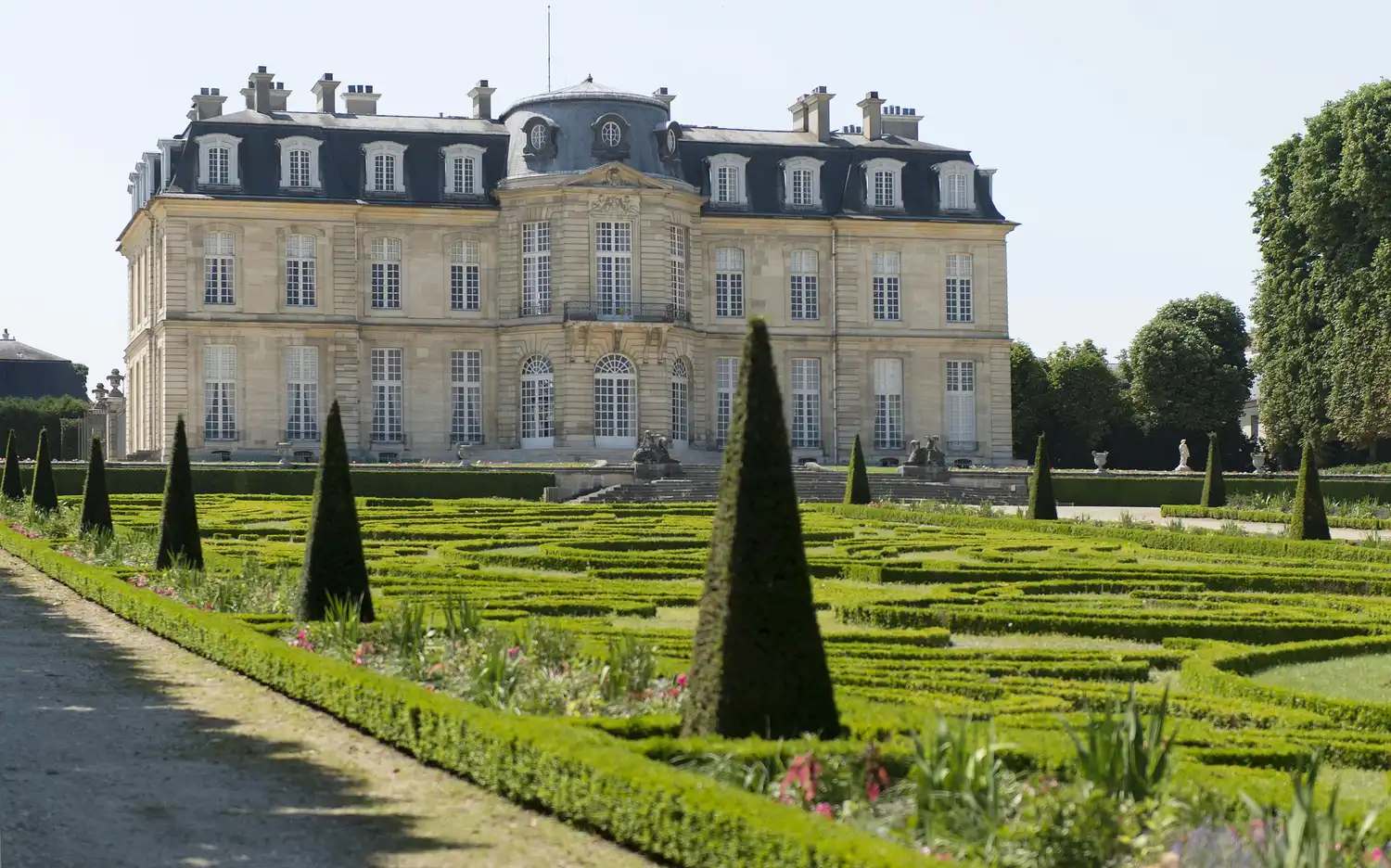
The Château de Champs-sur-Marne stands as a quintessential example of the 18th-century maison de plaisance, or pleasure house, representing a pinnacle of French neoclassical architecture and the refined art de vivre. Built between 1703 and 1707 by architects Pierre Bullet and Jean-Baptiste Bullet de Chamblain, it was originally commissioned for the financiers of Louis XIV. Over the centuries, the estate has played host to a dazzling array of illustrious figures, from the Princesse de Conti, the legitimized daughter of the Sun King, to the influential Marquise de Pompadour, who spent a small fortune renovating the interiors to suit her exquisite tastes. Later, in the late 19th century, the banker Louis Cahen d’Anvers undertook a masterful restoration, eventually gifting the estate to the French state in 1935, after which it served as a prestigious residence for visiting heads of state.
Architecturally, the château was a pioneer of modern comfort, introducing an innovative interior layout that prioritized privacy and convenience—a departure from the grand, drafty enfilades of earlier eras. Visitors are treated to a rare glimpse of Rococo splendor, most notably in the world-renowned Salon Chinois, which features delicate Chinoiserie murals painted by the artist Christophe Huet. The house is a treasure trove of the decorative arts, boasting one of the most significant collections of period furniture in the region, with rooms like the Music Room and the Smoking Room reflecting the sophisticated lifestyle of the Enlightenment era. The intricate woodwork, Aubusson tapestries, and the unique Dining Room—one of the first of its kind—create an atmosphere of intimate luxury that remains palpable today.
The estate’s allure extends far beyond its walls into a magnificent 85-hectare park that holds the prestigious Jardins Remarquables label. This green sanctuary offers a harmonious blend of a French-style formal garden, designed by Claude Desgotz (the nephew of André Le Nôtre), and a 19th-century English-style landscape park. A grand central axis stretching nearly 900 meters draws the eye toward the Marne River, framed by meticulously manicured box-tree embroidery and elegant statuary like the Apollo Belvedere. This cinematic landscape has served as the backdrop for over 80 films, including Sofia Coppola's Marie Antoinette and Stephen Frears' Dangerous Liaisons, cementing its status as a cultural icon.
Today, a visit to the Château de Champs-sur-Marne offers a serene escape from the bustle of Paris, just 18 kilometers to the west. The atmosphere is one of timeless elegance and quiet grandeur, where the lack of overwhelming crowds allows for a truly immersive historical experience. Whether wandering through the ornate state apartments or strolling through the sprawling meadows and orchards, visitors feel more like honored guests in a private domain than tourists in a museum. It remains a vibrant testament to French heritage, offering a perfect marriage of architectural innovation, artistic mastery, and botanical beauty.
Highlights
- Admire the exquisite 18th-century rococo and Chinoiserie decor found throughout the 22 rooms of this historic pleasure house.
- Explore the sprawling 85 hectares of gardens which feature both formal French-style landscapes and English-style parks.
- Marvel at the intricate designs of the Salon Chinois, a masterpiece of the mid-18th-century fascination with East Asian art.
- Wander through the grand reception rooms that once hosted famous guests like Madame de Pompadour and Voltaire.
- Appreciate the collection of high-quality French furniture and decorative arts that showcase the elegance of the Age of Enlightenment.
Must-Dos
- Stroll through the kitchen and pantry area to see the copper cookware and learn about the daily logistics of a grand 18th-century estate.
- Find a quiet moment by the sculpted fountains and water basins to listen to the trickling water while taking in the symmetry of the classic parterres.
- Climb to the upper floors to enjoy an elevated perspective of the grand perspectives and geometric patterns of the manicured grounds.
- Walk along the Grand Canal to witness the stunning reflections of the château’s facade mirrored in the long stretch of water.
- Identify the conical shrubs and trimmed hedges that demonstrate the precision of French topiary art across the landscape.
- Search for the hidden shaded paths within the English-style park for a cooler, more intimate walk away from the formal garden's open spaces.
Guidelines
- All visitors must undergo security checks at the entrance as part of the national security plan.
- Large bags and suitcases exceeding 55cm x 35cm x 20cm are strictly prohibited inside the estate.
- Permitted luggage must be deposited in a locker after being inspected by security personnel.
- Drinks and food are not allowed to be brought inside the estate.
- Animals are prohibited within the grounds, though exceptions typically apply to service animals.
- Strollers are permitted in the outdoor gardens but cannot be used inside the château itself.
- Umbrellas must be stored in a provided bag before you enter the historic building.
Tips
- Take the RER A line from central Paris to reach the estate quickly and conveniently in about 40 minutes.
- Visit during the weekdays to beat the weekend crowds and enjoy a much calmer, more authentic atmosphere.
- Plan your arrival for the early morning or late afternoon to capture the best natural light for photos of the gardens.
- Purchase your tickets online in advance to skip the ticket office queues and head straight to the security checkpoint.
- Set aside time for a relaxing walk through the sprawling 85 hectares of historic French pleasure gardens.
- Explore the 22 rooms inside the château to admire the rare 18th-century Chinoiserie and rococo decor.
Why Visit
If you find yourself yearning for the opulence of Versailles but dreading the claustrophobic crush of the crowds, the Château de Champs-sur-Marne is your ultimate Parisian secret. Just a short trip from the city center, this architectural jewel offers an intimate, unhurried encounter with the pinnacle of French elegance. Unlike the grand, distant halls of royal palaces, this estate was designed as a maison de plaisance, a pleasure house meant for living, allowing you to walk through remarkably preserved rooms that feel as though their illustrious residents—like the Marquise de Pompadour—have only just stepped out. With its sprawling 85-hectare park and cinematic gardens that have set the stage for over 80 films, including Sofia Coppola’s Marie Antoinette, the estate provides a rare opportunity to play the part of an aristocrat in your own historical drama.
To enter the château is to be enveloped in a sensory masterpiece where the air carries the faint, sweet scent of ancient woodwork and seasonal blooms from the kitchen gardens. As you wander into the Salon Chinois, the vibrant colors of the Chinoiserie murals seem to dance in the soft, natural light, while the tactile richness of Aubusson tapestries anchors you in a world of refined comfort. Outside, the emotional resonance of the landscape is undeniable; the rhythmic sound of trickling fountains in the formal parterres gives way to the deep, cooling silence of the English-style park's shaded paths. Standing on the upper floor, looking down the 900-meter central axis toward the shimmering Marne River, you don't just see history—you feel the profound, tranquil pulse of a bygone era of French art de vivre.The Château de Champs-sur-Marne is a breathtaking sanctuary of neoclassical beauty and quiet grandeur, offering a uniquely personal portal into the soul of 18th-century France.
When to Visit
Midweek Solitude in the Rococo Salons
Visiting the estate during weekdays, particularly Wednesdays or Thursdays, allows for a much more intimate exploration of the 22 historic rooms compared to the busier weekends. Since the venue is closed every Tuesday, the first morning back can occasionally see a slight uptick in visitors, so aim for a 10:00 AM arrival to stay ahead of any local school groups or small tours. Entering as soon as the doors open ensures the Chinoiserie decor and period furniture can be viewed without the distraction of large groups, providing a peaceful atmosphere that mirrors the original "maison de plaisance" intent of the property.
Afternoon Glow Across the 85-Hectare Park
Photographers and nature lovers should prioritize the late afternoon to capture the expansive gardens when the sun begins its descent, casting long shadows across the manicured hedges and conical shrubs. The south-facing facade of the château benefits from the warm, directional light found roughly one to two hours before closing, which highlights the intricate architectural details that are often flattened by the harsh midday sun. Planning your stroll through the French-style pleasure gardens during this window ensures the most vibrant colors and textures are visible, creating a dramatic and professional quality to any images captured on the grounds.
How to Visit
To get the most out of your visit to this 18th-century gem, you should budget at least 3 hours. This allows for a thorough 1.5-hour tour of the 22 furnished rooms and an additional 90 minutes to wander the 85 hectares of grounds. The estate is quite large, so wearing comfortable walking shoes is a must.
Navigating the Noble Residence
For the most logical flow through the history of the house, I suggest following this interior circuit:
- Start in the kitchen and pantry area to appreciate the logistical heart of the estate, complete with its original copper cookware.
- Move upstairs to the state apartments to see the evolution of French taste, transitioning from the heavy prestige of the late 1700s to lighter, more intimate styles.
- Be sure to linger in the Salon Chinois, as the hand-painted wall decor here is some of the finest surviving examples of the period's obsession with Eastern aesthetics.
The Quick Path to the Parterres
All guests enter through the main security check at the front of the estate, where you should be prepared for a quick bag inspection. To avoid any unnecessary backtracking, head straight to the ticketing desk in the main courtyard. Once you have your pass, I recommend touring the house first to understand the layout before exiting through the garden-side doors. This leads you directly into the French-style pleasure gardens, from which you can easily branch off into the wilder, wooded paths of the English-style park.
Schedules
Opening Hours
- The Château de Champs-sur-Marne is open every day except Tuesday.
- From June 1 to September 30, the venue opens from 10:00 AM to 12:15 PM and 1:30 PM to 6:00 PM.
- Between October 1 and May 31, visitors are welcome from 10:00 AM to 12:15 PM and 1:30 PM to 5:00 PM.
- The last entry is strictly permitted until 30 minutes before closing time.
Special Days
The château is closed every Tuesday and on annual holidays including January 1st, May 1st, and December 25th.
Free entry is available for all visitors on the first Sunday of the month from November to March.
How to get there
Nestled in the lush greenery of the Marne Valley, the Château de Champs-sur-Marne is an 18th-century masterpiece located approximately 25 kilometers east of central Paris. This elegant pleasure house is easily accessible via the region's efficient rail and bus networks, offering a tranquil escape from the city's urban bustle.
- RER: Take Line A toward Marne-la-Vallée Chessy and disembark at Noisiel, followed by a 20-minute walk or a short bus ride. Alternatively, exit at Noisy-Champs to connect with local bus services.
- Bus: From Noisiel station, take bus line 220 toward Bry-sur-Marne RER and stop at Mairie de Champs. From Noisy-Champs station, take bus line 312 and get off at Mairie de Champs, which is just a few minutes' walk from the estate.
- Car: Follow the A4 motorway toward Metz-Nancy, take exit 10 for Champs-sur-Marne, and follow the signs to the château’s dedicated parking area.