
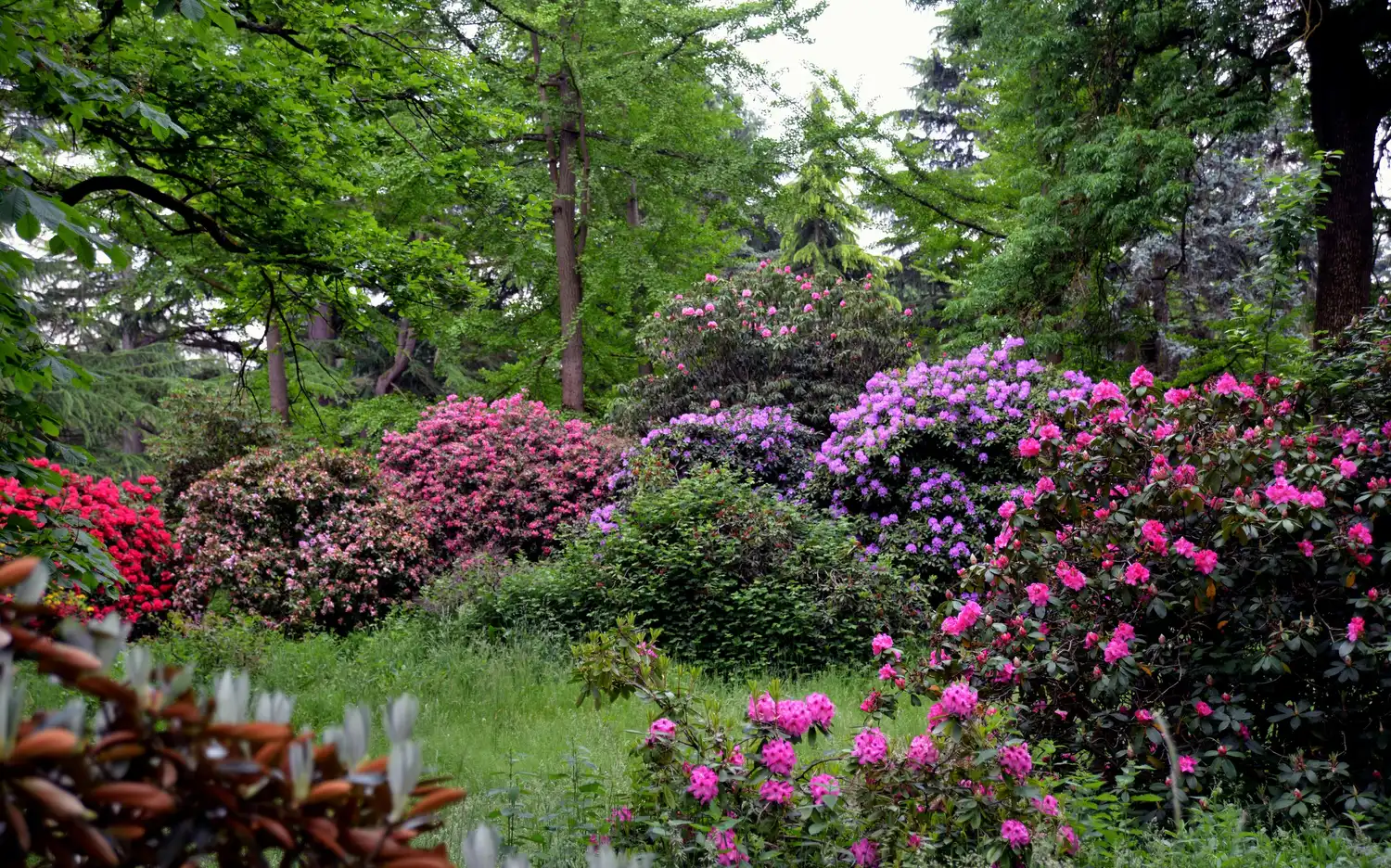
Nestled on the edge of the royal estate, the Arboretum de Versailles-Chèvreloup is a sprawling 200-hectare living museum that offers a serene escape from the typical tourist bustle. Its history is deeply intertwined with the French monarchy, tracing back to 1699 when Louis XIV acquired the hamlet of Chèvreloup to extend his private hunting grounds. Though the site saw various botanical experiments over the centuries—including a short-lived garden by the famed botanist Bernard de Jussieu—it was formally established as a national arboretum in 1922. Managed by the Muséum national d’Histoire naturelle, it has evolved into a vital center for scientific research and the preservation of global biodiversity.
The arboretum is architecturally unique not for traditional buildings, but for its meticulous organization into geographical zones and systematic botanical collections. Visitors can embark on a global tour through trees, wandering from the temperate regions of Europe to the rugged landscapes of the Caucasus, and onward to the diverse forests of China, Japan, and North America. Among its artistic natural highlights are the Japanese cherry tree meadow, which erupts in delicate blossoms each spring, and the Lawsons maze, a whimsical wandering path through conifers with strikingly colorful foliage. For those seeking rare wonders, the tropical greenhouses house an staggering collection of 5,000 species, including succulents and orchids, though these treasures are typically reserved for guided tours.
The atmosphere at Chèvreloup is one of profound tranquility and "semi-wild" beauty, designed to feel more like a secluded forest than a manicured palace garden. With over 2,500 species and 10,000 individual trees, the landscape is a tapestry of flowering meadows, quiet ponds, and majestic groves of giant sequoias and ancient oaks. It serves as a sanctuary for local wildlife, where one might spot roe deer or squirrels darting between the shadows of the conifer collection. Whether you are walking the 10 km hiking trail or cycling along its paved pathways, the arboretum provides a rare opportunity to experience the "green lung" of the National Estate of Versailles in a contemplative, unhurried environment.
Highlights
- The Systematic Botany area features the oldest plantations on the estate, with trees organized by their biological family and genus.
- Explore over 120 hectares of Geographic Collections that showcase representative tree species from Europe, Asia, and the Americas.
- The Ornamental Horticulture section displays a unique variety of cultivars selected for their striking aesthetic and ornamental properties.
- Wander through the Japanese Cherry Tree Meadow to see a beautiful display of blossoms during the spring season.
- The Lawson's Maze offers a fun and wandering experience through a dense collection of colorful conifers.
- View five Giant Sequoias that stand over 25 meters tall, representing some of the most impressive specimens in the park.
- Discover the Tropical Greenhouses which house a massive collection of 5,000 plant species from warmer climates around the world.
Must-Dos
- Plan a peaceful picnic under the shade of the majestic oaks to fully absorb the tranquil atmosphere of the royal estate.
- Listen to the rustling leaves and local birdsong while wandering the quieter paths away from the main garden circuits.
- Capture the early morning light as it filters through the misty tree canopies, providing a perfect opportunity for nature photography.
- Visit on the first Sunday of the month to experience the vast living museum for free alongside local nature enthusiasts.
- Search for hidden benches tucked away in wooded areas to find a private spot for reflection and meditation amidst the greenery.
- Walk the perimeter trails to appreciate the scale of the 200-hectare site and witness the ongoing conservation and restoration efforts.
Guidelines
- All visitors must present a valid ticket or proof of entitlement for entry into the living museum.
- Domestic pets are strictly prohibited within the gardens with the exception of licensed service animals.
- To protect the plant collections, active sports and games are not permitted on the estate.
- Commercial photography and the use of drones require prior official authorization and a specific license.
- Visitors are required to remain on the designated paths and lawns to avoid damaging sensitive plantings.
- The consumption of alcohol and the use of open flames or grills are forbidden throughout the botanical areas.
- All waste and litter must be disposed of in the provided trash receptacles to maintain the natural environment.
Tips
- Visit the Arboretum on the first Sunday of the month to take advantage of free admission for all visitors.
- Arrive early when they open at 10:00 to enjoy the 200 hectares of diverse landscapes before any potential crowds arrive.
- Pack a meal to enjoy in the designated picnic area, as this venue is highly recommended for open-air dining on sunny days.
- Follow the Île-de-France trail if you want to learn about regional tree species through informative, educational panels.
- Wear comfortable walking shoes to explore the 10 km hiking trail that spans through the American, Asian, and European botanical collections.
- Check the seasonal blooming schedule specifically for the Japanese cherry tree meadow to see the vibrant spring blossoms at their peak.
- Head to the Chèvreloup Reservoir to see historic remains of the hydraulic system that once fed the fountains at the nearby Palace of Versailles.
Why Visit
To truly experience the soul of the French countryside without leaving the reach of the capital, one must venture to the Arboretum de Versailles-Chèvreloup. While the neighboring palace dazzles with gilded halls and manicured geometry, Chèvreloup offers a sublime, untamed contrast that feels like a private secret shared with the kings of old. It is here that the grandeur of nature takes center stage, inviting you to trade the frantic shuffle of city sightseeing for a world-class botanical odyssey. Imagine standing in the presence of towering giants from the Himalayas or wandering through a Japanese meadow that feels worlds away from the Seine; this is more than a garden—it is a living global archive where every path lead to a new continent of wonder.
Stepping into these sprawling 200 hectares is a sensory rebirth, where the heavy hum of urban life is replaced by the rhythmic rustle of ancient oaks and the crisp scent of conifer needles. There is a profound emotional resonance in the "semi-wild" aesthetic; it fosters a rare sense of introspective solitude that even the most beautiful Parisian parks cannot replicate. As the morning mist clings to the silver-blue foliage of a hidden grove or the golden afternoon light filters through a canopy of maples, you are caught in a timeless, shifting masterpiece that nourishes the spirit and demands a slower, more meaningful pace of discovery.The Arboretum de Chèvreloup is the ultimate Parisian sanctuary, offering a transcendent escape where the majesty of a global forest meets the enduring peace of a royal retreat.
When to Visit
Morning Mist Among the Conifers
Arriving at the gates right when they open at 10:00 ensures you enter the grounds before the midday heat and local families arrive. The early hours provide the most tranquil environment for navigating the 200-hectare expanse, especially near the Systematic Botany area where the densest tree collections reside. Weekday visits, particularly on Tuesday or Wednesday, offer the most solitude compared to the busier weekend afternoons.
Low Sun Through the Living Museum
Late afternoon light creates the most dramatic atmosphere across the open meadows and heritage groves, making the final hours before the 18:00 spring/summer closing time ideal for photography. As the sun dips lower, the light filters through the varied foliage of the 2,500 species, highlighting textures on the bark of ancient oaks and cedars. Aiming for a 16:00 arrival during the peak season allows you to catch this soft illumination while bypassing the morning peak of school groups and larger tours.
How to Visit
Navigating the Arboretum de Versailles-Chèvreloup requires a different mindset than a typical museum visit. Because the grounds cover a massive 200 hectares, you should budget at least three hours to see the major collections without feeling rushed. If you are a dedicated plant lover or birdwatcher, a half-day is more realistic to reach the quieter, northern corners of the estate.
Your Gateway to the Groves
Entry is exclusively through the main gate located at 30 Route de Versailles in Rocquencourt. While it feels like part of the Versailles estate, it has its own dedicated entrance away from the main palace queues. If you are coming from Paris, the most straightforward route is taking the Transilien Line L or N to Versailles Rive Droite or Versailles Chantiers, then catching a quick local bus to the Arboretum stop.
A Curated Continental Loop
To make the most of your time, I recommend a circular route that hits the three distinct geographical zones. This path ensures you see the most diverse "living exhibits" while keeping your bearings:
- Start in the Systematic Botany area near the entrance. This is the scientific heart of the park, where you can see the oldest heritage trees arranged by family, including the iconic oaks and maples.
- Head west toward the Geography sections. This is the closest you can get to a global trek in a single afternoon; walk through the North American conifers before crossing into the Asian collections to see rare species from the Himalayas and China.
- Loop back through the Horticultural zone. This area is particularly stunning in spring and early summer when the flowering shrubs and ornamental species are at their peak.If you have extra time, keep an eye out for the Chèvreloup Greenhouses. While they are usually restricted to guided tours, catching a peek at the thousands of tropical plants and succulents inside is well worth the inquiry at the ticket desk upon arrival.
Schedules
Opening Hours
- From March 1st to October 31st, the venue is open daily from 10:00 to 18:00, with the last entry at 17:00.
- Between November 1st and February 28th, it remains open from 10:00 to 17:00, while the last entrance is at 16:00.
- The arboretum is closed to the public on May 1st and during the period from December 25th to January 1st.
Special Days
The venue is closed exceptionally on May 1st, December 25th, and January 1st.
Admission is free for all visitors on the first Sunday of every month throughout the year.
The arboretum remains open on most other public holidays, including Easter Monday and Ascension Day.
How to get there
The Arboretum de Versailles-Chèvreloup is a lush botanical sanctuary located just north of the Palace of Versailles in the town of Rocquencourt. While situated about 20 kilometers west of central Paris, it remains accessible through a combination of regional rail and local bus networks.
- RER: Take Line A to Versailles-Château-Rive-Gauche station, then transfer to bus 111 toward Rueil-Malmaison RER and exit at the Arboretum de Chèvreloup stop.
- Train: From Paris Montparnasse or Paris Saint-Lazare, travel to Versailles-Chantiers or Versailles-Rive-Droite stations, followed by a short bus ride on lines B or H to the Parly II or Arboretum stops.
- Bus: Use line 111 from Versailles or local lines B and H which serve the nearby Parly II shopping center area.